Front Camera vs Back Camera: Which Is More Accurate?
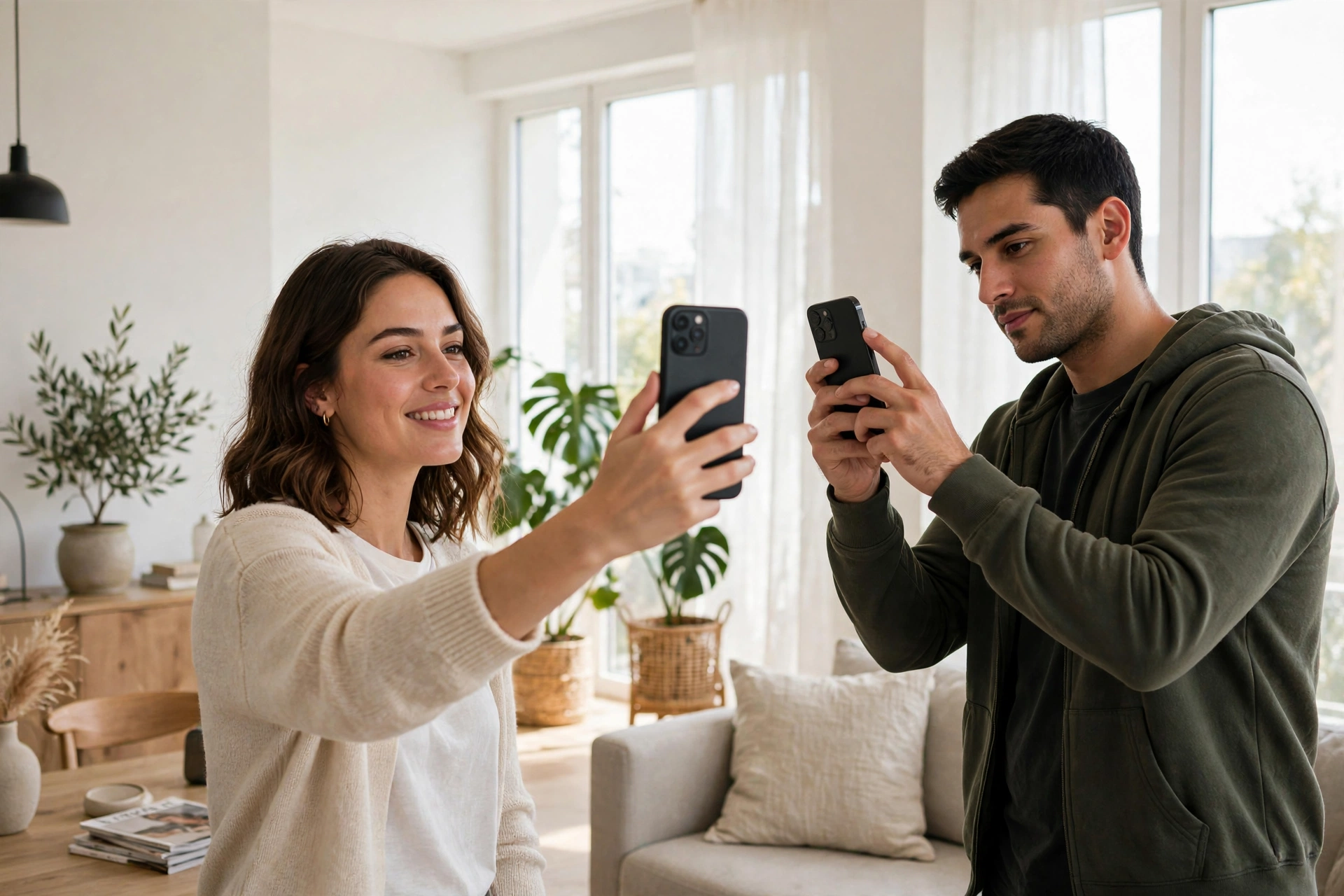
You take a selfie with your front camera and barely recognise yourself. Then someone snaps you with the rear camera from a few feet away and you look like… you. Same face, same day, two different people. So which camera is telling the truth — the front camera or the back camera? The short answer: the back camera is more accurate, and it is not close. The longer answer is a genuinely interesting bit of phone photo science that explains a lot about why we distrust our own selfies.
The Short Answer: The Back Camera Wins
The rear (back) camera on your phone is more accurate for capturing what your face actually looks like. It has a better lens, a better sensor, and — most importantly — it is used from a normal viewing distance. The front camera is a compromise component: smaller sensor, wider-angle lens, and it is almost always used at arm’s length, which is far closer than anyone ever looks at your face in real life. That combination distorts your features in predictable ways.
This is not a matter of opinion or brand. It is optics. And it is the reason selfie camera accuracy is such a common complaint.
Why the Front Camera Distorts Your Face
Three things work against the front camera, and they compound each other.
Wide-angle lens at close range. Front cameras use wide-angle lenses (typically equivalent to around 24mm) so you can fit your face and some background into a shot at arm’s length. Wide-angle lenses exaggerate perspective: whatever is closest to the lens looks disproportionately large. Your nose sits at the centre of your face and closest to the camera, so it renders larger; your ears and the edges of your face compress inward. The result is a rounder-looking face with a bigger nose — a distortion of geometry, not a flaw in your face.
Arm’s-length distance. A selfie is taken from roughly 30–40 cm away. Nobody in real life studies your face from that distance — conversational distance is more like 1–2 metres. Facial proportions change measurably with camera distance, and researchers have demonstrated that portraits taken from 30 cm versus 135 cm produce visibly different faces from the same person. The close-up is the abnormal view, not the normal one.
Lower-quality hardware. The front camera is physically smaller: smaller sensor, smaller lens, less light-gathering ability. In anything less than good light, it compensates with aggressive noise reduction and sharpening that smears skin texture and alters fine detail. Add the beauty filters many phones apply by default (sometimes buried in settings), and the front camera is as much an interpreter as a recorder.
Why the Back Camera Is More Accurate
The rear camera system is the phone’s real camera — the one the manufacturer puts its best engineering into. Larger sensors, better lenses, more sophisticated processing. But the accuracy advantage is mostly about how it gets used:
Longer focal length. Main rear cameras sit around 24–26mm equivalent too, but the telephoto lenses on modern phones (2x, 3x, 5x) let you shoot portraits from further back with a narrower field of view. A 50–70mm equivalent portrait from 1.5–2 metres renders facial proportions far more faithfully than any arm’s-length selfie.
Natural shooting distance. Because you cannot hold the phone and be in the photo simultaneously (without a mirror or timer), rear-camera portraits are taken by someone else or on a tripod from a normal distance. That distance alone eliminates most of the distortion that plagues selfies.
Better processing pipeline. More light, more detail, less need for the aggressive smoothing that front cameras apply in dim conditions. Skin texture, which front cameras often turn to wax, survives.
The honest caveat: “more accurate” does not mean “perfect.” Any photo is still a flat, frozen, 2D projection of a 3D moving face. But the rear camera from a few feet away is dramatically closer to how other people see you than a front-camera selfie is.
The Mirror Complicates Everything
Part of why the front-camera version feels so wrong is the mirror comparison. The face you know best is your mirrored reflection — flipped left-to-right. Your front camera shows you unflipped, the way others see you. So the front camera hits you with two shocks at once: distorted proportions and an unfamiliar orientation. The rear camera, viewed later rather than live, at least removes the live-comparison shock. Our guide on why you look different in selfies vs the mirror digs into the psychology of this in detail.
Which Camera Should You Use for Face Analysis?
This question has a definitive answer, and it matters: if you are using any AI face rating or face analysis tool, always use the rear camera. Front-camera selfies feed the algorithm distorted geometry — exaggerated nose size, compressed face width, altered eye spacing — and the scores it returns will reflect the distortion, not your face. A surprising amount of “my AI score changed between photos” confusion comes down to people comparing a front-camera selfie with a rear-camera portrait.
The protocol for a meaningful face analysis photo: rear camera, phone propped or held by someone else 4–6 feet away, straight-on angle, neutral expression, even frontal lighting (face a window, no overhead-only light). Our accurate face analysis photo guide has the complete checklist. Then run that photo through our free AI face analysis tool on the homepage — the measurement is only as honest as the photo you feed it.
A 60-Second Test You Can Do Right Now
Take a front-camera selfie at normal arm’s length. Then prop your phone on a shelf, switch to the rear camera (use the timer or a mirror to frame), stand 5–6 feet back facing a window, and take the same neutral-expression shot. Put them side by side. The difference in nose size, face width, and overall proportions is the distortion, made visible. Almost everyone who does this test stops trusting arm’s-length selfies immediately.
Frequently Asked Questions
Is the front camera or back camera more accurate for selfies?
The back camera is more accurate. It has better hardware and is used from a natural viewing distance, while the front camera’s wide-angle lens at arm’s length distorts facial proportions — enlarging the nose and rounding the face.
Why do I look worse on the front camera?
Mostly lens distortion at close range, plus lower-quality hardware, aggressive processing in poor light, and the shock of seeing your unflipped face. None of these reflect how you actually look to other people.
Does the front camera flip your face?
Most phones show you a mirrored (flipped) preview while shooting but save the unflipped version — the one everyone else sees. Some phones let you choose. Either way, the saved photo is the non-mirrored version.
Which camera do others see me as?
Neither exactly, but the rear camera from a few feet away is far closer. Other people see you in 3D, in motion, from conversational distance — which a well-taken rear-camera portrait approximates much better than a close-up selfie.
Can I trust AI face ratings from selfies?
Not from front-camera selfies. The distortion changes the facial landmarks the AI measures. For a trustworthy reading, always use a rear-camera photo taken from 4–6 feet away with even lighting and a neutral expression.