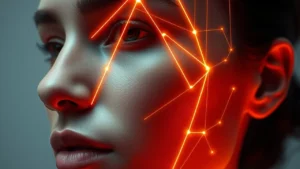
AI Face Rating: How Algorithms Analyze Attractiveness

The definitive technical guide to deep neural networks, 478 3D landmark geometric mapping, client-side WebAssembly privacy, and the science of attractiveness scores.
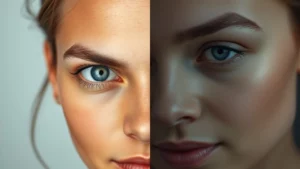
In recent years, artificial intelligence has expanded from automating industrial workflows to answering a deeply personal, age-old question: “How attractive is my face?” Driven by viral social media filters, dating profile optimization apps, and aesthetic modeling engines, AI Face Raters and Attractiveness Calculators are now used by millions daily.
How do computer vision algorithms actually evaluate beauty? What does an AI attractiveness score of 7.5 or 8.8 truly mean in mathematical terms? Why do different apps give wildly contradicting numbers for the exact same person, and are your personal selfies secretly uploaded and stored on remote cloud servers?
In this comprehensive technical breakdown, we pull back the curtain on AI face analysis. We explain the difference between geometric landmark engines and black-box neural networks, contrast automated ratings against human psychology, address data privacy concerns, and explain why your score changes between photos.
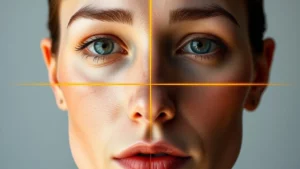
- AI Measures Proportions, Not “Soul”: AI face raters evaluate geometric harmony—bilateral symmetry, canthal tilt, midface ratio (fWHR), and facial thirds. They cannot perceive personal charisma, warmth, or dynamic expression.
- Recognition vs Rating: Facial recognition identifies who you are (biometric identity matching). Face rating models evaluate how your geometric coordinates align with statistical population averages.
- Score Fluctuation Is Optical: A change in camera focal length (e.g., a 24mm wide-angle selfie vs an 85mm portrait) changes your measured midface and nasal width by up to 30%, radically shifting your AI score.
- Dataset Bias Dictates Results: Different AI models give different ratings because they were trained on different benchmark datasets (e.g., SCUT-FBP5500, Chicago Face Database), each carrying distinct cultural biases.
- Privacy Varies Drastically: Outdated services upload your unencrypted photos to remote cloud GPUs. Modern platforms (like AuraFace AI) execute 100% of landmark inference directly in your browser via WebAssembly with zero data storage.
Machine Learning Architecture
How Does an AI Face Rating Work?
At its core, an AI Face Rater is a computer vision system that maps a two-dimensional image of a human face onto a mathematical vector space and outputs an aesthetic compatibility score.
Modern systems generally follow one of two technical paradigms:
The software extracts precise coordinate pins (landmarks) across the eyes, nose, lips, and jaw. It evaluates hard mathematical formulas: bilateral symmetry, facial thirds (1:1:1), and the midface ratio. Transparent, formula-based, and objective.
Trained on massive datasets of tens of thousands of human portraits pre-scored by human focus groups. The network learns abstract feature representations (skin texture, lighting, bone structure) through gradient descent.
Technical Pipeline
AI Face Analysis Explained
How Does AI Analyze a Face?
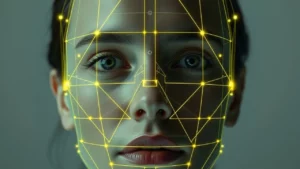
When you upload an image to an advanced landmark-based engine (such as AuraFace AI), the algorithm executes a multi-stage inference pipeline within milliseconds:
The detector isolates the cranial boundary, filtering out background noise, hair clutter, and non-facial image artifacts.
A deep sub-pixel regressor places 478 virtual coordinate pins across the eyelids, iris contours, nasal bridge, vermilion lip borders, and jawline.
The algorithm computes yaw, pitch, and roll angles to mathematically de-rotate tilted faces back to a level horizontal baseline.
The engine computes symmetry variance, canthal tilt degrees, and fWHR, combining them into a weighted aesthetic composite score.
Score Interpretation
What Does an AI Attractiveness Score Mean?
When an algorithm assigns an attractiveness score—for example, 8.4 out of 10—what does that number actually quantify?
In reality, an AI score represents statistical alignment with trained population averages and classical craniofacial harmony benchmarks. A high score signifies:
- High bilateral symmetry across the sagittal facial midline.
- Proportional balance across the vertical thirds (forehead, midface, chin).
- A compact facial width-to-height ratio (fWHR between 1.80 and 2.05).
- Clear contrast boundaries indicating healthy, even skin texture and lighting.
It is critical to remember that an AI score is a geometric audit, not an absolute verdict on personal appeal or magnetism.
Input Guidelines
AI Face Rating From Photo
AI Facial Analysis From a Selfie
The quality and accuracy of any AI face analysis depend almost entirely on your photographic input. If you feed an algorithm a flawed, distorted selfie, the resulting rating will be completely inaccurate.
Follow this 5-step photo protocol to ensure accurate landmark extraction:
Avoid Arm’s Length Selfies
Holding your smartphone 12 to 18 inches away introduces wide-angle barrel distortion, expanding the nose and artificially lowering your score. Mount your phone and step back 5 to 7 feet.
Use Diffused, Balanced Frontal Lighting
Directional shadows from a side window or overhead light create artificial asymmetries that mislead edge-detection neural networks.
Maintain Eye-Level Alignment
Ensure the camera lens sits exactly parallel to your pupils. Looking up or down introduces perspective foreshortening.
Completely Neutral Facial Expression
Do not smile, squint, or raise eyebrows. Resting muscle tone reveals true underlying bone architecture.
Clear Facial Framing
Pull hair back away from forehead, temples, and jawline, and remove glasses to ensure unobstructed landmark mapping.
Frictionless Access
Free AI Face Rating Without Sign Up
Historically, online face rating websites forced users through tedious email sign-ups, subscriptions, or credit-card paywalls to see their results. Today, modern client-side architectures have made 100% free AI face rating without sign-up a reality.
By running pre-compiled neural network weights directly inside your web browser using WebAssembly (Wasm) and WebGL, modern tools execute all tensor computations on your local device CPU/GPU. Because the platform incurs zero remote cloud GPU server costs per analysis, there is no need to demand logins, sell user emails, or lock high-resolution face cards behind paywalls.
Data Ethics & Security
How Private Are AI Face Rating Apps?
Does an AI Face Analyzer Store Your Photo?
Privacy is the most urgent concern surrounding biometric AI tools. When you upload a picture of your face to an unknown app, where does that image go?
The answer depends entirely on whether the app uses Server-Side Processing or Client-Side Processing:
| Architecture | Where Photo Is Processed | Server Data Storage | Privacy Rating |
|---|---|---|---|
| Client-Side (AuraFace AI) | Local Device Browser (WebAssembly) | Zero. Image never leaves your phone/PC. | 100% Private (Gold Standard) |
| Standard Cloud Server | Remote GPU Cluster (AWS / Google Cloud) | Often cached in temporary server buckets. | Moderate Risk (Requires trust in provider) |
| Predatory Ad-Supported Apps | Unknown offshore servers | Persistently stored; used to train AI models. | High Privacy & Data Leak Risk |
To protect your digital identity, always use privacy-first platforms that explicitly confirm client-side execution and guarantee zero remote image transmission.
Biometric Distinctions
How Facial Recognition Differs From Face Rating
It is common to conflate facial recognition with facial rating, but their computational objectives are completely different:
- Facial Recognition (Identity): Extracts unique 128- or 512-dimensional facial embeddings (like a fingerprint) to verify “Is this individual John Doe?” Used for phone unlocking and passport control.
- Face Rating (Aesthetic Proportions): Measures angular vectors and distance ratios to calculate “How do these proportions compare to aesthetic models?” It does not identify or track the individual’s identity.
Scientific Evaluation
How Accurate Are AI Face Raters?
Can AI Measure Facial Attractiveness?
AI can accurately measure mathematical facial geometry, but it cannot measure holistic human attractiveness.
Attractiveness is profoundly subjective and deeply influenced by evolutionary psychology, cultural context, personal chemistry, voice cadence, and emotional warmth. An algorithm can calculate your midface ratio to two decimal places, but it cannot capture the charisma of a genuine smile or the intensity of an expressive gaze.
Why Does My AI Face Score Change?
Why Do Different AI Face Raters Give Different Scores?
If you upload three different photos of yourself and receive three wildly differing ratings (e.g., 6.8, 8.2, and 7.4), you are observing three core technical variables:
Differences in lens focal length and shooting distance physically warp your facial proportions by up to 30%.
An AI trained on Asian beauty datasets will score proportions differently than one trained on Western or European datasets.
A tilt of just 2 degrees or directional shadow shifts measured landmark coordinates by several pixels.
AI Face Analyzer vs Human Rating
While humans evaluate attractiveness holistically in dynamic, living 3D environments, AI analyzes static 2D pixel matrices. Human ratings incorporate emotional warmth, personality, and social context—elements completely invisible to a neural network.
Common Questions
Frequently Asked Questions
Is an AI attractiveness score permanent?
No. Your score reflects only the specific photograph you uploaded. Factors such as camera focal length, lighting, grooming, hairstyle, posture, and facial expression can dramatically alter your score between pictures.
How can I get the highest possible score on an AI face rater?
Use an optically flat portrait taken from 6 to 8 feet away with 2.5x optical zoom, soft diffused frontal lighting, clean skin grooming, neutral expression, and eyes aligned directly at the camera lens.
Can AI detect plastic surgery or cosmetic enhancements?
Geometric landmark analyzers simply measure resulting proportions (such as refined nasal width or heightened cheekbones). They do not know whether a proportion is natural or surgical; they only evaluate geometric balance.
Does makeup confuse AI face rating algorithms?
Subtle daily makeup has minimal effect on 3D bone landmark detection. However, heavy dark eye contouring or extreme lip overlining can slightly alter detected edge coordinates, shifting canthal tilt and lip height measurements.
Why is client-side WebAssembly better for AI face rating?
Because your photo is processed directly inside your browser’s memory without ever being sent over the internet to a remote server. This guarantees 100% complete data privacy with zero risk of server leaks or image harvesting.
AI face rating tools offer fascinating mathematical insights into the geometry of human facial architecture. They are fantastic diagnostic mirrors for understanding symmetry, proportions, and camera distortions.
However, never mistake an algorithmic score for your personal human worth. True attractiveness is alive, expressive, and magnetic. Use AI for curiosity and styling guidance, but remember that real-world charm will always transcend lines of code.