What Are Hunter Eyes? The Looksmaxxing Term Explained Honestly
If you have spent any time on looksmaxxing forums or TikTok, you have seen the term “hunter eyes” thrown around like it is an official medical classification. It is not. Hunter eyes is internet slang for a particular eye shape — deep-set, hooded, intense — that certain online communities treat as the ideal masculine eye area. The hashtag #huntereyes has drawn huge attention on TikTok — and a lot of mythology with it. This guide explains what hunter eyes actually are, the anatomy behind the look, and what the term gets right and wrong.
What “Hunter Eyes” Actually Means
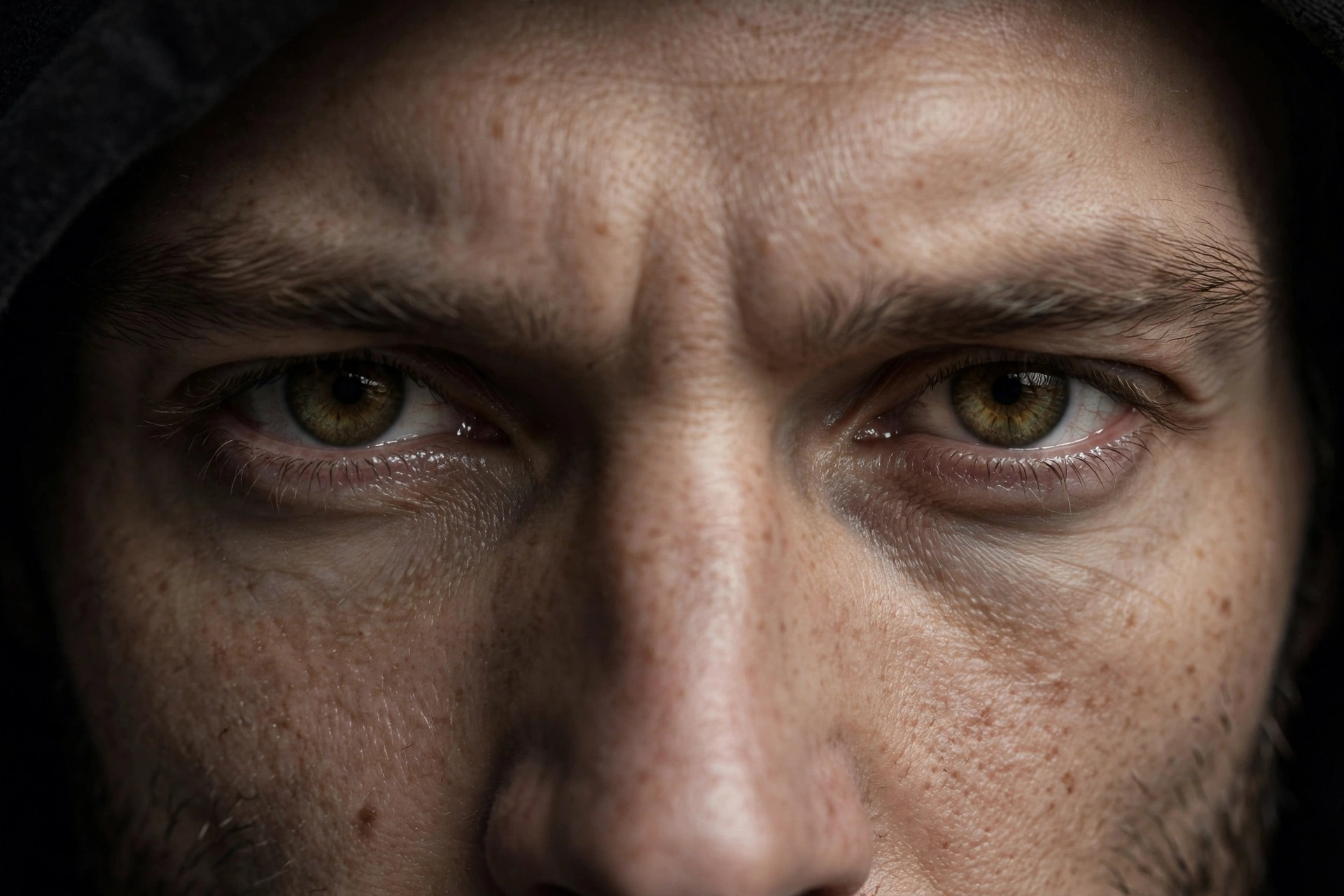
In looksmaxxing and PSL (physical scale looks) communities, “hunter eyes” describes eyes that sit relatively deep in the skull, with heavy upper eyelid hooding, a strong brow ridge casting shadow over the eye area, and typically a neutral or slightly positive canthal tilt — meaning the outer corner of the eye sits level with or slightly above the inner corner. The name comes from the intense, forward-focused gaze associated with predators: think of the stereotypical look of models and actors known for piercing stares.
The opposite term, “prey eyes,” is used in the same communities for the reverse: more prominent, rounder eyes with visible upper eyelid, negative canthal tilt (outer corners drooping below inner corners), and a softer, more surprised expression. Together, hunter eyes vs prey eyes form one of the most repeated dichotomies in looksmaxxing culture.
Two important caveats before we go further. First, this is slang invented on anonymous forums, not anatomy terminology you will find in a medical textbook. Ophthalmologists and plastic surgeons do not use “hunter eyes” as a diagnosis. Second, the hunter/prey framing carries a value judgment baked in — one is “good,” the other “bad” — which says more about forum culture than about how eyes actually look in real life.
The Anatomy Behind the Hunter Eyes Look
When people say “hunter eyes,” they are usually describing a combination of several separate anatomical features:
Deep-set eyes. The eyes sit further back in the orbital socket. This is largely determined by bone structure — the position of the orbital rims — and is mostly genetic. Deep-set eyes naturally create shadow around the eye area, which reads as intensity.
Upper eyelid hooding. A fold of skin and tissue that covers part of the upper eyelid, sometimes all the way to the lash line. Hooding varies enormously between people and tends to increase with age as skin loses elasticity.
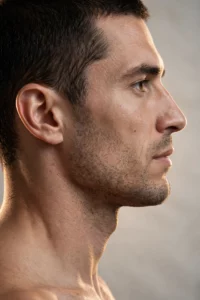
A prominent brow ridge. The bone above the eyes projects forward, casting a shadow over the eye area. This is a sexually dimorphic trait — it tends to be more pronounced in men — which is part of why the “hunter eyes” ideal is discussed almost exclusively in the context of male attractiveness.
Positive or neutral canthal tilt. The line from the inner corner to the outer corner of the eye tilts upward or sits flat, rather than drooping downward. A strongly negative tilt is associated with a tired or sad look regardless of other features. Our guide on how to measure canthal tilt walks through the photo method if you want to check your own.
Thick, low eyebrows. Dense brows sitting close to the eyes complete the look in most examples people post. This is the one component that is actually modifiable — grooming, and in some cases cosmetic enhancement, can change brow appearance without touching anything else.
None of these features is binary. They exist on spectrums, and the classic “hunter eyes” photos people share online show people who score high on all of them at once — which is rare, and which is exactly why cherry-picked examples are misleading.
Hunter Eyes vs Prey Eyes: The Honest Version
The meme version says hunter eyes are attractive and prey eyes are not, full stop. The honest version is more boring: eye shape is one feature among dozens, and its impact depends entirely on the rest of the face. Plenty of conventionally attractive people — models, actors, people you find good-looking in real life — have prominent, rounder eyes with visible eyelids. What reads as attractive in a face is overwhelmingly about overall harmony and proportion, not any single feature maxed out.
Why Is Everyone Talking About Hunter Eyes Right Now?
The TikTok #huntereyes trend is the main driver. Short videos rating eye shapes, “hunter eyes tutorials” (usually just squinting techniques or makeup), and before-and-after edits have pushed the term far beyond the forums where it was born.
There is also a feedback loop with AI face rating tools. People run their photos through face analysis apps, get eye-area scores, and go searching for what those scores mean — which leads them to looksmaxxing glossaries. If you want to understand how your own eye area actually measures, the honest move is a consistent, well-lit photo rather than a forum rating. Run one through our free AI face analysis tool on the homepage and you will get measurements of your actual features instead of a stranger’s opinion of your screenshot.
Can You Tell If You Have Hunter Eyes?
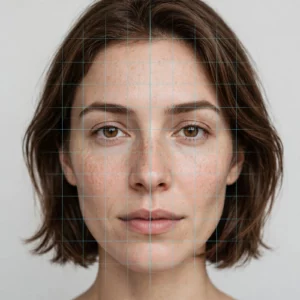
Roughly, yes — but do it honestly. Take a straight-on photo in even frontal lighting, neutral expression, no squinting, no eyebrow-raising. Look at: how much upper eyelid is visible (less visible = more hooded), whether your eyes sit deep or prominent relative to your brow, and your canthal tilt direction. Compare against the components above rather than against a filtered TikTok.
One thing to watch for: the “squintmaxxing” trick. Deliberately squinting narrows the eye aperture and mimics hooding, which is why so many “hunter eyes” selfies involve a half-squint. It changes the photo, not the face. A relaxed, neutral photo is the only honest baseline — and it is also the baseline any AI face rating needs to give you a meaningful reading.
What Actually Matters More Than Eye Shape
Here is the part the forums underplay: eye shape is a supporting actor. Research on facial attractiveness consistently points to bigger-picture factors — overall symmetry, clear skin, facial proportions, and how features work together — as far more influential than any single trait. A face with “prey eyes” but excellent harmony will read as more attractive to almost everyone than a face with textbook hunter eyes and poor proportions elsewhere.
Eye area does matter, but the levers that actually move it are unglamorous: sleep (under-eye darkness and puffiness change the eye area more than most people realise), grooming the brows, and lighting in photos. Those are within your control. Bone structure is not, and no amount of forum scrolling changes that.
If the eye-area rabbit hole is making you anxious rather than curious, step back. The hunter/prey framework was built by anonymous posters rating strangers’ photos for entertainment. It was never meant to be a mirror you hold up to yourself every morning.
Frequently Asked Questions
What are hunter eyes in simple terms?
Hunter eyes is looksmaxxing slang for deep-set, hooded eyes with a strong brow ridge and a neutral or positive canthal tilt — the intense, forward-gaze eye shape often seen in male models. It is internet terminology, not a medical term.
Are hunter eyes attractive?
Eye shape is one feature among many, and overall facial harmony matters far more. The ideal comes from specific online communities focused on male attractiveness; in real life, many attractive faces have rounder, more prominent eyes.
Can you get hunter eyes naturally?
The core components — eye depth, brow ridge projection, orbital bone structure — are genetic. What you can influence: brow grooming and sleep quality.
What is the opposite of hunter eyes?
In looksmaxxing slang, “prey eyes” — rounder, more prominent eyes with visible upper eyelid and often a negative canthal tilt. The dichotomy is a meme, not a scientific classification.
Do AI face rating apps score hunter eyes?
Some AI tools measure related features like eye spacing and canthal tilt, which overlap with what “hunter eyes” describes. But they measure geometry, not forum slang — and the photo you feed them matters more than the algorithm. Use a neutral, well-lit, straight-on photo.