How Accurate Are AI Face Rating Apps? An Honest Breakdown
You’ve seen them everywhere: upload a selfie, wait a few seconds, and an AI face rating app hands you a number — maybe a 7.2, maybe a “92/100.” It’s fun and instant, but before you let a score change how you feel about your face, ask: how accurate are AI face rating apps, really?
The short answer: they’re far better at measuring geometry than beauty. They can detect where your eyes, nose, and lips sit in a photo, but the leap from “your measurements are X” to “you’re an 8 out of 10” is where things get shaky. Here’s how they work, why scores vary, and what they genuinely can and can’t tell you.
How AI Face Rating Apps Actually Work
Most face rating apps follow the same pipeline under the hood, even when their interfaces look different. That pipeline is the key to their limits.
Facial Landmark Detection
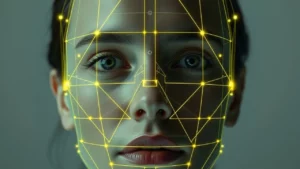
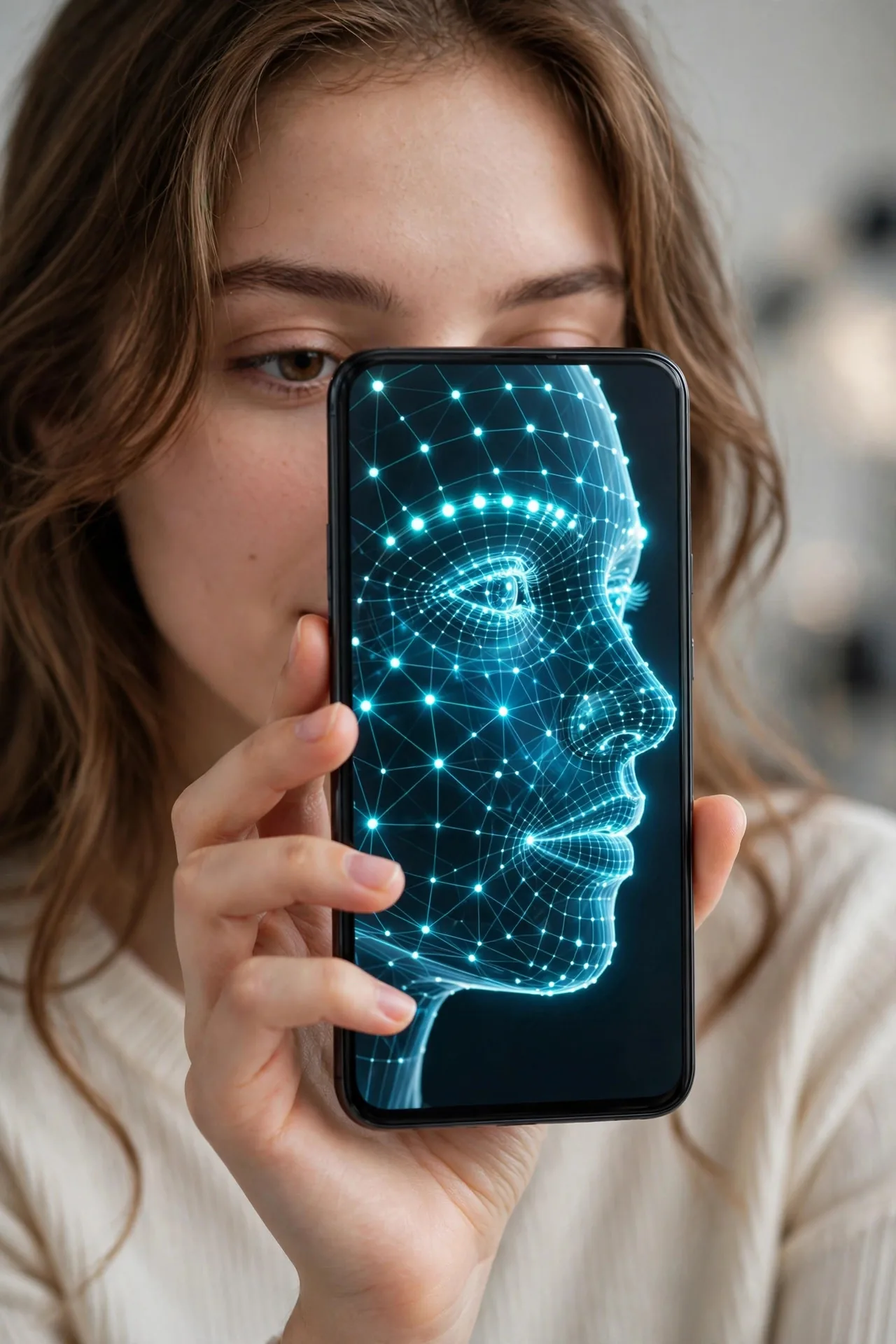
The first thing the app does is find your face and map it. Modern computer vision models place dozens — sometimes hundreds — of tiny “landmark” points along your features: the corners of your eyes, the bridge and tip of your nose, the outline of your lips, the curve of your jaw.
This part is genuinely impressive technology. Landmark detection is one of the most reliable steps in the chain, and it’s the same technique behind many legitimate applications, from camera focus to accessibility tools. Our AI face rating page explains how landmark-based measurements work.
Training Data and Scoring Models
Here’s where the score comes from. After mapping your landmarks, the app compares your proportions to patterns learned during training. That training data might be faces rated by human judges, measurements linked to attractiveness ratings, or — very commonly — proportions derived from idealized symmetry and ratio concepts.
The app then produces a score: how close your measurements are to whatever the model was trained to reward. The score reflects the training data’s biases and assumptions far more than any universal truth about beauty.
Why Your Score Changes Between Apps
Try the same selfie in three different AI face rating apps and you’ll very likely get three different scores — sometimes wildly different. This isn’t a bug; it’s a natural consequence of how these tools are built.
First, every app trains on different data. One might be trained mostly on faces rated by a specific demographic; another on idealized ratios — the kind our golden ratio face calculator measures — from cosmetic surgery literature; a third on social media photos from a particular region. Each dataset bakes in different ideas about what a “good” face looks like — a known problem in anthropometry, the study of human body measurements.
Second, apps measure different things. Some weight symmetry heavily, others focus on proportion ratios like eye spacing relative to face width, and others blend many measurements into a proprietary formula. There’s no agreed-upon standard for what an AI attractiveness score should measure, so developers each make their own choices.
Third, the scales aren’t comparable. A “7.5 out of 10” on one app and “82 out of 100” on another aren’t the same quantity on different scales — they’re different quantities entirely. (The PSL rating scale from looksmaxxing communities is yet another incompatible system.)
If you get a 6 on one app and an 8 on another, neither is “wrong.” They’re just answering different questions.
The Biggest Sources of Inaccuracy
Beyond score-to-score variation, several factors can push any single app’s result far from anything meaningful.
Training-Data Bias
This is the most discussed — and most real — limitation. AI models learn from the faces they were trained on, and those datasets are rarely balanced. If a model’s training data skews toward certain ages, genders, ethnicities, or skin tones, it will tend to score faces resembling its training data more favorably and faces that don’t less favorably.
Researchers studying facial analysis systems have repeatedly raised concerns about demographic bias: systems performing differently across groups. Many consumer apps don’t publish their training data at all, so you have no way of knowing whose faces the app “expects” to see. That’s reason enough not to treat a low score as a verdict on your appearance.
Photo Quality and Camera Distortion
The biggest variable you control is the selfie itself. Lighting, angle, distance, and expression can swing a score dramatically:
- Angle and distance: Shooting very close up with a wide-angle phone lens distorts proportions — noses look larger, faces look narrower. Move the camera farther away and the same face measures differently.
- Lighting: Harsh shadows shift where landmarks land; flat, even lighting gives the most consistent map.
- Expression: A smile moves landmarks around the mouth and eyes. A neutral expression measures most consistently.
- Image quality: Heavy filters, low resolution, or motion blur confuse the landmark detector — and bad landmarks mean bad scores.
The camera is part of the measurement instrument, and distorted input guarantees distorted output. Our selfie camera accuracy guide explains why.
What These Apps Can and Can’t Measure
It’s worth separating the legitimate measurements from the questionable conclusions.
What they’re reasonably good at: Mapping facial landmarks in a clear, front-facing photo. Comparing proportions — like eye spacing relative to face width — against a reference. Noticing left-right differences in landmark positions. With a good photo, the math is consistent.
What they can’t do: Define beauty. Attractiveness is cultural, personal, and contextual — it involves expression, grooming, style, movement, and voice, none of which a still photo captures. No training dataset can encode what everyone finds attractive, because no such standard exists. The score is always a proxy: a number standing in for a judgment the app can’t actually make.
Also worth remembering: ordinary facial asymmetry is completely normal. Almost every human face is slightly asymmetric, and small asymmetries don’t register in everyday social interaction. An app flagging your left eye as a fraction lower than your right is reporting geometry, not a flaw anyone notices.
Treat the Result as Entertainment
The healthiest way to use an AI face rating app is like a personality quiz: a bit of fun, not feedback on your worth. High score? Enjoy it lightly. Low score? Dismiss it just as lightly. It was never a measurement of you — only of how closely a photo matched one dataset’s patterns.
One more check before uploading your face anywhere: what happens to your photo afterward. Facial images are sensitive biometric data, so read the app’s data policy first. Our privacy guide for AI face analysis walks through what to look for. If you would rather experiment without creating an account, try a free face rating website with no sign-up.
Frequently Asked Questions
Can an AI face rating app tell me how attractive I am?
No — not in any objective sense. It can tell you how closely your measurements match the patterns in its training data. That’s a geometric comparison, not an attractiveness measurement. Real attraction involves far more than a still image can capture.
Why did I get different scores from different apps?
Each app trains on different data, measures different features, and uses a different scoring scale. They’re answering different questions with the same photo, so different answers are expected. None of them is an authority.
Can a bad photo change my score?
Absolutely. Angle, distance, lighting, expression, and image quality all change where the AI places its landmarks, and those landmarks determine the score. A close-up selfie can produce a noticeably different result than the same face photographed from farther away.
Are AI face rating apps biased?
Bias in facial analysis systems is a real, well-documented concern, and consumer apps rarely publish their training data — so you can’t easily check. Treat any score as a reflection of the app’s dataset, not of your face.
Should I worry if an app gives me a low score?
No. A low score only reflects how your photo’s measurements compare to one app’s training patterns — nothing about your appearance or worth. If a result is affecting how you feel, delete the app and stop checking.
Want to see what a landmark-based analysis looks like for yourself? Try the free AI face analysis on our homepage — clear photo, neutral expression, good lighting — and remember to read the number as entertainment, not evaluation.