
Eyeliner for Downturned Eyes: A Technique-First Tutorial
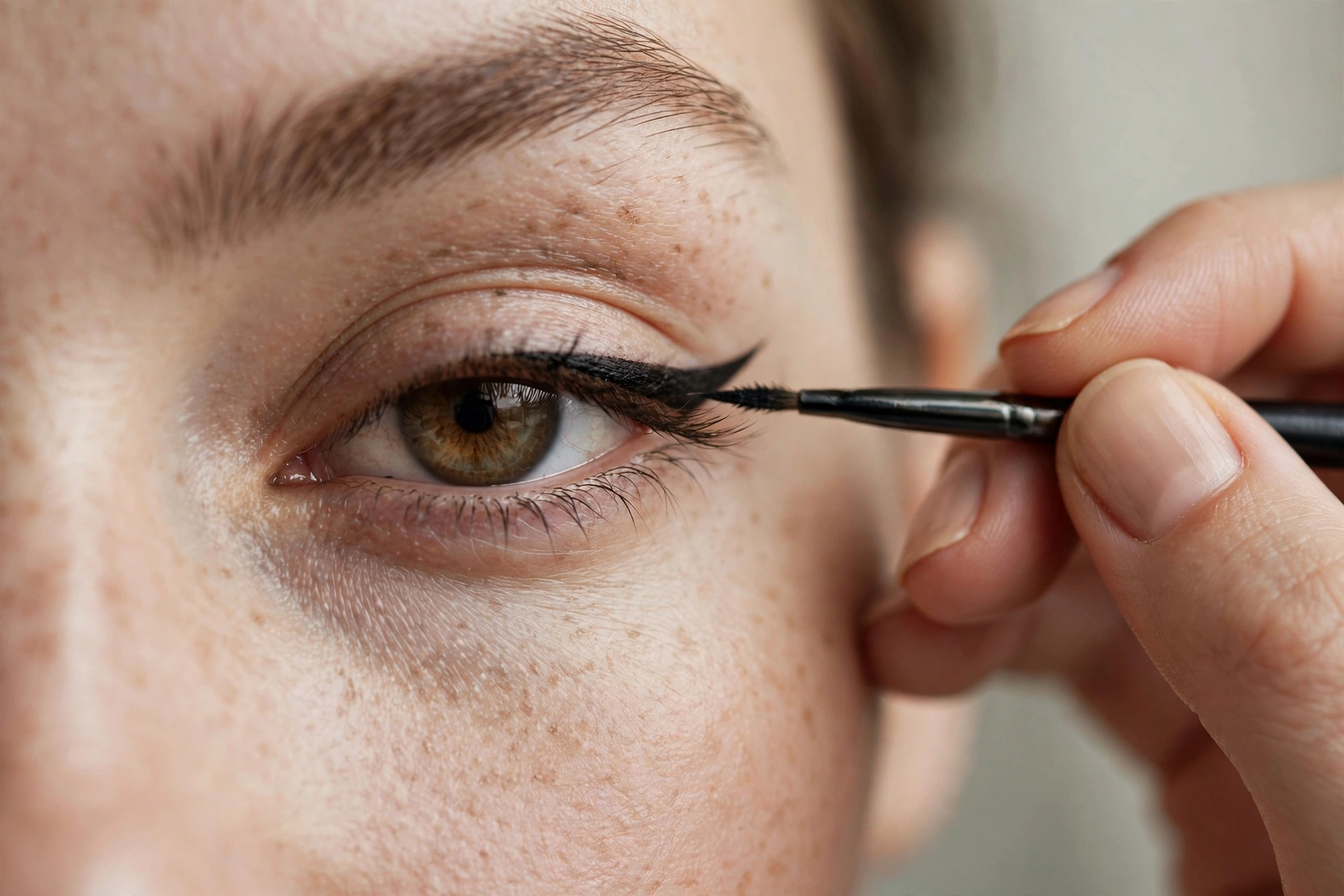
Downturned eyes — where the outer corners sit slightly lower than the inner corners — are elegant and expressive, and eyeliner can lift and define them beautifully. The catch: most winged-liner tutorials assume an upturned or neutral eye, so following the usual flick angle drags the outer corner further down instead of lifting it. This tutorial is technique-first: exact angles, mapping steps, and fixes, built specifically for downturned eyes.
Forget the myth that downturned eyes “can’t wear winged liner.” They can — the wing just needs a different trajectory. Work with the eye’s natural line instead of fighting it, and liner becomes your best lifting tool.
First: confirm your eye shape
Quick check in a mirror, looking straight ahead, face relaxed: draw an imaginary line from your inner corner to your outer corner. If the outer corner sits below the inner corner, your eyes are downturned. For the fuller technical picture — including how this relates to canthal tilt — our guide to measuring canthal tilt explains the angle properly.
Why this matters: downturned eyes carry visual weight at the outer corners, so liner techniques that extend horizontally or downward emphasise that weight. The entire tutorial below is built around redirecting the eye upward.
The tools that make this easier
- A fine angled brush with gel liner, or a felt-tip pen — both give the control this technique needs. Avoid thick crayons for wings; they drag and deposit unevenly.
- A small flat brush and concealer for cleaning and sharpening the wing edge.
- Waterproof formula if your outer corners water or your lids touch the liner line — smudging at the outer corner is the most common downturned-eye complaint.
The lifted-wing method, step by step
Step 1: Tightline the upper lash line
Start by filling between the upper lashes (tightlining) from inner to outer corner. This defines the eye without any visible line yet, and it means you need less liner on top — thinner liner lifts better than thick liner, which adds weight.
Step 2: Map the wing angle
Here is the technique that matters. Look straight into the mirror — not down, not up. Imagine a line extending from your lower lash line upward toward the tail of your eyebrow. Your wing should follow that upward trajectory, not the downward angle of your outer corner.
A practical way to find it: hold a brush handle from the outer corner of your nostril through the outer corner of your eye, extending upward. That upward angle — roughly toward the brow tail — is your wing direction. Mark a tiny dot where the wing tip should end, about 3–5mm beyond the outer corner.
Step 3: Draw the wing from the outside in
With the eye open and looking straight ahead, draw from the wing tip dot back toward the lash line, not from the lash line outward. This reversed direction gives you far more control over the angle. Keep the wing relatively short — a long horizontal wing extends the downturn. Lifted and compact beats long and droopy every time.
Step 4: Connect along the lash line
Now draw the lash-line portion: a thin line from the inner corner, gradually thickening slightly toward the outer third, meeting the wing. Keep the inner two-thirds thin — heavy liner across the whole lid weighs the eye down. The outer third carries the drama.
Step 5: Fill, sharpen, set
Fill any gaps between the wing outline and the lash line. Clean the wing’s lower edge with a tiny flat brush and concealer for a crisp line. Set with a matching eyeshadow pressed over the liner if your lids are oily — this locks it in for the day.
The outer-corner lift trick
If your eyes are strongly downturned, add this finishing detail: extend the upper edge of the wing slightly upward past where you’d expect, and keep the lower edge of the wing short. This asymmetry — longer top edge, shorter bottom edge — visually rotates the outer corner upward. It is subtle in the mirror and dramatic in photos.
Pair this with our eyeliner tips for round, hooded eyes if your downturned eyes also have hooded lids — the two techniques layer well.
Eyeshadow that supports the lift
Eyeliner does the heavy lifting, but shadow placement reinforces it:
- Keep the darkest shadow at the outer third of the lid, blended upward toward the brow tail — never downward past the outer corner.
- Place the lightest shimmer at the inner corner and centre of the lid. Light at the centre opens the eye; light at the downturned outer corner emphasises it, so keep outer-corner shimmer minimal.
- Blend transition shades in an upward windshield-wiper motion above the crease, lifting toward the temples.
Mascara and lashes
Curl lashes before mascara — curled lashes at the outer corners lift the eye’s whole read. Apply an extra coat to the outer-corner lashes, or use individual flare lashes concentrated at the outer third. Avoid full-strip lashes that are longest at the outer edge and sweep downward — they exaggerate the downturn. Lashes that are longest at the centre or outer-upward sweep complement the liner’s lift.
Mistakes that drag downturned eyes down
- Following the natural downward angle with the wing — the number-one error. The wing must angle upward, against the eye’s slope.
- Thick liner across the whole lid — adds weight; keep it thin until the outer third.
- Extending liner along the lower lash line to the outer corner — lower liner at the outer corner deepens the downturn. If you line the lower lashes, stop two-thirds of the way and keep it soft and smudged.
- Drawing the wing with eyes closed — the angle looks completely different when the eye opens. Always map and check with eyes open, looking straight ahead.
- Waterproof skipped on watery outer corners — smudged outer corners undo all your lifting work by midday.
Try it with your real proportions in mind
Makeup flatters most when it suits your actual face. For a neutral read on your features — including your eye angles — try our free AI face analysis tool on the homepage before you map your wings.
Frequently Asked Questions
What is the best eyeliner style for downturned eyes?
A lifted wing that angles upward toward the brow tail rather than following the eye’s downward slope. Keep the lash line thin through the inner two-thirds and let the outer third carry the definition.
Should downturned eyes avoid winged eyeliner?
No — they just need a different wing angle. A wing that extends horizontally or downward emphasises the downturn, but an upward-angled, compact wing lifts the outer corners beautifully.
How do I find the right wing angle for downturned eyes?
Look straight ahead in a mirror and follow an imaginary line from the lower lash line upward toward the tail of your eyebrow. Mark the wing tip with a tiny dot, then draw from the tip back toward the lash line for control.
Why does my eyeliner make my downturned eyes look sadder?
Usually because the wing follows the eye’s natural downward angle, or the liner is too thick across the whole lid. Redirect the wing upward, thin the inner portion, and avoid heavy lower-lash liner at the outer corner.
Can I wear eyeliner on the lower lash line with downturned eyes?
Yes, but keep it soft, smudged, and stop about two-thirds of the way out. A hard dark line running into the downturned outer corner deepens the droop.
Does mascara placement matter for downturned eyes?
Yes. Curl lashes first, concentrate mascara or flare lashes at the outer third angled upward, and avoid strip lashes that sweep downward at the outer edge — they exaggerate the downturn.