Contouring for Oblong Face: The Guide to Visually Shorten It
An oblong face — noticeably longer than it is wide, with a long forehead, extended midface, or lengthy chin — benefits from contouring more than almost any other face shape. The strategy is beautifully simple: while most contouring adds definition, contouring for an oblong face is about shortening. Strategic shadow at the top and bottom of the face visually compresses length, bringing the proportions closer to balance.
This guide gives you the exact placement, a beginner-friendly routine, and the mistakes that accidentally make long faces look longer. For the same light-and-shadow logic on other shapes, see our contouring guide for square faces and our beginner’s round-face contour routine.
Oblong Face: The Quick Refresher
Oblong (sometimes called rectangular) faces have length as their dominant feature: the forehead, cheeks, and jaw are similar in width, but the face measures clearly longer than wide. Common traits include a high forehead, a longer nose or extended chin, and relatively flat, narrow cheeks. The contouring goal is to break up that vertical expanse — creating the illusion that the face is a touch shorter and more oval.
The Core Principle: Shadow Shortens
Contour creates receding shadow. Placed horizontally across the top of the forehead (along the hairline) and across the bottom of the chin, it visually “cuts off” length at both ends — like cropping a photo. Meanwhile, keeping the sides of the face relatively light preserves (or even suggests) width. Shorten vertically, protect horizontally: that is the entire strategy.
Your Toolkit
- Matte cream or powder contour one to two shades deeper than your skin tone. Either format works; cream blends more forgivingly.
- A fluffy blending brush for the broad forehead and chin areas, plus a damp sponge for seamless edges.
- Highlighter or light concealer for the horizontal emphasis steps.
- Blush — placement matters enormously on oblong faces (more below).
Step-by-Step: Visually Shortening an Oblong Face
Apply over foundation on prepped skin.
1. Shade the forehead hairline
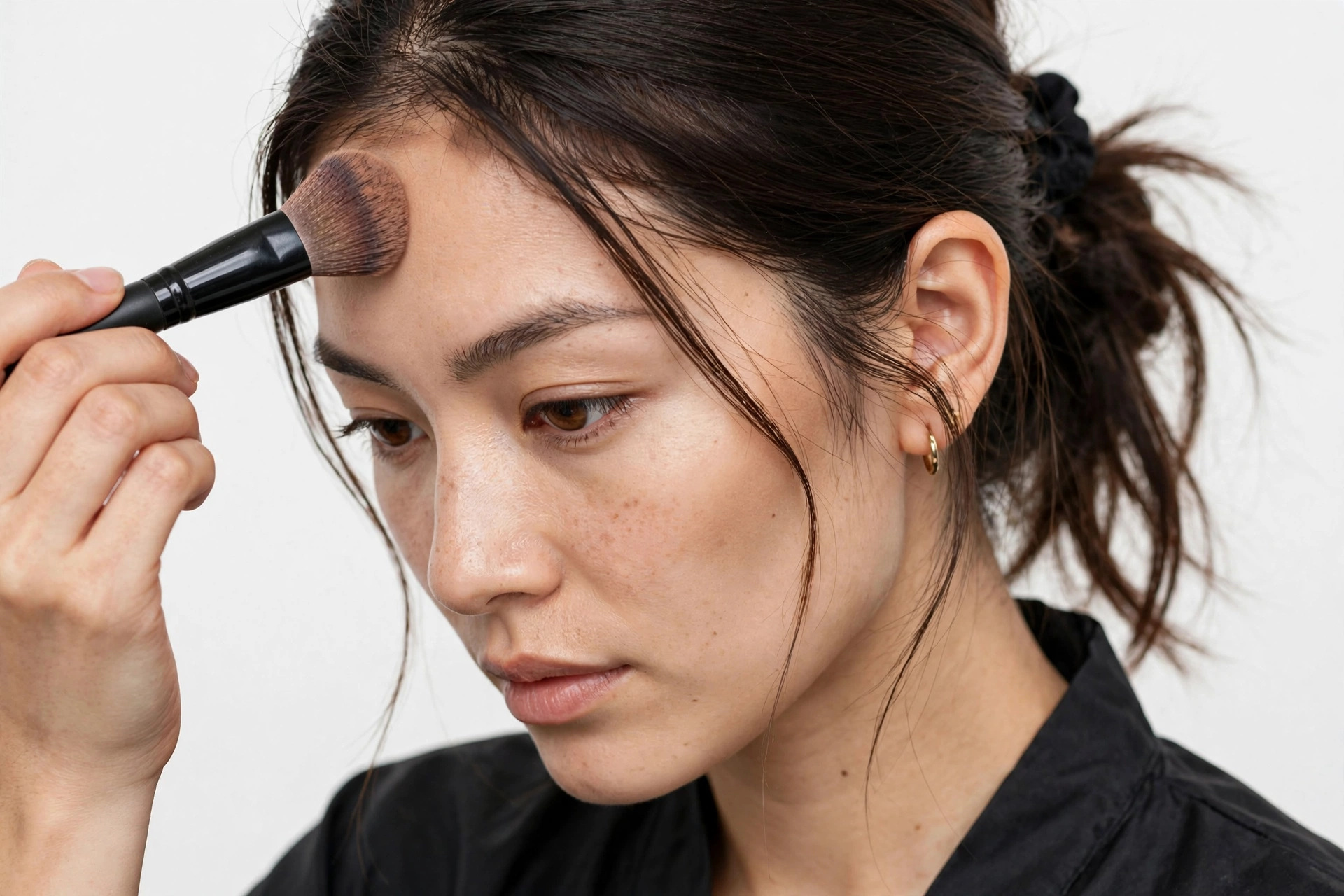
Apply contour along the entire hairline, from temple to temple, in a band roughly a finger-width deep. This is the highest-impact step: darkening the top edge of the face visually lowers the hairline and shortens the forehead. Blend upward into the hairline so no line shows — the shadow should fade, not stop.
2. Shade the chin and jawline underside
Apply contour across the bottom of the chin and along the underside of the jawline, blending down into the neck. This “crops” the lower end of the face the same way step one cropped the top. If your chin is the longest feature, spend extra blending time here — it carries more of the shortening work.
3. Keep the sides light
Resist the urge to contour the sides of the forehead or the cheek hollows deeply. On oblong faces, side contouring narrows an already narrow face and emphasizes length — the exact opposite of the goal. If you want cheek definition, keep it minimal and placed higher than usual.
4. Highlight horizontally
Apply highlighter across the tops of the cheekbones in a horizontal sweep (not angled upward), on the center of the chin, and sparingly down the nose bridge. Horizontal highlighting emphasizes width, which counterbalances length. This is the step most tutorials skip for oblong faces, and it matters.
5. Place blush for width, not length
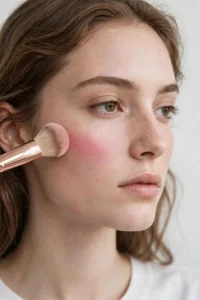
Apply blush on the apples of the cheeks and sweep it outward toward the temples rather than upward. The outward direction adds the illusion of width. Our makeup guide for oblong faces covers blush, brows, and lips as a complete routine if you want the full picture.
6. Blend everything seamlessly
Use the damp sponge over all contoured areas with a bouncing motion. Check your work in natural light — indoor lighting hides harsh lines that daylight reveals.
Mistakes That Make Oblong Faces Look Longer
- Vertical highlighting: a strong highlight stripe down the full nose and center of the face draws the eye vertically. Keep vertical highlighting minimal and let horizontal cheek highlighting do the work.
- Contouring the temples and sides: hollows on the sides of an already narrow face exaggerate length. Leave the sides alone.
- Upward-swept blush: blush angled sharply upward elongates; sweep outward instead.
- Over-contouring the nose: long, heavy nose contour lines extend the midface visually. If you contour the nose, keep the lines short and soft.
- Skipping the chin: beginners often shade the forehead and forget the chin, shortening only one end — which just relocates the imbalance.
Choosing the Right Contour Shade
The wrong shade undoes good placement. Test contour on your jawline in natural daylight: the right shade looks like a soft shadow, not like makeup. As a rule, go one to two shades deeper than your natural skin tone with a neutral-to-cool undertone — warm, orangey contours read as bronzer and defeat the shortening illusion. If you are very fair, even one shade deeper is enough; deeper skin tones can handle richer pigment but still need that matte, shadow-like finish. When between two shades, choose the lighter one — subtlety is the whole game on oblong faces. Powder formulas are easier to sheer out if you over-apply; creams demand a lighter hand but melt more naturally into skin.
The 5-Minute Everyday Version
Short on time? The two moves that matter most are the forehead hairline band and the chin shading — they do the heavy lifting of visually shortening the face. Blend both well, add your usual blush swept outward, and skip the detailed highlighting. You will get most of the balancing effect in a fraction of the time, which makes the routine sustainable enough to actually use daily.
Frequently Asked Questions
Where should you contour to make a long face look shorter?
Across the forehead hairline (temple to temple) and across the bottom of the chin and jawline underside. These two horizontal bands of shadow visually compress the face’s length from both ends.
Should oblong faces contour their cheekbones?
Lightly or not at all. Deep cheek-hollow contouring narrows the face, which emphasizes length on an oblong shape. If you want definition, keep it subtle and placed high on the cheekbone.
Does blush placement matter for oblong faces?
A great deal. Blush swept outward from the apples toward the temples adds the illusion of width, which balances length. Blush angled upward has the opposite effect.
Can contouring really make my face look shorter?
Visually, yes — convincingly so in photos and in person. It is an optical effect, not a structural change: shadow at the top and bottom of the face reads as “less face” to the eye. It washes off at the end of the day.
Cream or powder contour for oblong faces?
Either works for the technique; the choice is about skill level. Cream is more forgiving for beginners and blends seamlessly on the broad forehead area, while powder suits oily skin and those comfortable with brushes.
The Bottom Line
Oblong-face contouring has one job: shorten. Shade the hairline, shade the chin, highlight horizontally, and leave the sides alone. Four moves, and the face reads noticeably more balanced.
Curious about your own facial proportions before you start? Try our free AI face analysis tool on the homepage — upload a photo for an entertaining breakdown of your facial thirds, symmetry, and proportions.