Face Shape Detector Online Free: AI vs Manual vs Quiz Methods Compared
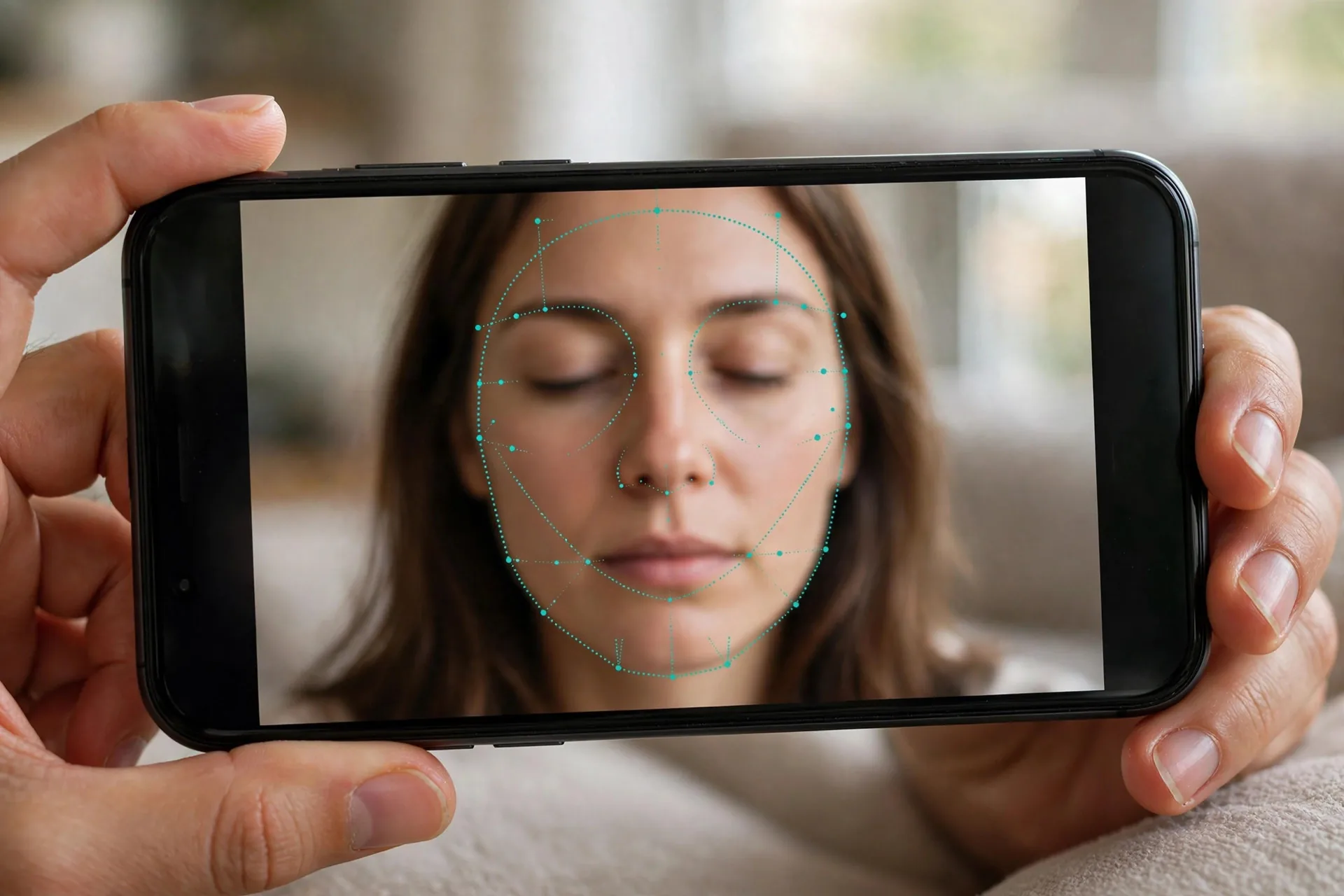
Wondering whether your face is oval, round, square, heart, diamond, or oblong? A face shape detector online free of charge promises to answer that from a single selfie. But not all detectors work the same way. Some use artificial intelligence to map your features automatically, some walk you through measuring your own face, and some ask you quiz questions about what you see in the mirror.
Each approach has real strengths and weaknesses, and understanding them first will save you from trusting a result built on shaky ground.
How Face Shape Detectors Work
Every face shape detector, regardless of style, answers the same question: which standard category does your structure most closely match? Most tools use oval, round, square, heart, diamond, and oblong.
To decide, a detector looks at the same features a stylist would notice in person. Learn the shapes as concepts first in our face shape detection guide:
- Face length versus face width. The single biggest signal. An oval face is longer than it is wide; a round face is roughly as wide as it is long.
- Forehead width. Measured across the brow, this separates heart and triangle shapes from square and oblong ones.
- Cheekbone width. The widest part of most faces, anchoring diamond and round proportions.
- Jawline width and shape. A narrow, pointed jaw points to heart or diamond; a wide, angular jaw suggests square; a rounded jaw suggests round or oval.
- Chin shape. Pointed, rounded, or squared — often the tiebreaker between similar categories.
The Three Main Detection Approaches
Free online detectors generally fall into three categories. Here is how each one works, what it does well, and where it falls short.
AI-based detectors
AI-based detectors ask you to upload a photo, then use a trained model to find facial landmarks automatically — eye corners, jaw edges, forehead outline — and measure the distances between them. From those measurements, the tool computes the proportions above and classifies your face into the closest category.
Strengths: They are fast, objective, and consistent — the same photo usually produces the same result. They remove the guesswork of judging your own features, which is genuinely hard to do without bias. On a good photo, the measurements are more precise than anything you could do by eye.
Weaknesses: They depend completely on photo quality. A tilted head, a wide-angle selfie lens, hair over the forehead, or a smile will shift the landmarks and can flip the result from one category to another. Some tools also say little about how the classification decision was made.
Manual measurement guides
Manual guides do not analyse a photo for you. They teach you to measure your own face — with a tape measure or ruler — and compare your numbers against the definitions of each shape. You record forehead, cheekbone, and jaw widths plus face length, then match the pattern to a category.
Strengths: Measuring directly on your face avoids every camera-related distortion. You also learn the proportions behind the categories, which makes the result more meaningful and easier to verify.
Weaknesses: Self-measurement is fiddly. Finding the exact widest point of your cheekbones with a tape measure is harder than it sounds, and small errors can push you into the wrong category. It takes more patience than the other approaches.
Quiz-style tools
Quiz-style tools ask a series of questions about your face: Is your forehead wider than your jaw? Is your chin pointed or rounded? Is your face longer than it is wide? Your answers combine to produce a classification.
Strengths: They are quick, need no photo, and force you to look at your face closely. Nothing is uploaded, so there are no privacy concerns.
Weaknesses: They rely entirely on your own judgement, and most people are not reliable judges of their own features. The questions are simplified — real faces rarely match textbook descriptions — so ambiguous faces often get ambiguous answers.
AI vs Manual vs Quiz: Side-by-Side Comparison
| Factor | AI detector | Manual measurement | Quiz |
|—|—|—|—|
| Speed | Seconds | 10–20 minutes | 2–3 minutes |
| Effort | Upload a photo | Measure carefully | Answer questions |
| Objectivity | High (measures pixels) | High (measures face) | Low (self-judgement) |
| Main accuracy risk | Bad photo, distortion | Measurement mistakes | Biased self-assessment |
| Privacy | Photo is uploaded | Nothing leaves your room | Nothing is uploaded |
| Best for | Quick, precise first reading | Verifying a result | Casual exploration |
No approach is universally best. A sensible strategy is to combine them: get a quick AI reading, then sanity-check it with a couple of manual measurements. If both agree, you can be fairly confident.
Accuracy Tips: Getting a Reliable Reading
Whichever method you use, these tips will improve your result:
- Use a straight-on photo. Face the camera directly with your chin level. Even a slight turn makes one side look wider and misleads every type of detector.
- Pull your hair back. Your hairline defines the top of the face, and hair over the forehead or jawline hides the landmarks any analysis depends on.
- Keep a neutral expression. Smiling widens the cheeks and changes the jawline; raised eyebrows shift the forehead. A relaxed, neutral face gives the truest proportions.
- Take the photo from a distance. Hold the camera at least an arm’s length away — or better, prop it up and use a timer from a couple of metres back. Close-range selfies distort proportions through lens perspective. Our guide on selfie camera accuracy explains how this distortion works.
- Use even lighting. Harsh side lighting creates shadows that obscure the true edges of the face. Soft, front-facing light is ideal.
- Measure twice. Take each manual measurement twice and average the results. With an AI tool, try two different photos and see whether they agree.
One thing worth remembering: face shape is a guide for hairstyles, glasses, and styling choices — not a fixed identity. Faces sit on a spectrum, and many fall between two categories. And everyday asymmetry is normal; a facial symmetry check shows just how ordinary small left-right differences are.
Frequently Asked Questions
Which type of face shape detector is most accurate?
An AI-based detector with a good, straight-on photo is usually the most precise, because it measures actual distances rather than relying on self-judgement. But its accuracy collapses with a poor photo. Careful manual measurement on your own face can match or beat it.
Can my face shape change over time?
Yes. Weight changes, ageing, and muscle development can alter the apparent shape. It is worth re-checking every year or two, especially before a big styling decision like a new haircut.
What if I get different results from different tools?
That is common and usually comes down to photo differences or different classification rules. Compare the underlying measurements rather than the labels — if two tools agree your face is longer than wide with a narrow chin, the label disagreement matters less.
Do I need to pay for an accurate face shape analysis?
No. Free AI-based detectors and manual measurement guides are perfectly capable of giving a reliable answer. Paid tools may add nicer reports, but the core measurement task does not require payment.
Try It Yourself
The easiest way to put this into practice is to run a photo through an automated analysis, then verify the result with the tips above. Our free AI face-analysis tool on the homepage detects your face shape and measures your facial proportions from a single selfie — no account needed.
Featured image alt text: Face Shape Detector Online Free: AI vs Manual vs Quiz