Does Sleeping on Your Side Cause Facial Asymmetry? (Honest Guide)
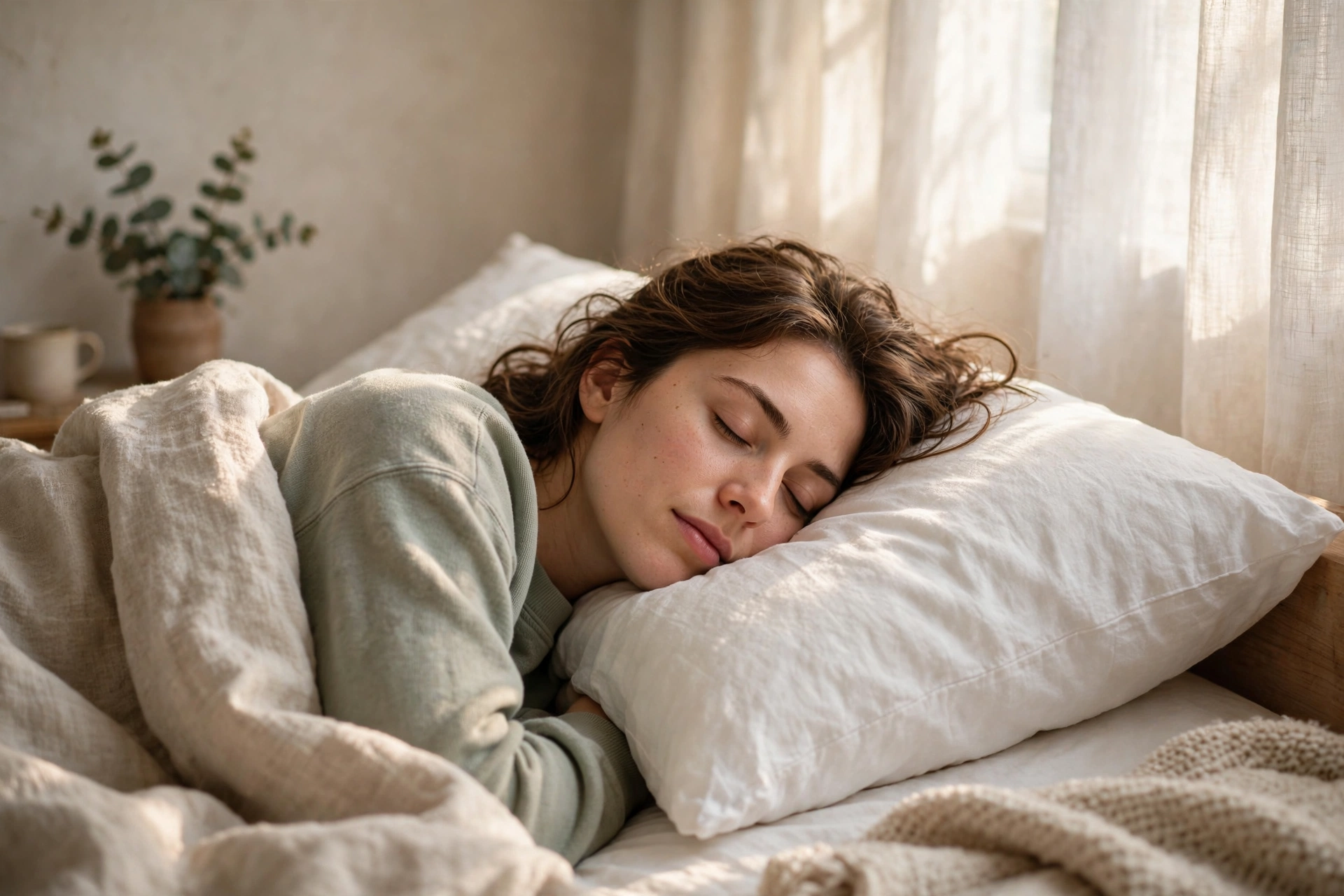
It is one of TikTok’s favorite anxieties: the idea that years of sleeping on your side have slowly squashed one side of your face into asymmetry. The honest answer is more reassuring — and more nuanced — than the trend suggests. Side sleeping almost certainly does not reshape your facial bones, but it can affect how symmetrical your face looks, especially in the morning.
This guide gives you the evidence-based picture without inventing studies or statistics: what side sleeping can and cannot do, what actually causes facial asymmetry, and the practical habits worth trying. Nothing here is medical advice — if you have jaw pain, bite problems, or sudden facial changes, see a professional.
The Short Answer
Ordinary side sleeping is very unlikely to cause structural facial asymmetry in adults. Adult facial bones do not remodel under the mild, distributed pressure of a pillow the way growing bones respond to sustained orthodontic force. What side sleeping can do is create temporary, visible unevenness — morning puffiness on the pressed side, sleep creases, and fluid redistribution — which photographs as asymmetry and fuels the worry.
So the fear is understandable, but it mistakes a temporary appearance effect for a structural one. Let us unpack why.
Why the Claim Sounds Plausible (But Falls Short)
The idea has a kernel of logic: sustained pressure over time can shape tissue. Orthodontics works exactly this way — gentle, constant force guiding teeth and even jaw growth over months and years. So it feels intuitive that eight hours of nightly cheek-on-pillow pressure might do something similar.
The problem is the comparison does not hold up. Orthodontic force is precisely directed, continuous, and applied to growing or adaptable structures under professional supervision. Pillow pressure is diffuse, intermittent (you shift in your sleep), low-force, and applied to a mature adult skull — one of the most rigid structures in your body. There is no solid research showing that normal sleep position meaningfully reshapes adult facial bone, and the absence of such evidence across decades of sleep and dental research is itself telling. Claims to the contrary on social media come with dramatic before-and-afters, not data.
What Side Sleeping Can Actually Affect
That said, side sleepers are not imagining everything. Several real, temporary effects are well within what nightly pressure can do:
Morning puffiness and fluid shift
Lying on one side lets gravity and pressure pool fluid in the lower cheek and under-eye area on that side. The result is a puffier, slightly fuller look on the slept-on side each morning — which reads as asymmetry in the bathroom mirror and in early photos. It typically fades within an hour or two of being upright.
Sleep creases and skin compression
Pressing your face into a pillow for hours can etch temporary creases, especially with age as skin loses elasticity. These are skin-level and transient, not structural, but they contribute to the “one side looks different” impression.
Muscle tension patterns
Chronic one-sided sleeping can come with one-sided jaw clenching or neck tension for some people, which may make one side of the lower face look or feel slightly different. This is muscular and postural — addressable with habits — not bone change.
What Actually Causes Facial Asymmetry
If your asymmetry is noticeable beyond morning puffiness, the real causes are almost always elsewhere:
- Natural development: everyone grows slightly unevenly; most asymmetry is simply how your face formed. Our guide on facial symmetry explains how normal this is.
- Dental and bite factors: uneven bite, teeth grinding, or jaw joint issues can create visible imbalance — dental territory, not sleep territory.
- Muscle habits: chewing mostly on one side, habitual expressions, or old injuries can build one side slightly differently.
- Injury or medical conditions: past fractures, Bell’s palsy, or other conditions can cause real asymmetry that deserves professional evaluation.
If you are trying to tell normal variation from something worth checking, our guide on how to know if your face is symmetrical walks through honest self-assessment — and our piece on fixing asymmetrical face habits naturally covers the evidence-informed daily habits that genuinely help appearance.
Practical Habits If It Bothers You
You cannot — and do not need to — “fix” your bones with sleep tricks. But these habits reduce the temporary effects side sleeping creates:
- Alternate sides if you are a dedicated side sleeper, so neither side takes all the pressure.
- Try back sleeping if you can fall asleep that way; a supportive pillow under the knees helps many people adjust. Do not sacrifice actual sleep quality for position — poor sleep ages your face far more than pillow pressure.
- Use a smooth pillowcase (silk or satin reduces friction and creasing) and keep your pillow supportive so your neck stays neutral.
- Morning de-puff routine: cold water, gentle massage, and staying hydrated clear overnight fluid faster.
- Do not buy “anti-asymmetry” sleep gadgets promising to reshape your face overnight. There is no mechanism by which they could work, and some can disrupt sleep.
When to Talk to a Professional
Sleep position is a comfort topic, not a medical one — but facial asymmetry sometimes is. See a dentist, orthodontist, or doctor if you notice jaw pain, clicking, or locking; a bite that feels shifted; numbness or weakness on one side; or asymmetry that appeared suddenly or is getting worse. Sudden facial changes can occasionally signal something needing prompt attention.
Frequently Asked Questions
Will switching to back sleeping fix my asymmetry?
It will reduce morning puffiness unevenness, which is the part of “asymmetry” most side sleepers are actually seeing. It will not change your underlying bone structure — but for most people, that structure was never the problem.
Is there any study proving side sleeping reshapes the face?
No credible study demonstrates that normal side sleeping structurally reshapes adult faces. Social media claims rely on anecdotes and angled photos, not research. Be skeptical of anyone citing “studies” without naming them.
Does sleeping on your side cause wrinkles?
It can contribute to sleep creases — temporary lines from skin compression — and over many years, repeated creasing in the same spots may play a small role in fine lines. Silk pillowcases and back sleeping minimize this, but aging, sun, and genetics matter far more.
Which sleeping position is best for your face?
Back sleeping creates the least facial pressure and fewest creases, making it the theoretical favorite. But the genuinely best position is the one in which you sleep well — chronic poor sleep shows on the face far more dramatically than any pillow ever could.
Can a special pillow prevent facial asymmetry?
No pillow can reshape or “protect” your facial structure in any meaningful structural sense. Supportive, comfortable pillows are great for neck alignment and sleep quality — buy one for those reasons, not for asymmetry fears.
The Bottom Line
Sleeping on your side does not meaningfully cause facial asymmetry — it causes temporary morning unevenness that looks like asymmetry in the mirror. Alternate sides or try your back if it bothers you, keep perspective on what is normal, and save your worry for things that actually change faces: sun, sleep quality, and dental health.
Curious how balanced your features actually measure, beyond morning-mirror anxiety? Try our free AI face analysis tool on the homepage — upload a photo for an entertaining, honest breakdown of your facial proportions. Built for curiosity, not comparison.