Lipstick Shades for Round Face Shape: An Undertone-First Guide
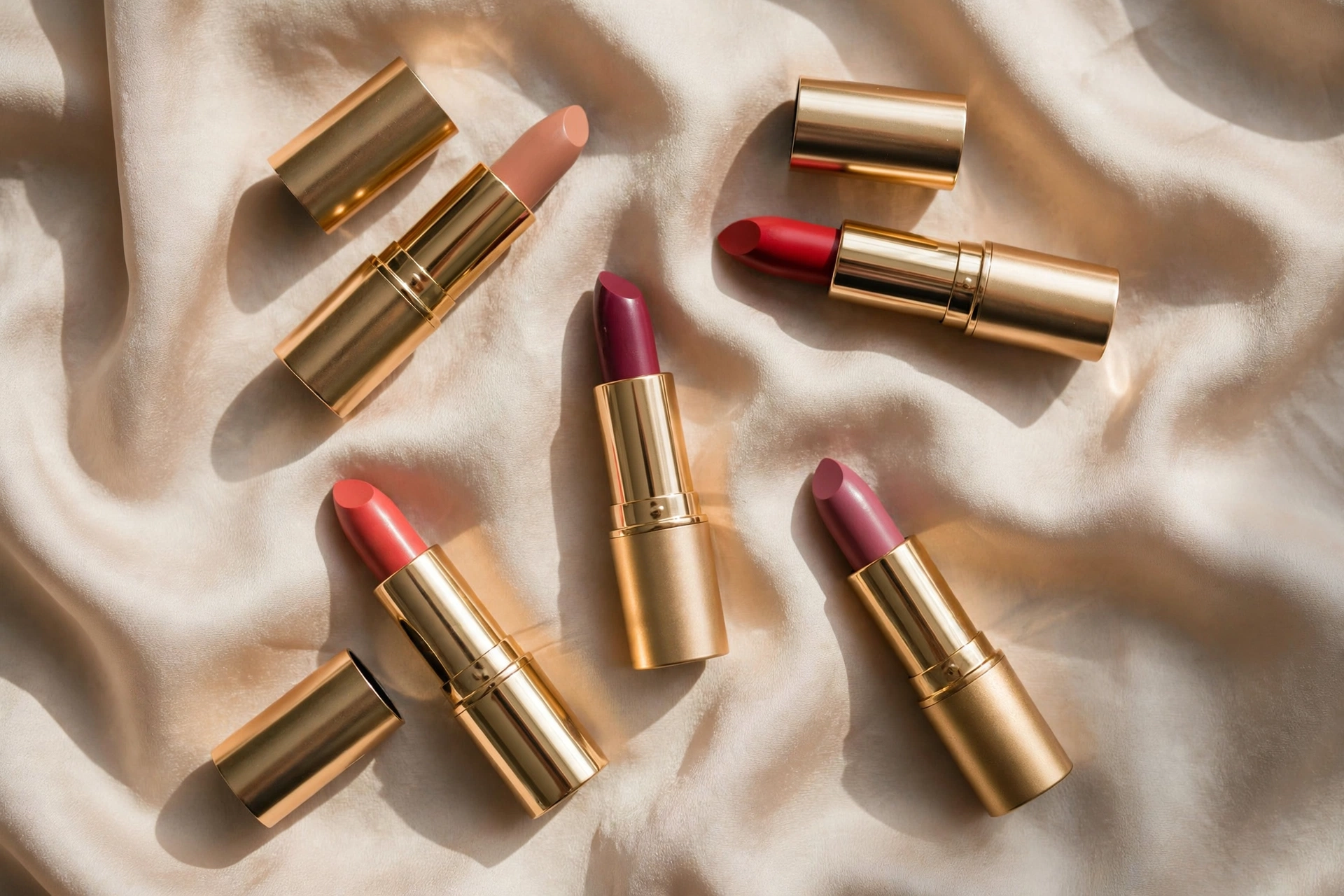
The lipstick shade that flatters a round face has almost nothing to do with face shape and everything to do with undertone. A round face — full cheeks, soft angles, width and length roughly equal — is flattered by lip colour chosen for your skin’s warm, cool, or neutral undertone, not by some mythical “slimming” shade. Get the undertone right and nearly any colour family works; get it wrong and even a beautiful lipstick looks off.
This guide takes an undertone-first approach: find your undertone, match your shade family, then use finish and placement to add dimension to the lips. No rules about what round-faced women “can’t” wear — just the colour logic that makes lipstick look expensive on you.
Step one: find your undertone
Your undertone is the subtle hue beneath your skin’s surface — warm, cool, or neutral — and it does not change with tanning or seasons. If you are not sure of yours, test with the vein check (greenish veins suggest warm, blue/purple suggest cool) and the jewelry check (gold flatters warm, silver flatters cool) in natural daylight — and our blush placement guide for oval faces applies the same undertone-matching logic to cheek colour.
Quick summary here: if gold jewelry flatters you and your veins look green, you are likely warm. If silver wins and veins look blue or purple, you are likely cool. If both metals look fine and you see a mix, you are likely neutral. Knowing this single fact eliminates about half of all bad lipstick purchases — and it pairs well with our guide to making a round face look slimmer with makeup, which covers the same undertone-aware colour logic.
The most flattering shade families by undertone
Warm undertones
Warm skin glows in shades with a golden, peachy, or orange-leaning base. Think warm nudes (caramel, terracotta nude), coral reds, brick reds, warm berries with a brown base, and peachy pinks. True blue-reds can fight warm skin and make teeth look yellow — lean into shades with warmth in them and your whole face looks lit from within.
Cool undertones
Cool skin comes alive with blue- or pink-based shades: classic blue-reds, cherry reds, cool pinks, berry tones, mauves with a purple base, and plums. Warm orangey shades can look garish against cool skin and make the complexion read sallow — keep the colour temperature matched and everything harmonises.
Neutral undertones
Neutral undertones have the widest playground: most shade families work, from true reds to rose nudes to soft berries. Your filter is intensity rather than temperature — choose depth based on how much contrast you want with your skin tone, and let occasion guide the rest.
Finish matters as much as colour
For a round face, where features are soft and curved, lip finish adds the dimension that keeps lipstick from sitting flat. A few practical notes:
- Satin and cream finishes are the most forgiving on most lips — comfortable, dimensional, and flattering at every age.
- Matte lipsticks create definition and can make lips look more structured, which some people love with a round face. Prep lips first (exfoliate, balm, blot) so matte doesn’t settle into lines.
- Gloss and sheer tints add fullness and light — lovely on thinner lips, and they keep the overall look soft and youthful.
- Frosty or very pale nudes can wash out the mouth area and flatten the face’s lower half. If you love nude, go one shade deeper than your natural lip colour and add gloss or liner for definition.
Placement tricks that add dimension
Colour choice does the heavy lifting, but placement refines it:
- Define the edges. A lip liner in a shade close to the lipstick (not darker) sharpens the lip line and adds structure — especially flattering with soft round features. Our guide on lipstick shades for oval faces covers liner-matching logic in more depth.
- Centre-light trick. Dab a slightly lighter shade or gloss just at the centre of the lips after applying your main colour. The light catches the centre, lips look fuller and more dimensional.
- Avoid overlining everywhere. A subtle overline on the cupid’s bow is fine; overlining the whole lip can look artificial in daylight.
- Blot and layer. One layer, blot on tissue, then a second layer. This builds lasting colour without the heavy, cakey look that emphasises lip texture.
Shade picks by occasion
Everyday nudes
The perfect nude is not one shade — it is your natural lip colour, deepened slightly, in your undertone’s temperature. Warm: caramel and toffee nudes. Cool: rose and mauve nudes. Neutral: true beige-rose. A nude with the wrong undertone is what makes people say “nude doesn’t suit me” — it does, once matched.
Bold reds for evening
Red is undertone-matched confidence. Warm undertones: tomato and brick reds. Cool undertones: blue-reds and cherry. Neutral: true reds sit perfectly. Test reds on your lips, not your hand — hand skin has a different undertone and lies to you.
Berries and plums for autumn/winter
Deeper shades add beautiful contrast against round faces in low light. Warm: warm berries with brown bases. Cool: plums and cool berries. These shades photograph beautifully and need minimal other makeup — let the lip be the statement.
Pinks for daytime
Pink is the most undertone-sensitive family of all. Warm: peachy and coral pinks. Cool: blue-pinks and fuchsia. Neutral: true rose pinks. When a pink looks “wrong,” it is almost always a temperature mismatch.
What to stop believing
- “Round faces should avoid dark lipstick.” False. Dark shades add contrast and structure — many round-faced women look stunning in deep berry. Undertone-matched dark shades are flattering, full stop.
- “Nude lipstick slims the face.” No lipstick slims anything; that framing sells insecurity. Nude is a beautiful neutral choice, not a corrective one.
- “You can only wear one red.” You can wear every red — you just look best in the ones that match your undertone.
Try it with your real proportions in mind
Makeup flatters most when it suits your actual face. For a neutral read on your features before you shop for shades, try our free AI face analysis tool on the homepage — it checks face shape and key proportions in seconds.
Frequently Asked Questions
What lipstick shade is best for a round face?
The shade that matches your undertone — warm, cool, or neutral — matters far more than face shape. Undertone-matched shades in any colour family flatter round faces; mismatched-temperature shades look off regardless of face shape.
Do dark lipsticks suit round faces?
Yes. Dark, undertone-matched shades add contrast and definition, which many round-faced women love. The myth that round faces must avoid dark lipstick has no basis in colour logic.
How do I find my perfect nude lipstick?
Find a shade slightly deeper than your natural lip colour, in your undertone’s temperature: warm caramel/toffee for warm undertones, rose/mauve for cool, true beige-rose for neutral. Add liner or gloss for definition.
Should I match my lip liner to my lipstick?
Match it closely to the lipstick or your natural lip colour — never dramatically darker. A close match sharpens edges and adds structure; a dark ring around a light lip looks dated.
Does lipstick finish matter for round faces?
Finish adds dimension: satin and cream are most forgiving, matte adds structure (prep lips first), and gloss adds fullness. Very pale frosty nudes can flatten the lower face, so go slightly deeper and add definition.
Can I wear bright red with a round face?
Absolutely — choose your undertone’s red (warm: tomato/brick; cool: blue-red/cherry; neutral: true red) and test it on your lips, not your hand, since hand skin has a different undertone.