Looksmaxxing Guide for Beginners: Start Here (Honest)
Looksmaxxing — the project of maximising your appearance — has grown from a niche forum hobby into a full-blown internet subculture with its own vocabulary, rating systems, and endless debates. If you are new to it, the sheer volume of jargon (PSL, canthal tilt, FWHR, softmaxxing, hardmaxxing) is overwhelming, and the signal-to-noise ratio is poor. This beginner’s guide gives you the honest foundation: what looksmaxxing actually is, where to start, what the terms mean, and the traps to avoid.
What Looksmaxxing Is
At its core, looksmaxxing is simply the deliberate effort to look your best — optimising the controllable factors of your appearance. The term comes from “maxxing” culture (min-maxxing borrowed from gaming: maximise strengths, minimise weaknesses), and it originated on early-2010s forums where users rated each other’s photos and shared advice.
The community splits the project into two tracks. Softmaxxing covers the non-invasive, reversible stuff: hairstyle, grooming, skincare, fitness, posture, style, photography. Hardmaxxing covers the medical and surgical: orthodontics, cosmetic surgery, and other clinical interventions. Beginners should understand both terms but start — and mostly stay — in softmaxxing territory, where the returns are high, the costs are low, and nothing is irreversible.
One cultural note: looksmaxxing spaces can be brutally blunt. Ratings are harsh, the discourse skews negative, and the environment can be rough on self-esteem. Take the useful information (the grooming advice is often genuinely good) and leave the toxicity. Your face is not a stat sheet.
The Honest Starter Checklist
Forget the exotic techniques. The beginner looksmaxxing checklist that actually moves the needle is almost boring — which is why forums under-discuss it in favour of more dramatic topics:
1. Body composition. The single highest-leverage variable for most people. Lower body fat reveals jawline definition, cheekbone structure, and facial leanness that no technique can fake. This is the unsexy truth behind most dramatic “transformations.”
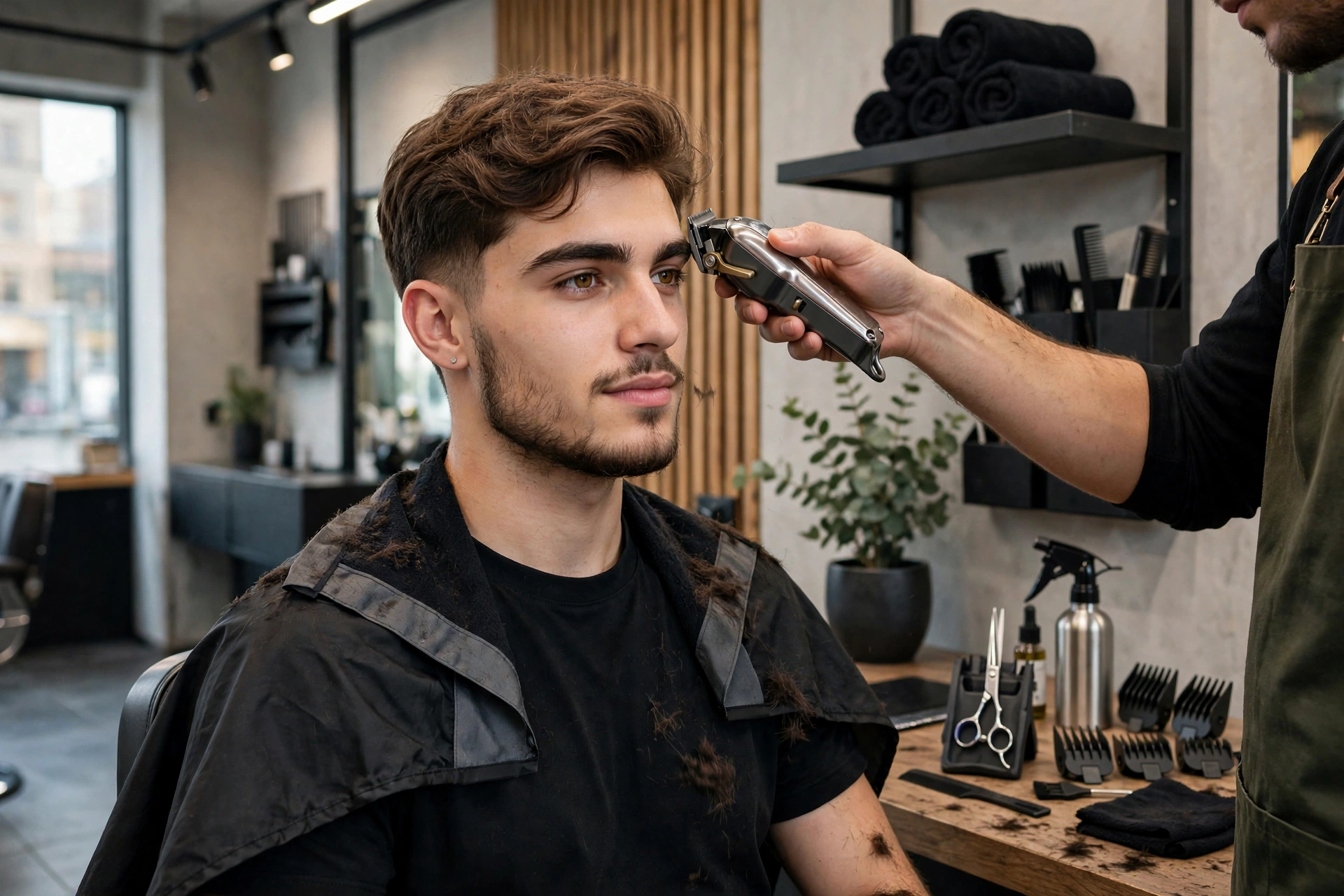
2. Hair. The right haircut for your face shape changes your appearance more than almost anything else short of fat loss. Know your face shape, find cuts that suit it, and maintain them. Our styling guides by face shape are a good starting point.
3. Skin. Consistent basics — cleanser, moisturiser, sunscreen — beat exotic routines. Skin quality is one of the strongest predictors of perceived attractiveness in research, and it is fully within your control.
4. Brows and grooming. Neat, well-shaped eyebrows frame the eyes and change the whole upper face. Clean up necklines, nose and ear hair, and nails. Small details, large aggregate effect.
5. Posture. Forward head posture weakens the jawline’s appearance and ages the neck. Chin slightly tucked, head upright — free and instant.
6. Style. Clothes that fit properly outrank expensive clothes that do not. Fit is the whole game at the beginner stage.
7. Sleep. Under-eye darkness, puffiness, and dull skin are sleep-deprivation artefacts. Eight hours does more for your eye area than any forum technique.
8. Photography. Learn how you photograph: good light, right distance, right angle. Most people’s self-image problems are actually photo problems — see our guide to taking an accurate face analysis photo.
Notice what is not on the list: any device, supplement, exercise program, or paid scheme. The fundamentals are free.
Key Terms, Honestly Defined
The jargon is half the barrier to entry. Here are the essential terms, without the mystique:
PSL scale — An informal 1-to-8 attractiveness rating scale from old forums (Puahate, Sluthate, Lookism). Subjective, inconsistent between communities, and not scientific — but it is the shared language of looksmaxxing ratings. Our PSL scale explainer and the detailed tier-by-tier breakdown cover it fully.
Canthal tilt — The angle of the eye’s outer corner relative to the inner corner. Positive (upturned) is generally preferred; negative (drooping) reads as tired.
FWHR — Facial width-to-height ratio: cheekbone width divided by upper-face height. Discussed as a masculinity signal in the literature, though the real-world evidence is weaker than forums claim.
Gonial angle — The angle of the jaw corner; smaller (sharper) angles are associated with the classic strong jawline.
IPD — Interpupillary distance: the space between your pupils, used as an eye-spacing metric.
Midface ratio — The proportion of the midface relative to face width. A compact midface is generally preferred in forum aesthetics.
Hunter eyes / prey eyes — Slang for deep-set hooded eyes versus prominent round eyes. Internet terminology, not anatomy.
Mewing — Tongue-on-palate posture, claimed to reshape the face. The evidence-based verdict: good habit, no structural magic for adults.
Face harmony — The overall balance of features relative to each other; arguably the most useful concept in the whole glossary.
Softmaxxing vs Hardmaxxing: Where Beginners Belong
Softmaxxing is the beginner’s entire world for the first year, minimum. It is cheap, reversible, and — honestly assessed — delivers the majority of achievable improvement. The checklist above is softmaxxing. So are teeth whitening, tanning sensibly, and learning your angles.
Hardmaxxing deserves a clear-eyed framing. Orthodontics for genuine bite or alignment issues is legitimate healthcare — see a professional. Cosmetic surgery is a serious decision with real risks and costs; it is not a casual optimisation step, whatever forums imply.
The rule: exhaust softmaxxing completely before even thinking about hardmaxxing. Most people who think they need the latter have not finished the former.
Common Beginner Mistakes
Trusting bad photos. Rating yourself from front-camera selfies is rating lens distortion, not your face. Always assess from proper photos: rear camera, distance, good light. Then, if you want numbers, run one through our free AI face analysis tool on the homepage — measured geometry from a faithful photo beats a stranger’s forum rating of a distorted selfie.
Major obsession, minor levers. Beginners obsess over millimetre-level metrics (a degree of canthal tilt, a point of FWHR) while ignoring the big levers (body fat, hair, skin, sleep). Fix the big things first; the small things mostly stop mattering once you do.
Buying solutions. The looksmaxxing space is monetised aggressively: jaw exercisers, special chewing gum, posture devices, paid rating services. The fundamentals are free, and anything promising structural change from a product is selling hope.
Letting it consume you. The line between self-improvement and dysmorphia is real and easy to cross in rating-centric communities. If looksmaxxing is making you feel worse rather than giving you a constructive project, step back. The goal was to feel better in your skin.
Ignoring the unmeasurable. Confidence, humour, style, presence, how you treat people — none of these have a ratio or a scale, and all of them dominate real-world perception. The forums underweight them because they cannot be measured and debated. Do not make that mistake.
Your First 30 Days
Week one: fix your photography (learn your good light and angles) and get a proper haircut for your face shape. Week two: lock in the skincare basics and sleep schedule. Weeks three and four: start training and dialling in nutrition if body composition is a goal, clean up grooming details, and audit your wardrobe fit. Throughout: one honest photo per week, same conditions, to track actual change — because memory lies and weekly photos do not.
Frequently Asked Questions
What does looksmaxxing mean?
Looksmaxxing means deliberately maximising your appearance through optimising controllable factors — grooming, fitness, style, skincare, posture. It originated in online forums and splits into softmaxxing (non-invasive) and hardmaxxing (medical/surgical).
Where should a beginner start with looksmaxxing?
Body composition, haircut, skincare basics, sleep, posture, and grooming. These fundamentals deliver the majority of achievable improvement and cost little or nothing.
What is the difference between softmaxxing and hardmaxxing?
Softmaxxing is non-invasive and reversible: hairstyle, fitness, skincare, style, posture. Hardmaxxing involves medical intervention: orthodontics, cosmetic surgery, clinical procedures. Beginners belong in softmaxxing.
Is looksmaxxing healthy?
The practices — exercise, grooming, skincare, good sleep — are healthy. The culture can be unhealthy: harsh ratings, obsession over unchangeable traits, monetised misinformation. Take the useful habits, skip the toxicity, and watch for signs of dysmorphia.
How long does looksmaxxing take to show results?
Grooming and styling changes are immediate. Skin improvements take weeks. Body composition changes take months. Real improvement is a months-long project — which is exactly why starting with the fundamentals matters.