Facial Symmetry: Measurements, Causes, Myths, and How to Test
The definitive scientific guide to human bilateral facial symmetry, camera distortion, sleep ergonomics, and clinical aesthetics.
Have you ever caught a glimpse of yourself in a candid photo or flipped your smartphone’s front-facing selfie camera and wondered, “Why does my face look so uneven?”
You are far from alone. Almost everyone experiences a momentary shock when viewing an unmirrored photo of themselves. In an era dominated by high-definition smartphone cameras, social media comparison, and viral symmetry filters, anxiety about facial asymmetry has reached an all-time high.
The truth is reassuring: human faces are biologically designed to be asymmetrical. Minor discrepancies between the left and right sides of your face are not only completely normal, but they also contribute to your unique attractiveness, emotional expressiveness, and personal charm.
- 100% Symmetry Does Not Exist in Nature: Perfect bilateral symmetry looks artificial and uncanny to the human eye.
- Photos Distort Reality: Smartphone selfies distort facial geometry because wide-angle front lenses compress features and exaggerate minor differences.
- Lighting and Angles Dictate Perception: Directional shadows and head tilts account for up to 80% of perceived asymmetry in casual snapshots.
- Daily Habits Matter: Chronic one-sided chewing, mouth breathing, and single-side stomach sleeping can subtly influence soft tissue and muscle volume over decades.
- Attractiveness Transcends Symmetry: Personality, eye vitality, skin radiance, and smile dynamics play a vastly larger role in physical appeal than millimetric symmetry.
Anatomy & Craniofacial Science
What Is a Symmetrical Face?
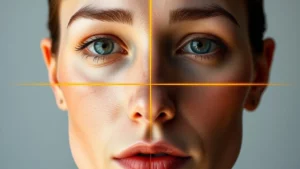
In biology and anatomy, a symmetrical face refers to bilateral symmetry across the central vertical facial axis (the sagittal midline). If you were to draw an imaginary plumb line directly down the center of the forehead, between the eyes, down the nasal bridge, through the philtrum, and to the tip of the chin, a symmetrical face would display matching proportions on both sides.
In practical anatomy, bilateral symmetry evaluates three primary structural dimensions:
Whether the pupils, eyebrows, cheekbones, and mouth corners rest on level, parallel horizontal planes.
Whether cheek fat pads, temples, and jawline angles carry balanced tissue mass and forward projection.
Whether the nasal bridge, tip, philtrum column, dental midline, and chin point fall along a single true vertical line.
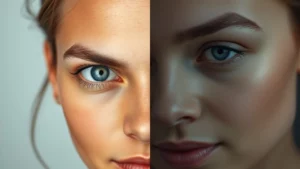
However, pure mathematical symmetry is practically nonexistent in human beings. Craniofacial specialists classify slight variation—known as directional asymmetry or fluctuating asymmetry—as a natural, healthy biological reality. In fact, when researchers digitally clone one half of a real person’s face to create a 100% symmetrical image, viewers consistently rate the synthetic face as robotic, emotionless, and eerie.
Etiology & Biomechanics
Why Is My Face Asymmetrical?
If you notice differences between your left and right sides, you may wonder what caused them. Facial asymmetry stems from a combination of genetic inheritance, structural development, lifestyle habits, and physiological aging.
Bone structure is hereditary. Natural developmental variances during childhood mean one orbit often rests 1-3mm higher or one jaw branch grows slightly denser.
Chewing predominantly on one side works the masseter muscle like a gym workout, creating muscle hypertrophy on the chewing side and a leaner cheek on the other.
Bite mechanics determine jaw posture. Crossbites, missing molars, or bruxism force the mandible to shift laterally to achieve contact, tilting the chin.
Facial fat pads and skeletal bone naturally shrink over decades. Because vascularity and mechanical strain differ per side, volume loss occurs at slightly different rates.
Neurobiology & Exposure
Left Side vs Right Side of Face: Why They Look Different
Have you ever examined your face and realized your left profile feels softer or more approachable, while your right side appears firmer or more defined? This is a documented scientific phenomenon.
Neuropsychological studies demonstrate that the right hemisphere of the human brain processes emotions more intensively. Because the right brain hemisphere controls the musculature of the left side of the face, the left side is typically more emotionally expressive. It displays broader smiles, subtler emotive shifts, and greater micro-movement during conversation.
Environmental differences also play an underappreciated role:
In countries with left-hand drive vehicles, commuters receive higher doses of UVA radiation through the driver’s window, accelerating one-sided collagen loss.
Habitually resting your chin or cheek against your hand during computer work applies hours of daily mechanical compression to one side of the jaw.
Nocturnal Biomechanics
Does Sleeping Position Affect Facial Symmetry?
The short answer is yes, chronic sleeping posture can gradually influence soft-tissue symmetry, though it rarely reshapes mature adult skull bones.
When you sleep on your stomach or side, your face presses against the pillow with the weight of your head (approximately 4.5 to 5.5 kilograms) for six to eight hours every night. Over decades, this continuous pressure creates:
Unlike dynamic expression lines caused by muscles, sleep wrinkles are mechanical folds caused by skin buckling against fabric.
Decades of unilateral compression can flatten the anteromedial cheek fat pad, reducing youthful malar projection.
Gravitational accumulation of lymphatic fluid on the dependent side creates uneven morning puffiness around the eyes and jaw.
Back sleeping (supine position) distributes pressure evenly across the skull and eliminates nocturnal facial compression entirely. If back sleeping feels uncomfortable, utilizing an ergonomic anti-wrinkle pillow or a pure mulberry silk pillowcase can dramatically reduce friction and mechanical distortion.
Aesthetic Science
Facial Symmetry vs Facial Attractiveness
Pop culture often suggests that symmetry is the holy grail of physical beauty. Evolutionary biologists historically theorized that symmetry serves as an outward signal of genetic health and developmental stability. However, contemporary aesthetic research paints a much more nuanced picture.
| Facial Characteristic | Attractiveness Impact | Real-World Role |
|---|---|---|
| Mild Asymmetry (Natural) | High | Creates warmth, individuality, character, and approachable charisma. |
| Absolute Symmetry (Synthetic) | Low to Moderate | Triggers the “uncanny valley” effect; perceived as robotic or artificial. |
| Proportions (Golden Ratio) | Moderate to High | Vertical thirds and horizontal fifths harmonize overall facial balance. |
| Skin Clarity & Radiance | Extremely High | Smooth texture and healthy skin rank higher than millimetric balance in person. |
| Dynamic Expressiveness | Extremely High | A genuine smile and confident gaze consistently outweigh static bone symmetry. |
Many of the world’s most celebrated supermodels, Hollywood actors, and cultural icons display pronounced facial asymmetry. An arched brow, a slightly crooked smile, or an offset jawline often becomes a signature feature that transforms an otherwise forgettable face into an unforgettable presence.
Visual Psychology & Perception
Why Does My Face Look Uneven in Photos?
Have you ever looked in the bathroom mirror, felt satisfied with your appearance, and then taken a photo that looked jarringly distorted? This disconnect usually has nothing to do with your real appearance and everything to do with visual psychology.
Psychologists call this the Mere Exposure Effect. Throughout your life, you observe your face almost exclusively as a mirrored reflection. Your brain builds a deeply ingrained mental blueprint of your mirrored features. When a standard smartphone camera takes an unreversed (non-mirrored) photo of you, it shows the perspective that external observers see every day.
Because your brain expects the mirrored version, any minor natural asymmetry (such as an eyebrow sitting three millimeters higher on the left) suddenly appears swapped to the opposite side. To your brain’s predictive vision system, this inverted orientation registers as strange, unfamiliar, and uneven—even though external observers see nothing unusual.
Transient Factors
What Causes Temporary Facial Asymmetry in Photos?
Not all asymmetry in photos is structural. Several transient daily factors can make your face appear temporarily uneven in pictures:
High-sodium meals, alcohol, or sleeping on one side causes interstitial fluid to pool unevenly in the eyelids and cheeks.
Most people have a habitual neck tilt of 2 to 5 degrees. In 2D photos, this misaligns pupils and jaw planes immediately.
Posing on command often engages the zygomaticus major muscle more aggressively on your dominant side, raising one mouth corner.
Seasonal allergies, localized sinus pressure, or minor tooth inflammation can cause unilateral micro-swelling.
Optics & Geometry
Does Camera Angle Affect Facial Symmetry?
Yes. In photography, camera positioning can either balance or drastically distort human facial proportions.
When a camera is held slightly off-center or tilted relative to your facial plane, perspective foreshortening occurs. Objects closer to the camera lens appear disproportionately larger than objects just a few inches further away. If your head is turned even 5 degrees toward the lens, the cheekbone closer to the camera expands visually, while the distant side recedes and appears narrower.
Similarly, a high-angle shot accentuates the forehead and shrinks the jawline, while a low-angle shot broadens the neck and lower jaw. If you hold a camera at an angle, natural facial variations are magnified dramatically.
Illumination Physics
How Lighting Changes Perceived Facial Symmetry
Lighting is arguably the most powerful variable determining how symmetrical your face looks in any image or environment.
Directional lighting—light coming predominantly from one side, a nearby window, or a desk lamp—casts pronounced shadows across the opposite side of your face. Because shadows carve out hollows while highlights bring surfaces forward, half of your face will appear deeply contoured and narrow, while the illuminated side will appear flat and broad.
Harsh overhead lighting (such as office fluorescent lights or midday sun) casts downward shadows beneath your brows, nose, and lower lip. If your brow bone or nasal tip has the slightest natural asymmetry, overhead shadows will exaggerate that variance tenfold.
For an accurate visual appraisal, professional portrait photographers rely on soft, diffused, frontal lighting (such as a large softbox or standing directly facing an open, overcast window). Diffused light minimizes misleading shadow play and reveals true contours.
Lens Physics
Can a Selfie Measure Facial Symmetry?
The definitive answer is no, a typical handheld smartphone selfie cannot accurately measure facial symmetry.
Smartphone front-facing cameras are engineered with wide-angle lenses (typically between 22mm and 28mm equivalent focal length). Wide-angle lenses are designed to capture a broad field of view at arm’s length. However, when placed within 30 to 50 centimeters of your face, wide-angle lenses produce severe barrel distortion.
A landmark study published in JAMA Facial Plastic Surgery confirmed that selfies taken at a distance of 12 inches (30 cm) make the nasal base appear up to 30% wider and the nasal tip 7% wider compared to standard clinical portraiture taken from 5 feet away. Furthermore, holding your phone with one arm inherently tilts your shoulder and angles the camera sensor off-axis, guaranteeing distorted proportions.
Clinical Photography Protocol
Facial Symmetry Test With a Front Camera
If you want to use your smartphone camera to evaluate facial symmetry without falling prey to wide-angle distortion, you must replicate clinical photographic standards. Follow this 6-step protocol:
Mount the Phone on a Tripod
Never hold the phone in your hand. Handheld shooting introduces involuntary tilt and arm-angle perspective bias.
Step Back at Least 5 to 7 Feet
Increasing the physical distance between you and the camera flattens optical perspective and eliminates barrel distortion.
Use 2x or 3x Optical Zoom
If your phone features a telephoto lens, zoom in to achieve a focal length equivalent of 50mm to 85mm, matching the human eye’s natural perspective.
Align the Lens Exactly at Eye Level
Position the camera lens directly parallel to your pupils. Do not angle the device upwards or downwards.
Stand in Front of Even, Diffused Light
Face an open window on an overcast day or use balanced dual lights to prevent one-sided shadows from falsifying contours.
Neutral Facial Rest Position
Rest your tongue gently on the roof of your mouth, allow lips to touch lightly without clenching teeth, and gaze straight into the lens.
DIY Assessment
How to Check Facial Symmetry at Home
You do not need high-tech equipment to perform a reliable baseline check of your facial symmetry. Here are three straightforward methods you can perform at home:
Hold dental floss vertically from mid-forehead through nasal bridge and chin. Check if pupils, eyebrows, and mouth corners cross at exact 90-degree horizontal planes.
Cover half your face with a card in front of a mirror to isolate each side. Appreciate the unique structural expression of each half as individual artistic balance.
Crop an undistorted portrait down the center and mirror left-left and right-right. You will see both synthetic composites look eerie, while your real face looks balanced.
Anthropometry & Medicine
How Is Facial Symmetry Measured?
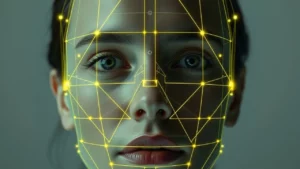
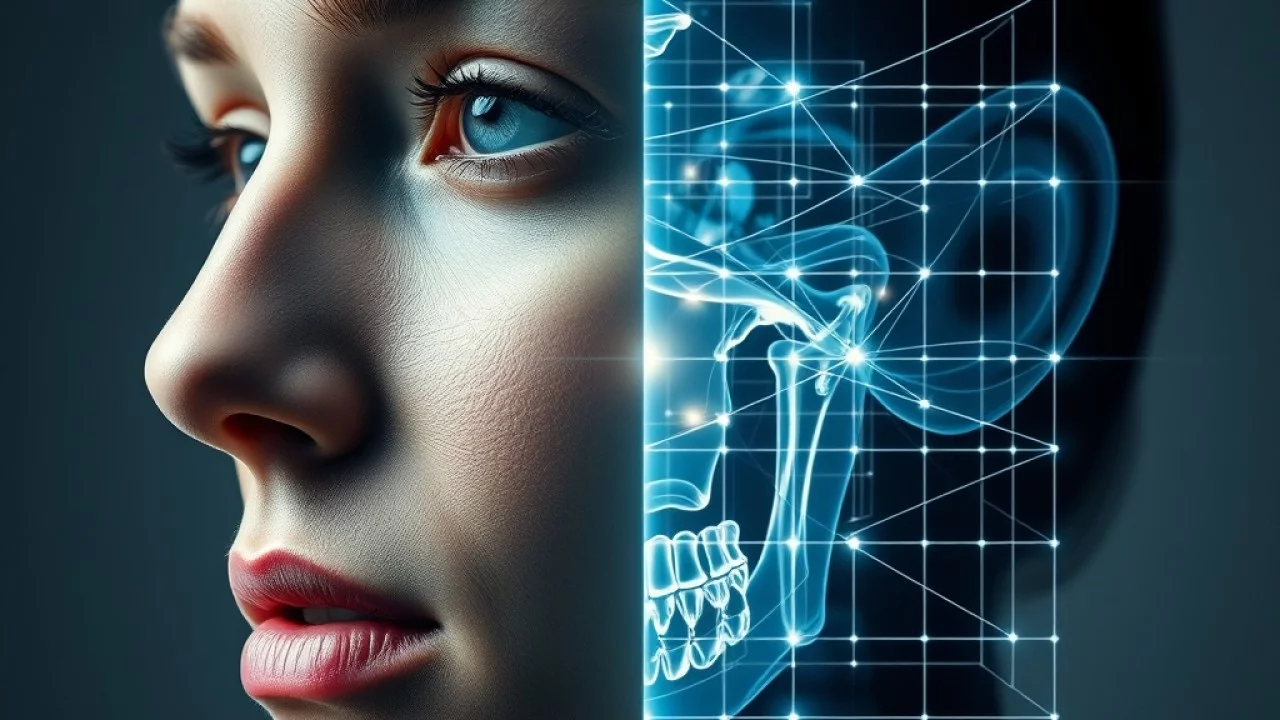
In plastic surgery, orthodontics, and maxillofacial medicine, specialists utilize rigorous anthropometric frameworks to quantify facial symmetry. Rather than relying on subjective impressions, clinicians measure specific landmarks across standard anatomical planes.
- Trichion (Tr): Midpoint of the anterior hairline.
- Glabella (G): Most prominent anterior point of the forehead between the eyebrows.
- Nasion (N): Depression at the root of the nose along the midline.
- Subnasale (Sn): Junction where the nasal columella meets the upper lip.
- Pogonion (Pog) & Menton (Me): Most anterior and lowest points of the bony chin.
- Endocanthion & Exocanthion: Medial and lateral corners of the eye apertures.
- Cheilion (Ch): Outer lateral corners of the mouth at resting position.
Consumer Tech Evaluation
How Accurate Are Facial Symmetry Tests?
With dozens of facial symmetry apps, AI beauty calculators, and TikTok filters available on app stores, how accurate are these consumer tools?
Mobile apps and social media filters are fundamentally inaccurate for clinical assessment. Here is why:
- No Perspective Control: Consumer apps cannot adjust for camera focal length distortion or the exact distance between the lens and your face.
- Tilt and Orientation Errors: A tilt of just 2 degrees in how you hold your phone causes consumer facial recognition algorithms to flag severe asymmetry that does not exist in reality.
- Crude 2D Landmark Detection: Free apps map 2D coordinates on flat pixels rather than understanding 3D volumetric bone and soft tissue structures.
- Algorithmic Bias: Many beauty scoring apps use arbitrary, rigid ratios that penalize normal human anatomical diversity.
Interventions & Solutions
Can Your Face Become More Symmetrical?
Depending on the underlying cause of asymmetry, meaningful improvements in balance and alignment are entirely achievable. Solutions range from simple everyday habits to advanced clinical care.
Chew equally on both sides to balance masseter muscle size. Sleep supine or alternate sides with a contour pillow, and apply daily SPF 30+ to prevent unilateral photoaging.
Clear aligners, palate expanders, or braces align dental arches and correct crossbites, returning a displaced lower jaw back to the true facial midline.
Micro-injections of neuromodulator into an overgrown masseter muscle slim an asymmetrical jaw in 4 weeks. Strategic hyaluronic acid fillers restore depleted cheek volume.
Septorhinoplasty straightens deviated nasal bones. Orthognathic surgery repositions the maxilla or mandible for permanent correction of skeletal malocclusion.
Common Questions
Frequently Asked Questions
Is anyone’s face 100% symmetrical?
No. Absolute bilateral symmetry does not occur in nature. Minor differences in eye size, eyebrow shape, nostril flare, and jaw contour are universal biological hallmarks of being human.
Why do I look more asymmetrical in rear camera photos than in the mirror?
Because you are psychologically accustomed to viewing your reversed reflection (the Mere Exposure Effect). The rear camera shows your face as other people see it. Flipping the orientation makes familiar minor variations look unfamiliar to your own brain, creating an illusion of sudden asymmetry.
Can facial exercises (face yoga) fix asymmetry?
While facial exercises can improve general muscle tone, there is limited scientific evidence that face yoga can correct skeletal or structural asymmetry. In fact, performing asymmetrical facial exercises without clinical guidance can sometimes worsen muscular imbalance. Balanced chewing and posture correction are significantly more reliable.
When should I see a doctor about facial asymmetry?
If you experience sudden, rapid-onset asymmetry—especially accompanied by facial weakness, numbness, difficulty speaking, eyelid drooping, or pain—seek emergency medical attention immediately to rule out acute conditions like a stroke or Bell’s palsy.
Does sleeping on my side permanently change my facial bones?
In mature adults whose cranial bones have completed growth, sleeping on one side does not alter the underlying skeletal structure. However, it can displace soft tissue fat pads, exacerbate sleep compression lines, and cause uneven morning lymphatic fluid retention over time.
In a digital world saturated with synthetic beauty filters and instant photo editing, it is easy to mistake normal biological individuality for a flaw. The quest for absolute mathematical symmetry is not only clinically unnecessary—it often strips a face of its vitality, charm, and unique personality.
Before worrying about how your face looks in a quick smartphone selfie, remember that wide-angle lenses, lighting shadows, and optical angles create illusions that have little to do with reality. Focus on healthy habits, balanced posture, and appreciate your face as a living, dynamic work of art.