How to Find Your Undertone: Warm, Cool, or Neutral (3 Tests)
Your undertone is the subtle warm, cool, or neutral hue beneath your skin’s surface, and it is the single most useful fact in all of makeup. Foundation that matches your skin tone but not your undertone looks orange, ashy, or grey. Lipstick in the wrong temperature fights your complexion. Once you know your undertone, choosing foundation, blush, lipstick, and even clothing colours gets dramatically easier.
Key Takeaways:
- The vein test: greenish veins suggest warm, bluish suggest cool undertones.
- The jewelry test: gold flatters warm undertones, silver flatters cool ones.
- The white versus cream test: stark white suits cool, cream suits warm undertones.
- When tests disagree, you may be neutral and can wear both metal tones.
- Always test foundation shades in natural daylight, not store lighting.
This guide walks through the three classic tests, the vein test, the jewelry test, and the white-vs-cream test, plus how to interpret mixed results, because real skin rarely fits a textbook perfectly.
Undertone vs skin tone: don’t confuse them
Skin tone is how light or dark your skin is, fair, medium, deep. Undertone is the hue underneath, warm, cool, or neutral. A deep-skinned person can have cool undertones; a fair-skinned person can have warm undertones. Skin tone changes with sun exposure; undertone does not. When foundation looks wrong despite matching your shade depth, the undertone is almost always the culprit.
Test 1: The vein test
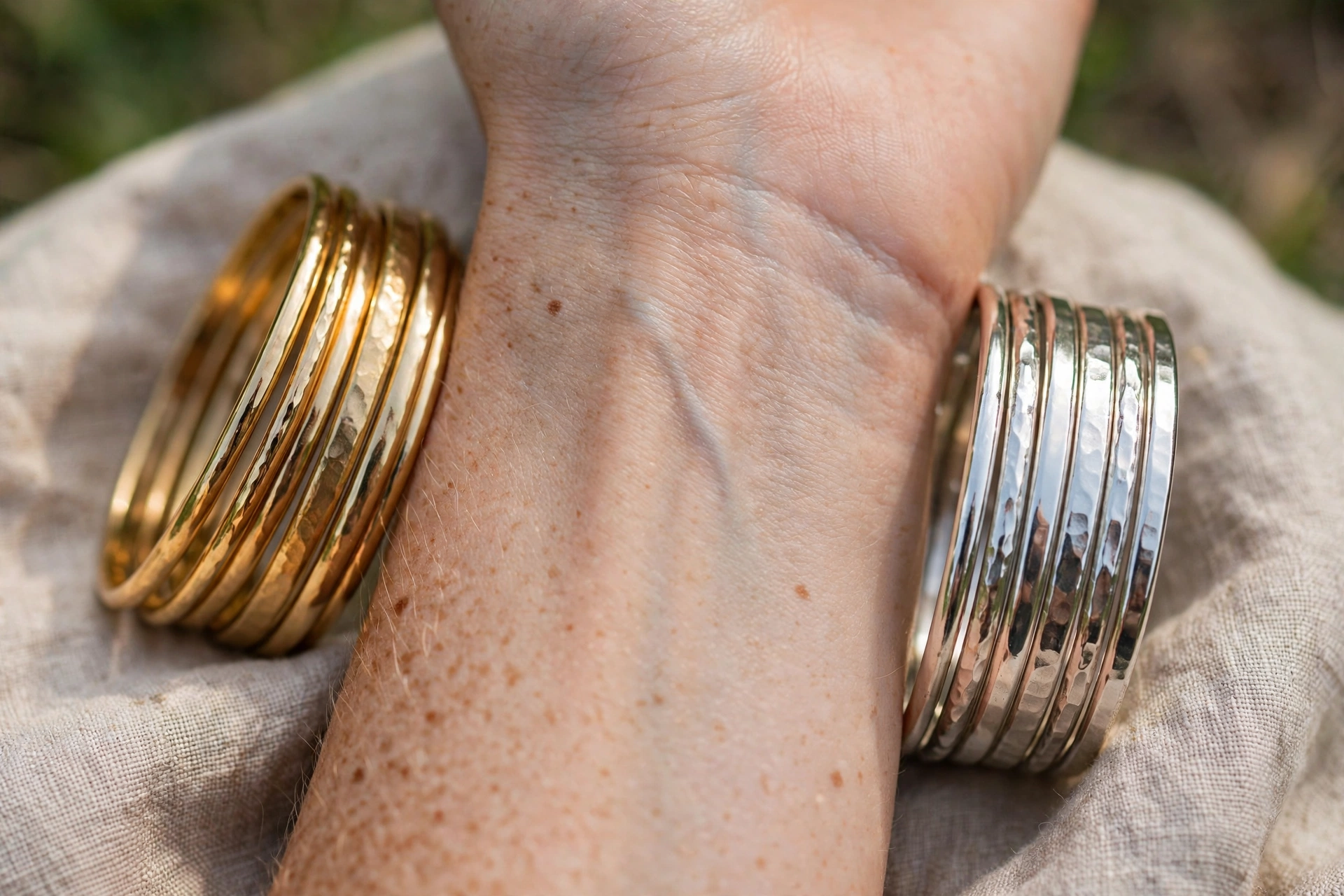
Look at the veins on the inside of your wrist in natural daylight (not yellow indoor lighting, which skews everything):
- Veins look green or greenish, suggests warm undertones. What you’re seeing is warm-toned skin filtering blue veins into a green read.
- Veins look blue or purple, suggests cool undertones.
- A mix of blue and green, or hard to tell, suggests neutral undertones.
Caveats: this test is least reliable on very deep skin, where veins are harder to read, and on skin with strong surface redness, which can tint everything. Treat it as one data point, not a verdict.
Test 2: The jewelry test
Hold gold jewelry against your face (or drape a gold and a silver cloth near your jaw) in daylight and compare:
- Gold looks better, your skin glows, looks even and healthy, suggests warm undertones.
- Silver looks better, suggests cool undertones.
- Both look equally good, suggests neutral undertones.
This test works because metal colour temperature interacts with your skin’s undertone: matching temperatures harmonise, clashing ones highlight sallowness or redness. It is one of the most reliable quick tests because you are judging an overall harmony effect rather than a tiny colour detail.
Test 3: The white-vs-cream test
Hold a pure bright-white fabric on one side of your face and an off-white/cream fabric on the other, in natural daylight, no makeup:
- Bright white makes you glow, suggests cool undertones. Stark white harmonises with cool skin’s pink/blue base.
- Cream/off-white looks better, white washes you out, suggests warm undertones. Warm skin’s golden base fights stark white and relaxes against cream.
- Both look fine, suggests neutral undertones.
Use plain fabrics without patterns, and drape them under your chin so they reflect onto your face, that’s where the colour interaction shows.
When the tests disagree
Mixed results are normal and usually mean one of these:
- You are neutral or neutral-leaning. True neutrals get split results constantly, that is the signature, not a failure. If tests point in different directions, “neutral” is your most likely answer.
- One test was done in bad light. Yellow indoor bulbs warm everything up and corrupt all three tests. Redo in daylight near a window before concluding anything.
- Surface redness is confusing things. Rosacea, acne, or sunburn add surface red that mimics cool undertones. Test on the jaw/neck area, which is usually calmer, rather than the cheeks.
- You are olive. Olive undertones, a greenish-neutral cast common in Mediterranean, Middle Eastern, South Asian, and Latin American skin, break the warm/cool binary. Olive skin often reads “neutral” on tests but pulls green in some foundations. If standard warm and cool foundations both look wrong, olive may be your answer, and you may need olive-specific foundation shades.
Testing foundation shades in-store
Knowing your undertone category is step one; confirming it against real products is step two. Department-store lighting is designed to flatter, not to reveal truth, so test properly:
- Swatch on your jawline, not your hand. Draw three stripes, one warm, one cool, one neutral in your depth, along the jaw where face meets neck. The right undertone disappears into the skin; the wrong ones sit visibly on top as a line of orange, pink, or grey.
- Walk to the window. Step into natural daylight (or the store entrance) before deciding. Fluorescent lighting warms everything and can make a too-warm shade look correct indoors.
- Wait ten minutes. Many foundations oxidise, darkening and warming as they dry. A shade that matches wet in the store may read orange an hour later. Swatch, shop around, then check again.
- Photograph the swatches. A quick phone photo in daylight is brutally honest about undertone mismatch in a way the mirror sometimes isn’t, the camera strips away the flattering-store-light effect.
- When in doubt, go neutral. If you sit between categories, neutral formulas are the most forgiving, they neither add warmth you don’t have nor pink you don’t need.
What your undertone means for makeup
Once you know your category, the payoff is immediate:
- Foundation: choose formulas labelled for your undertone (W/warm, C/cool, N/neutral). The right undertone in a slightly imperfect depth looks better than the perfect depth in the wrong undertone.
- Lipstick: warm undertones glow in peachy, coral, brick, and warm-red shades; cool undertones in blue-reds, cherry, berry, and mauve; neutrals wear most families. Our lipstick shade guide for oval faces applies the same temperature logic in detail.
- Blush: warm, peach, coral, warm rose; cool, pink, berry, cool mauve; neutral, true rose works beautifully (see our blush placement guide for application technique).
- Eyeshadow: warm undertones suit bronzes, coppers, and warm browns; cool undertones suit taupes, greys, and jewel tones; neutrals can wear both.
- Hair colour and clothing follow the same temperature logic, it is one system, not separate rules per category.
Try it with your real proportions in mind
Knowing your undertone is half the colour equation; knowing your face shape is the other half. For a neutral read on your features before you shop, try our free AI face analysis tool on the homepage, it checks face shape and key proportions in seconds.
Frequently Asked Questions
What is the difference between skin tone and undertone?
Skin tone is how light or dark your skin is; undertone is the warm, cool, or neutral hue beneath the surface. Tone changes with sun exposure, undertone never does, and foundation mismatches are usually undertone problems, not depth problems.
Which undertone test is most accurate?
The jewelry test and white-vs-cream test are generally more reliable than the vein test, because they judge overall harmony rather than tiny colour details. For the best answer, do all three in natural daylight and go with the majority.
Can I have neutral undertones?
Yes, and it’s common. If gold and silver both suit you, white and cream both look fine, and your veins are hard to categorise, you are likely neutral. Neutrals can wear most shade families, which is a genuine advantage.
What if warm and cool foundations both look wrong on me?
You may have olive undertones, a greenish-neutral cast that breaks the warm/cool binary and is common in Mediterranean, Middle Eastern, South Asian, and Latin American skin. Look for olive-specific foundation shades rather than forcing a warm or cool match.
Does undertone affect lipstick choice?
Enormously. Lipstick in the wrong temperature for your undertone can make teeth look yellow and skin look sallow, while the right temperature makes the whole face glow. Match shade temperature to undertone first, then pick your colour family.
Can my undertone change over time?
No. Undertone is determined by your skin’s underlying pigment structure and does not change with tanning, ageing, or seasons. What changes is surface tone, which is why you re-test foundation depth seasonally but never need to re-test undertone.