
Best Watch Size for Small Wrists: Men’s Fit Guide
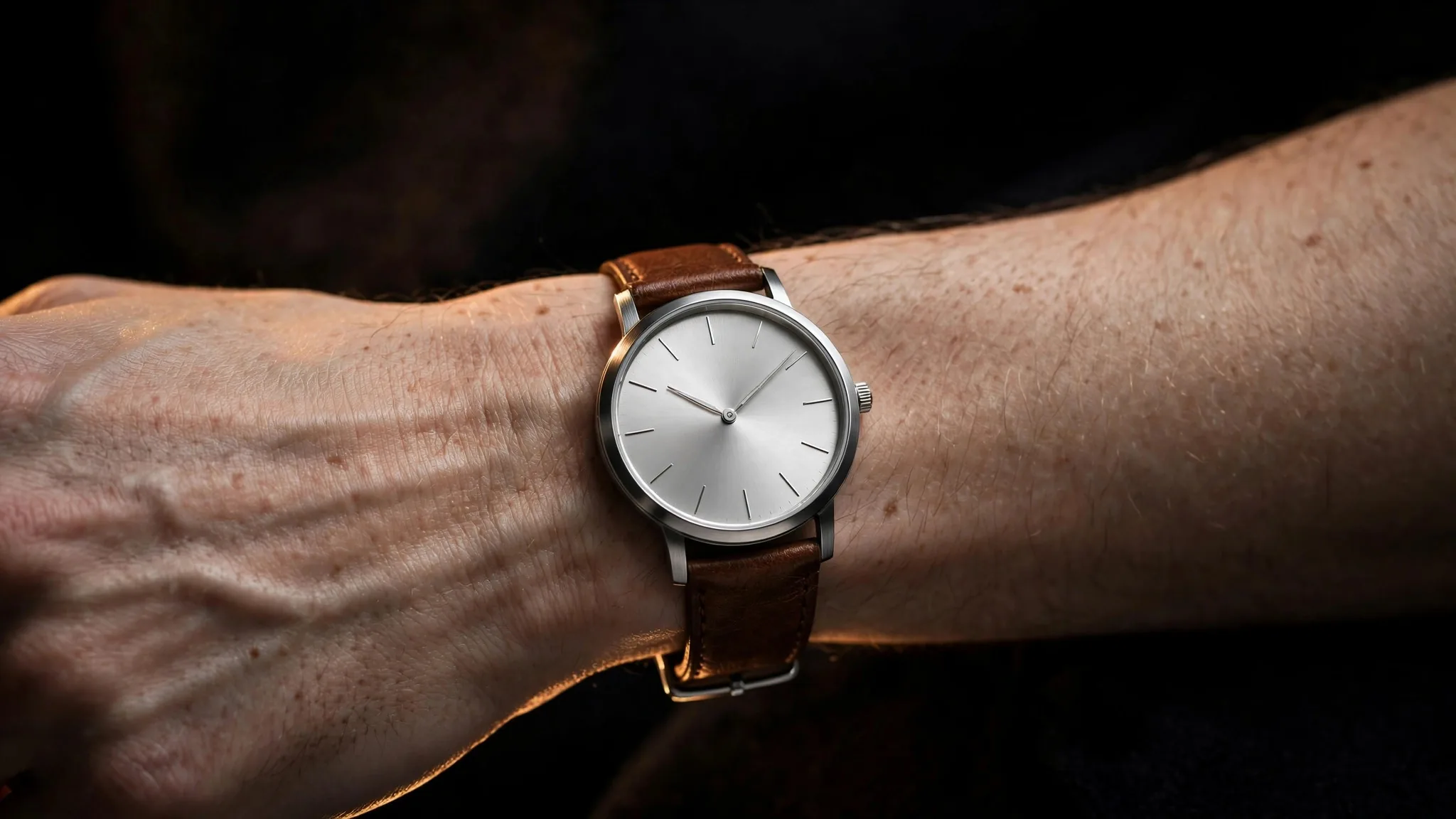
A watch should look like it was made for your wrist — not borrowed from someone larger. For men with small wrists (roughly 6 to 6.75 inches around), the difference between a 38mm and a 42mm case is the difference between refined and ridiculous. This guide covers the ideal case sizes, the measurements that matter even more than diameter, and the styles that sit best on a smaller wrist.
What Counts as a Small Wrist
Wrist size is measured just below the wrist bone with a flexible tape. For men, under 6.5 inches is generally considered small, 6.5–7 inches is medium-small, and the “average” watch marketing assumes is around 7–7.5 inches. If your wrist measures 6.75 inches or less, the advice in this guide is for you.
The Ideal Case Diameter
The Sweet Spot: 36–40mm
For small wrists, the most flattering case diameter range is 36–40mm. A 38mm watch is the classic safe choice — substantial enough to read as a men’s watch, proportional enough to sit elegantly. At 40mm you are at the upper limit; it works if the case is slim and the lugs are short, but it is the ceiling, not the starting point.
Why Diameter Is Not the Whole Story
Two 40mm watches can wear completely differently. Case thickness, lug length, and dial design change everything. A slim 40mm dress watch can look perfect while a thick 40mm diver overwhelms. Always consider the full geometry, not just the headline number.
The Measurements That Matter Most
Lug-to-Lug Distance
This is the secret measurement watch enthusiasts swear by. Lug-to-lug is the distance from the top of the top lugs to the bottom of the bottom lugs — essentially how far the watch stretches along your wrist. For small wrists, keep lug-to-lug under about 46–48mm. If the lugs overhang your wrist’s edges, the watch will look oversized no matter what the diameter says.
Case Thickness
Thinner wears smaller. Aim for cases under 12mm thick, and under 10mm for dress watches. A slim profile hugs the wrist and slides under cuffs — both practical and proportional wins for smaller wrists.
Dial Proportions
Dials with slimmer bezels look larger than their diameter suggests (more dial, less metal), while thick bezels shrink the visual presence. On a small wrist, a clean dial with a moderate bezel usually hits the sweet spot — enough presence without bulk.
Best Watch Styles for Small Wrists
Dress Watches (34–38mm)
Dress watches are the natural home of smaller cases, and they look impeccable on small wrists. A 36mm dress watch with a slim case is timeless, elegant, and proportionate — this is the easiest win in the watch world.
Field Watches (36–39mm)
Field watches traditionally come in modest sizes, and their rugged-but-restrained design suits smaller wrists well. A 38mm field watch is versatile enough for daily wear and weekend adventures alike.
Slim Divers (38–40mm)
You do not have to give up on dive watches — just choose slimmer, smaller ones. Many brands now offer 38–40mm divers with reduced thickness. Avoid the 44mm+ professional divers; they will wear like hockey pucks on a 6.25-inch wrist.
Minimalist and Bauhaus Styles
Clean, minimal dials in 36–38mm cases are practically designed for smaller wrists. Their visual simplicity keeps the watch from shouting, and the proportions tend to be naturally balanced.
Strap Choices That Help
- Tapered straps: A strap that narrows from the lugs to the buckle (e.g., 20mm to 16mm) looks more refined on small wrists than a straight-cut strap.
- NATO straps in moderation: A NATO adds thickness under the case, raising it off the wrist. It can work, but keep the watch itself slim to compensate.
- Bracelets with micro-adjustment: Metal bracelets often need links removed for small wrists; a micro-adjustable clasp lets you dial in the perfect fit.
- Avoid oversized buckles: A huge deployant clasp can look out of scale. Keep hardware proportional.
Common Mistakes to Avoid
Buying the 42mm version “because it looks more masculine” is the classic error — on a small wrist it just looks borrowed. Ignoring lug-to-lug and buying on diameter alone is the second. And wearing the watch loose so it slides around makes even a well-sized watch look wrong; a watch should stay put just below the wrist bone.
The In-Store Try-On Checklist
Numbers on a spec sheet only go so far — here is how to judge a watch on your wrist in person. First, check the lug overhang: look at your wrist straight-on in a mirror, and if the lugs extend past the edges of your wrist, the watch is too big regardless of its diameter. Second, do the finger test: you should be able to slide one finger (snugly) under the strap or bracelet — more room means it will slide around and look oversized in motion.
Third, check the cuff test with a shirt you actually wear: the watch should slide under a standard dress-shirt cuff without a fight. If it catches, it is too thick for office wear on your wrist. Fourth, look at the dial-to-wrist ratio from a normal viewing distance (arm’s length, not six inches from your face) — the watch should look like a natural part of your wrist, not a dinner plate or a coin. Finally, wear it around the store for ten minutes; a well-proportioned watch disappears on the wrist, while an oversized one keeps announcing itself.
FAQ
What watch size is best for a 6.5 inch wrist male?
A 36–39mm case is ideal for a 6.5-inch wrist, with lug-to-lug under 46mm and a slim profile. A 38mm watch is the safest all-round choice at this wrist size.
Is 40mm too big for a small wrist?
40mm is the upper limit, not automatically too big. It works if the case is slim (under 12mm) and the lugs are short. Try it on — if the lugs overhang your wrist, size down.
Should small wrists avoid dive watches?
No, but choose smaller, slimmer divers in the 38–40mm range rather than 42mm+ professional models. The style works; only the proportions need adjusting.
Does lug-to-lug matter more than case diameter?
For fit on the wrist, yes — it determines whether the watch actually sits within your wrist’s width. A 40mm watch with short lugs can wear smaller than a 38mm watch with long lugs.
Can small wrists wear smartwatches?
Yes, but choose the smaller case option — most smartwatch lines offer two sizes, and the smaller one (usually around 40-41mm) suits small wrists far better. Slimmer sport bands also help; bulky rugged bands can overwhelm a smaller wrist even when the case itself fits.
What is the smallest respectable watch size for men?
A 34-36mm watch is perfectly respectable — many classic dress watches were made in these sizes for decades. On a small wrist, a 36mm watch often looks more intentional and refined than a larger one straining for presence.
Explore Related Guides
Style the rest of your look with our guides to the best beard style for square face and beard styles for oval face male.
Proportion Starts With Your Face
A well-proportioned watch is part of a well-proportioned look. Discover your face shape with the free AI face-rating tool at russella.co.uk and make every style choice — from watches to beards to haircuts — work in harmony.