Trench Coat: How to Choose and Style the Classic Rain Coat
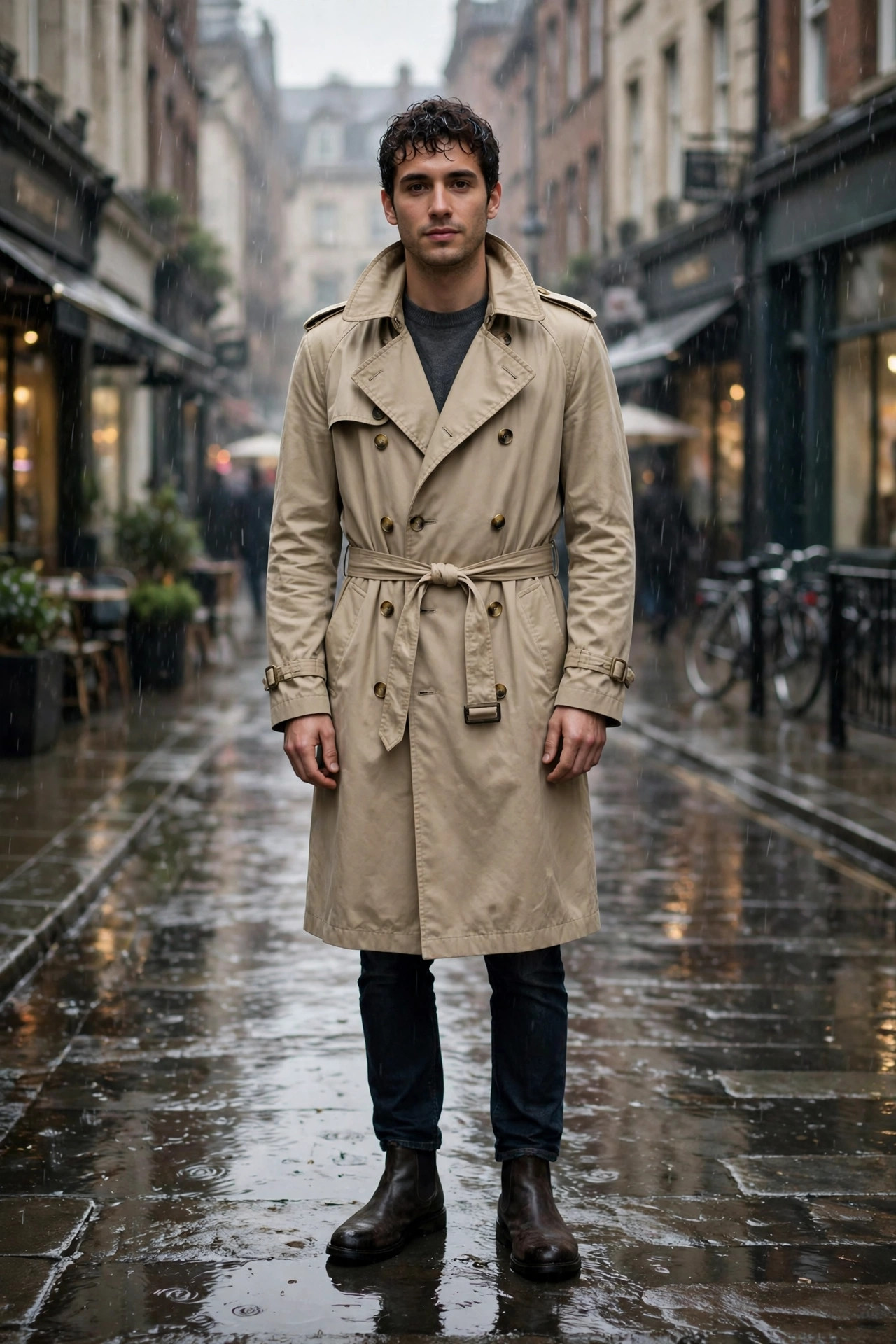
A trench coat is a long, double-breasted rain coat with a belted waist, wide lapels, shoulder epaulettes and a storm flap, originally designed for British officers in the First World War. The classic version is made from gabardine, a tightly woven, water-resistant cotton, and it remains one of the most useful coats you can own, because it is smart enough for work and practical enough for rain.
The short answer is this: choose a knee-length trench in beige, black or navy, with a fit that lets you layer a blazer or knit underneath, and you will have a coat that works for years. This guide explains trench coat design, fit, length and colours, and how to style it for different weather and occasions.
Key Takeaways
- A trench coat is a long, belted, double-breasted rain coat, usually made from water-resistant gabardine.
- Knee length is the most versatile, working for work, travel and everyday wear.
- Beige is the classic colour, while black and navy suit formal and city wear best.
- The fit should allow a blazer or knit underneath without pulling at the shoulders or waist.
- Belt it for shape, or wear it open for a relaxed, modern look.
What Makes a Trench Coat a Trench Coat
A true trench coat has a set of details that come from its military origin. The double-breasted front gives extra protection from wind and rain, the belted waist defines the shape, the wide lapels can be turned up against bad weather, and the storm flap across the chest adds a layer where rain hits first. Epaulettes on the shoulders and a buckled strap at the cuffs are traditional details that most modern trench coats keep, even in simplified form.
Not every long rain coat is a trench coat. A single-breasted rain coat without a belt is a rain coat, not a trench, and a long wool coat is an overcoat, not a trench. The belt and the double-breasted front are the two details that define the trench shape, and they are also what make it flattering, since the belt creates a waist even on a straight-cut coat.
Choosing Length and Fit
Length: Knee length is the most versatile trench length. It covers a suit or dress, protects the legs from rain, and works with trousers, jeans and skirts. Longer, calf-length trench coats give more drama and more rain protection, but they can overwhelm petite wearers and are harder to wear in cars. Shorter, hip-length trench styles exist, but they lose the classic trench proportion and much of the rain protection.
Fit: A trench coat should fit cleanly at the shoulders, with room to layer underneath. Try it on with a blazer or a thick knit, and check that the shoulders do not pull and the belt closes without straining. The sleeves should end at the wrist bone, and the belt should sit at your natural waist when tied.
Single vs double breasted: Double-breasted is the classic trench and suits most people, but it adds bulk at the front. Single-breasted trench coats are slimmer and suit petite wearers and anyone who prefers a cleaner line. Both are valid trench styles, so choose based on your shape and how much layering you need.
Colours and Fabrics
Beige, often called stone or camel, is the classic trench colour and the most versatile for everyday wear, since it pairs with black, navy, grey, white and most colours. Black trench coats suit city wear and formal offices best, and they hide rain marks well. Navy is a softer alternative to black that pairs well with brown shoes and accessories.
Gabardine cotton is the traditional trench fabric, giving water resistance, a clean drape and a smart finish. Cotton blends with a little synthetic fibre are more crease-resistant and easier to care for. Avoid very thin trench coats that wrinkle easily and offer no rain protection, since they lose the practical point of the coat. For more outerwear comparisons, see our Outerwear and Jackets section.
Styling a Trench Coat
Work: Wear a knee-length trench over a suit, a shirt and tailored trousers, or a smart dress. Belt it at the waist for a polished look, and choose black or navy for formal offices.
Everyday: Wear a trench open over jeans and a knit, or over a t-shirt and trainers in milder weather. The open, relaxed look suits weekends and travel, and it shows off the outfit underneath.
Rain: Turn the collar up, fasten the top button, and belt the coat snugly. A trench coat handles light to moderate rain well, but it is not a waterproof hiking jacket, so carry an umbrella in heavy rain.
Evening: A trench over a cocktail dress or smart outfit works for evenings when the weather is cool. Choose a dark colour and simple jewellery, and let the coat add the structure.
5 Mistakes to Avoid With Trench Coats
- Wrong length for your height: A calf-length trench can overwhelm a petite frame, while a very short trench loses the classic shape. Knee length suits most heights.
- Too tight to layer: A trench that only fits over a t-shirt is useless in cold weather. Always try it on with a blazer or knit.
- Ignoring water resistance: A trench made from thin, untreated cotton will soak through. Check that the fabric is gabardine or treated for water resistance.
- Over-accessorising: The trench itself is a strong statement. Keep scarves, bags and jewellery simple so the coat stays the focus.
- Never belting it: Wearing a trench always open hides the waist and loses the shape that makes it flattering. Belt it at least sometimes.
Frequently Asked Questions
What is a trench coat?
A trench coat is a long, double-breasted, belted rain coat, traditionally made from water-resistant gabardine, with wide lapels, a storm flap and shoulder epaulettes.
What length trench coat is best?
Knee length is the most versatile, working for work, travel and everyday wear, and suiting most heights. Calf length gives more drama and rain protection but can overwhelm petite wearers.
What colour trench coat should I buy first?
Beige is the classic and most versatile choice. Black suits formal and city wear best, while navy is a softer alternative to black.
Is a trench coat waterproof?
No, a trench coat is water-resistant, not fully waterproof. It handles light to moderate rain well, but carry an umbrella in heavy rain.
Can you wear a trench coat in summer?
Yes, in a light cotton trench worn open over a dress or jeans, for cool evenings and light rain. A heavy gabardine trench is too warm for hot summer days.
Explore more coats and jackets in our Outerwear and Jackets section, and browse the full Style and Fashion guides for outfits to wear under a trench coat.