
Sunglasses for Oval Face Male: The Complete Frame Guide
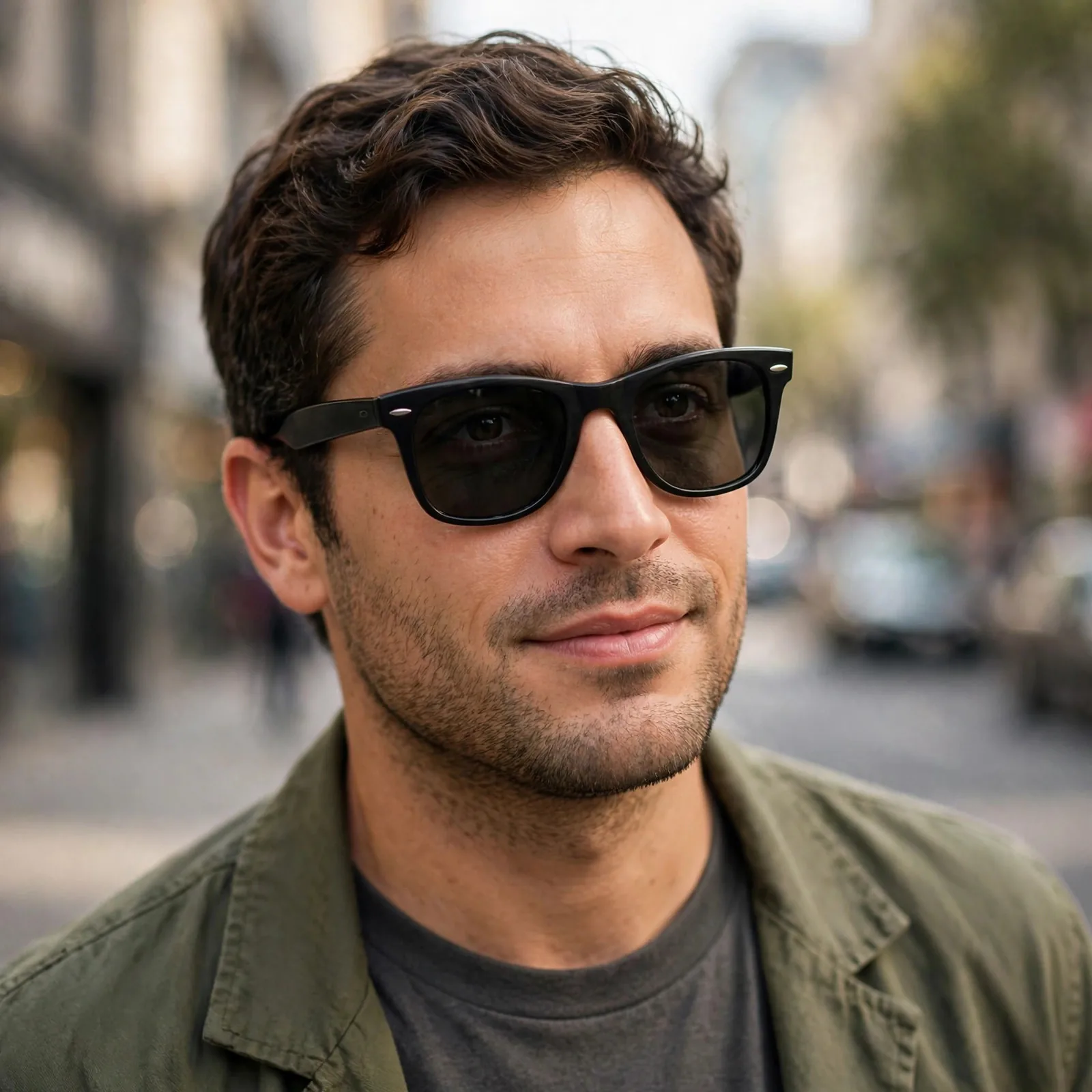
Men with oval faces have the easiest job in the sunglasses aisle: almost every frame shape works. Balanced proportions — a forehead slightly wider than the chin, gentle curves, length a bit more than width — mean you’re choosing for style and personality rather than correction. But “everything works” has its own pitfalls: the wrong size or the wrong proportions can still unbalance an oval face.
This guide covers the frame styles that look best, the sizing rules that matter, and the combinations to avoid.
The Sizing Rule That Matters Most
Forget frame shape for a moment — size is the real decision. The classic rule: your sunglasses should be roughly as wide as your face, with the frames ending near the temples. Too narrow and your face looks wider by comparison; too wide and the glasses wear you.
For oval faces specifically:
- The top of the frames should sit at or just below the brow line. Frames that cover the eyebrows throw off the face’s proportions.
- The bottom of the lenses shouldn’t extend past the cheekbones onto the mid-cheek.
- Leave a small gap at the temples — frames pressing into the sides mean they’re too narrow.
Get the size right and most frame shapes will look good. Get it wrong and even the “right” shape looks off.
Frame Styles That Suit Oval Faces
Wayfarer / Square Frames
The all-rounder. The wayfarer’s slight angles add definition to an oval face’s soft curves without fighting its balance. It’s the safest first pair and works from beach to business-casual.
Aviators
The teardrop shape mirrors the oval face’s own proportions — wider at the top, tapering down. Classic aviators flatter oval faces more naturally than almost any other shape. Keep the size moderate; oversized aviators can overwhelm.
Round Frames
Round lenses echo the face’s curves for a soft, intellectual look. They work well on oval faces because the face has enough length to carry them — on a rounder face they’d add too much curve, but oval proportions keep them balanced.
Rectangular Frames
Add a touch of structure and edge. A slightly angular rectangle gives an oval face definition without the harshness that strong angles can bring to square faces. Great for a sharper, more modern look.
Clubmaster / Browline
The bold upper frame draws attention to the eyes and brow — a strong look on oval faces, since the balanced forehead carries the heavier top line well.
What to Avoid
- Frames wider than your face. Oversized styles that extend well past the temples make an oval face look narrow and small.
- Tiny, narrow frames. The 90s-small-lens trend fights oval proportions — small lenses on a longer face look lost.
- Frames that sit on the cheeks. If the bottom of the lens rests on your cheek when you smile, the fit is wrong regardless of style.
- Perfectly mirroring your proportions in extreme. An extremely long, narrow oval frame on a long oval face exaggerates length. Keep some width in the frame.
Lens Color and Frame Color
Lens colors: Grey and green-grey are the most neutral — true color perception, suits everyone. Brown/amber adds warmth and contrast, flattering on warmer skin tones. Avoid very light fashion tints if you want the glasses to read as intentional rather than decorative.
Frame colors: Black and tortoise are universal. Match frame metal to your other accessories (watch, belt buckle) for a put-together look — silver frames with silver watch, gold with gold. This small detail is what separates “wearing sunglasses” from “styled.”
Matching Sunglasses to the Occasion
- Daily driver: Wayfarer or soft rectangle in black or tortoise. Goes with everything.
- Sport/outdoor: Wraparound or sport aviator with polarized lenses. Fit matters more than style here — they need to stay put.
- Evening/social: Round metal frames or a bold acetate. This is where personality gets to show.
- Formal: Slim rectangular or round metal frames in dark tones. Avoid mirrored or brightly colored lenses with tailoring.
Lens Technology Worth Paying For
Frames get the attention, but lenses do the work. For an everyday pair, two upgrades are worth the money:
- Polarized lenses. They cut glare from water, roads, and car hoods — a genuine functional upgrade, not a fashion one. Essential if you drive a lot or spend time near water. Note that polarization can make some car dashboard screens and phone displays look distorted; that’s normal.
- UV400 protection. Non-negotiable regardless of price. Dark lenses without UV protection are worse than no sunglasses at all, because the darkness makes your pupils dilate and admit more UV. Any reputable pair — even budget ones — should be labeled UV400.
Nice-to-haves rather than essentials: gradient tints (darker at top, lighter at bottom — good for driving), mirrored coatings (style-forward, hide your eyes), and photochromic lenses (darken in sunlight, though they don’t work well behind car windshields).
How to Test Fit In-Store (or at Home)
Buying online? Use this checklist when they arrive. In a store? Run through it before you pay:
- The shake test. Tilt your head forward and give it a gentle shake. The glasses shouldn’t slide or slip.
- The smile test. Smile broadly — the frames shouldn’t lift off your nose or press into your cheeks.
- The temple check. The arms should rest lightly without pinching. Red marks after five minutes mean they’re too tight.
- The brow check. Look straight ahead in a mirror — the top of the frames should sit at or just below your brows, not cover them.
- The width check. The frames should end near your temples. If there’s a finger-width gap between frame edge and face, size up.
Most fit issues are size issues, not style issues. A great-looking frame in the wrong size will never feel right.
A Note on Face Shape Certainty
All of this advice assumes an oval face — but plenty of men misidentify their shape (long faces often get called oval). If you’re not sure, our face shape detector guide explains the photo-measurement method, or run our free AI face analysis tool on the homepage for a quick read of your proportions. Buying frames for the wrong face shape is an expensive mistake this check prevents.
Frequently Asked Questions
What sunglasses look best on an oval face male?
Wayfarers, aviators, round frames, and soft rectangles all suit oval faces. The deciding factor is size — frames roughly as wide as the face, sitting at the brow line. Pick the style that matches your personal aesthetic.
Should oval face men wear round or square sunglasses?
Both work. Round frames echo the face’s curves for a softer look; square or rectangular frames add definition and edge. Neither is “correct” — it’s a style choice, which is the luxury of having an oval face.
Are aviators good for oval faces?
Yes — aviators are one of the best matches. The teardrop shape complements oval proportions naturally. Just keep them proportional: oversized aviators can dwarf the face.
How do I know if sunglasses fit properly?
Three checks: the frames end near your temples without pressing in, the top sits at or just below your brows, and they don’t slide down your nose or rest on your cheeks when you smile. Comfort is fit — if they need constant adjusting, the size is wrong.
Do lens colors matter for face shape?
Not for shape — lens color is about skin tone, style, and function (polarized for driving and water, darker for bright sun). For oval faces specifically, no lens color corrects or harms proportions; choose what suits your coloring and use case.