Best Lipstick Shades for Oval Face Shape (Undertone-First Guide)
Let’s be honest up front: the idea that your face shape dictates your lipstick shade is mostly marketing. What actually determines whether a lipstick looks good on you is your skin undertone and the occasion — not whether your face is oval, round, or square. An oval face (balanced proportions, gently rounded jaw) suits virtually every lipstick shade, which is exactly why this guide leads with undertone and treats face shape as a finishing consideration.
Step 1: Find Your Undertone (2-Minute Test)
Your undertone is the subtle hue beneath your skin’s surface. It never changes, and it decides which lipstick families flatter you.
The vein test: look at the veins on the inside of your wrist in natural light.
– Blue/purple veins → cool undertone
– Green veins → warm undertone
– Mix of both / hard to tell → neutral undertone
The jewelry test: which looks better against your skin — silver (cool) or gold (warm)? If both work, you’re likely neutral.
The white test: hold pure white paper near your face. Skin that looks rosy/pink next to it is cool; yellowish/golden is warm.
Not sure about your overall proportions? Our free face shape detector confirms whether you actually have an oval face — many people misjudge theirs.
Best Lipstick Shades by Undertone
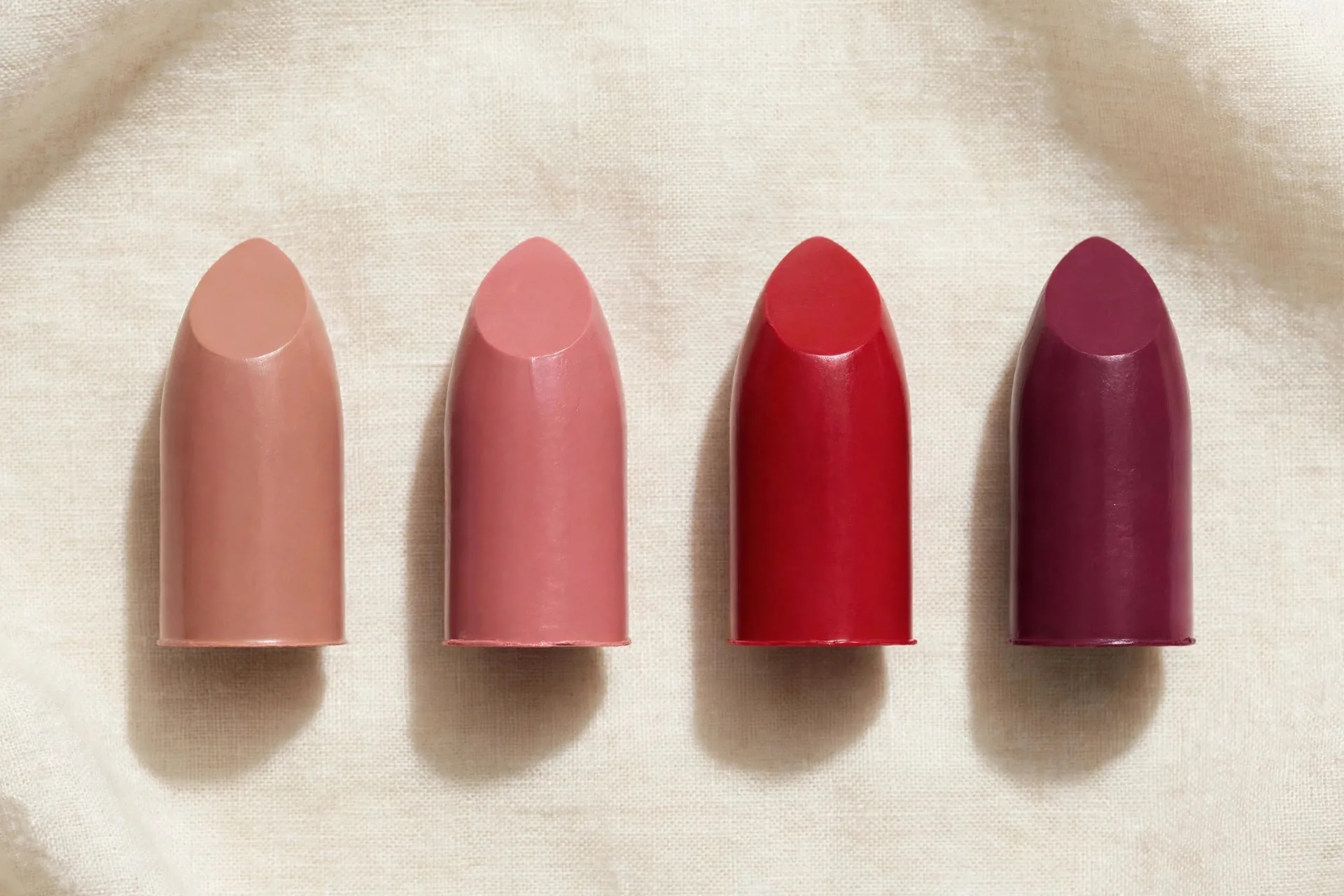
Cool undertones
- Blue-based reds (classic cherry, crimson) — the blue base brightens teeth and complements pink skin.
- Berry shades (raspberry, plum, wine) — rich without clashing.
- Mauves and cool pinks — everyday shades that won’t turn orange on you.
- Avoid: orangey corals and warm browns, which fight cool skin.
Warm undertones
- Orange-reds and brick reds (poppy, terracotta red) — harmonize with golden skin.
- Warm nudes (caramel, honey, cinnamon) — your can’t-miss everyday shades.
- Corals and peachy pinks — fresh and flattering.
- Avoid: icy blue-pinks and deep purple-browns, which can look ashy.
Neutral undertones
- Congratulations — you can wear nearly everything. True reds, rose, nude-pink, and berry all work.
- Your best strategy: choose by depth (how light/dark the shade is relative to your skin) rather than temperature.
12 Specific Shade Picks Worth Trying
Everyday nudes: MAC Velvet Teddy (warm), Maybelline Touch of Spice (neutral), Charlotte Tilbury Pillow Talk (cool-neutral)
Classic reds: MAC Ruby Woo (cool), NARS Dragon Girl (neutral-cool), Maybelline Red For Me (warm)
Berries & plums: Clinique Black Honey (universal), Revlon Black Cherry (cool), L’Oréal Plum (neutral)
Pinks & corals: Dior Addict Rose (cool), NYX Butter Gloss in Tiramisu (warm nude), Milani Color Statement in Fruit Punch (warm coral)
Drugstore and luxury formulas both appear here deliberately — the shade matters more than the price tag.
How Face Shape Actually Factors In
Since you have an oval face, here’s the small honest role it plays:
- Lip definition: oval faces have balanced features, so a defined lip line (lip liner matching your shade) enhances the natural harmony. This is where face-shape advice has a kernel of truth.
- Finish: matte finishes emphasize lip shape; glossy finishes add fullness. On balanced oval proportions, both work — choose by preference and occasion.
- Bold vs nude: oval faces carry bold lips well because no single feature dominates. If you’ve been hesitant about a strong red or deep berry, your face shape is on your side.
That’s really it. Anyone telling you oval faces “must” wear specific shade families is overselling it.
Application Tips for a Polished Result
- Exfoliate first. Dry lips make every shade look patchy. A damp toothbrush or lip scrub, 30 seconds.
- Line before filling. Lip liner in a matching shade prevents feathering and defines the shape — the step most people skip and most looks need.
- Blot and layer. One layer, blot with tissue, second layer. Doubles wear time.
- Clean the edges. A tiny flat brush with concealer around the lip line sharpens everything.
- Check in daylight. Store lighting is warm and flattering; daylight is the truth.
Lipstick Finishes: Matte vs Satin vs Gloss
The same shade in different finishes reads completely differently:
- Matte: most color payoff, longest wear, emphasizes lip texture (exfoliate first). Best for bold reds and berries where you want the shade to be the star.
- Satin/cream: the versatile middle — comfortable, moderate wear, flattering on most lip textures. The best default if you only buy one formula.
- Gloss: adds fullness and youthfulness, shortest wear, needs reapplication. Sheer glosses are the lowest-commitment way to test a bold shade family before buying it in matte.
- Stain: featherweight, long wear, builds from sheer to intense. Ideal if you hate the feeling of lipstick but want the color.
On oval faces specifically, finish choice is pure preference — your balanced proportions carry all of them. Choose by occasion and comfort.
Building a Seasonal Rotation
Undertone doesn’t change with seasons, but lighting and wardrobe do:
- Spring/summer: lighter, brighter versions of your shades — corals, rose pinks, sheer reds. Gloss finishes feel right in humidity.
- Autumn/winter: deeper versions — brick, wine, oxblood berries. Matte finishes suit the season’s heavier textures.
- Year-round anchors: your perfect nude and your perfect red never go out of season. If you own nothing else, own those two.
The One-Shade Wardrobe Strategy
If you want minimalism: pick one nude (your undertone’s family, close to your natural lip color but slightly deeper), one red (your undertone’s red), and one berry (for evening). Those three cover every situation, and you’ll actually finish the tubes.
How to Test Shades Before Buying
Lipstick is personal — test before committing:
- In-store: swipe on the back of your hand, then hold your hand near your face in the store’s brightest light. Better: ask for a disposable applicator and try it on the lips.
- At home (online orders): buy from retailers with good return policies, and test each shade in daylight — not bathroom light — before deciding.
- The wrist vs lips gap: shades look 1–2 tones darker on the pigmented lip than on skin. If a shade looks perfect on your hand, it’ll likely read slightly deeper on your lips.
- Phone photo test: take a selfie in daylight wearing the shade. Photos reveal whether a color harmonizes with your complexion more honestly than the mirror, which your brain auto-corrects.
Keep the winners, return the rest. Most people find their signature shades within 4–5 tries once they know their undertone.
FAQ
Does face shape really affect which lipstick suits me?
Barely. Undertone, lip pigmentation, and personal style matter far more. Oval faces suit the widest range of shades, so consider this guide permission to experiment rather than a set of rules.
What lipstick shade makes teeth look whiter?
Blue-based shades (cool reds, berries, wines). Orange-based shades do the opposite — they pull yellow from teeth. This is undertone-adjacent: cool-toned lipsticks whiten optically.
How do I stop lipstick from feathering?
Lip liner is the main fix, plus blotting between layers. If feathering persists, the formula may be too creamy for your lip texture — try a matte or long-wear version of the same shade.
Should my lipstick match my outfit or my skin?
Your skin (undertone) first, outfit second. A shade that flatters your complexion works with most outfits; a shade chosen to match clothes but wrong for your undertone flatters nothing.