Best Hairstyles for Heart Shaped Face Female 2026 (Trending)
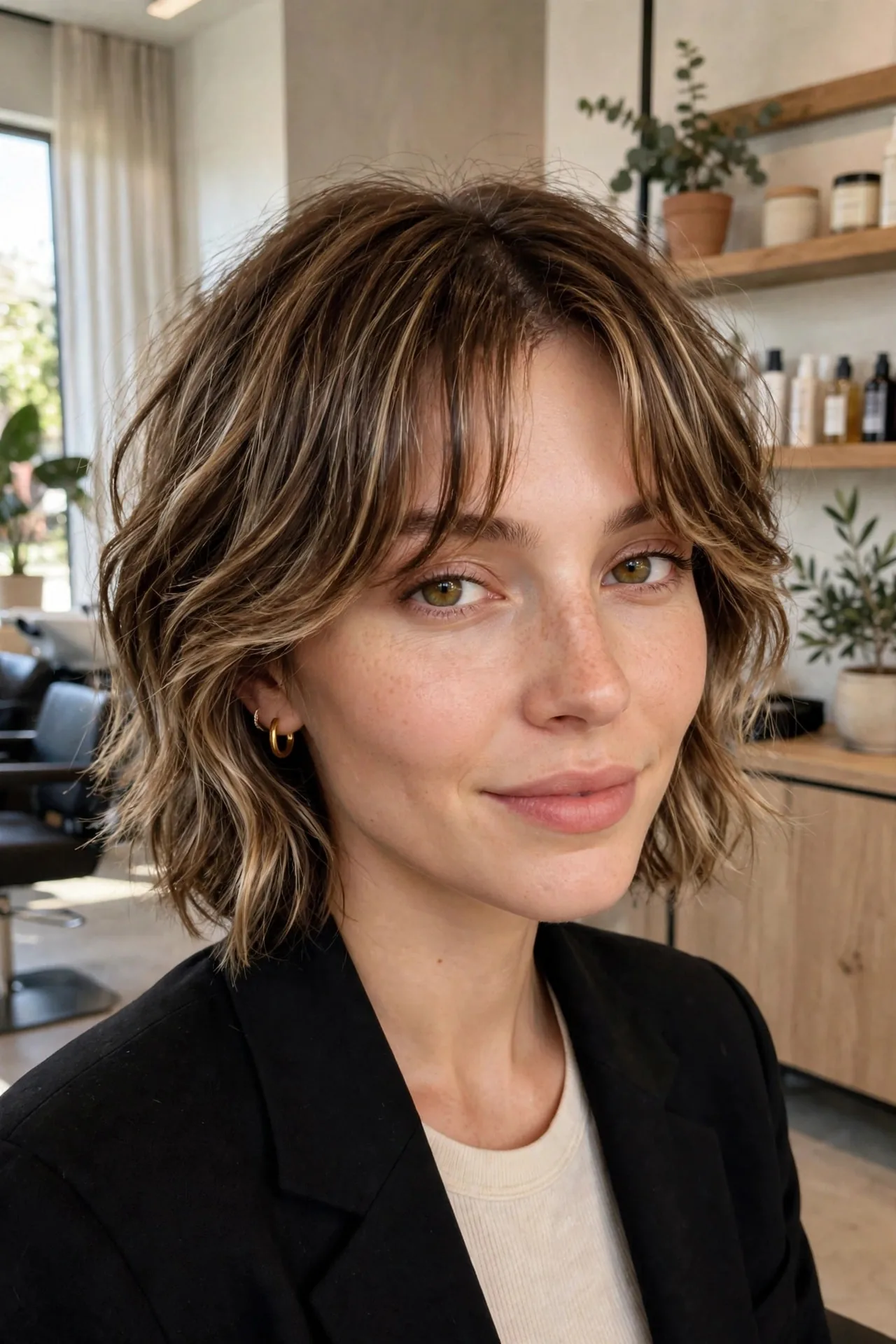
Chin-length bobs suit heart-shaped faces.
Key Takeaways:
- The heart-face formula: add fullness at the chin and jaw while softening the forehead.
- Side-swept bangs, chin-length bobs, and long layers with volume at the ends flatter most.
- Ask your stylist for layers that start below the cheekbones and textured ends.
- Color with dimension at the lower half, like balayage, enhances the balancing effect.
- Very short pixies or slicked-back styles can emphasize forehead width, approach with care.
The most common mistake I see on heart-shaped faces is best hairstyles that mirror the face shape instead of balancing it. That doubles down on a wide forehead tapering to a narrow chin when you want the opposite. Here is what to choose instead.
This guide covers the most flattering on-trend styles for heart-shaped faces right now, why they work with this year’s aesthetics, and the details to ask your stylist for.
The Heart-Face Formula (2026 Edition)
The timeless goal hasn’t changed: add visual width around the jaw and chin, soften the forehead. What 2026 changes is the toolkit, the current trend cycle favors softness, movement, and lived-in texture over sleek precision, which plays directly into heart-face strengths.
Three principles for every style below:
- Volume below the cheekbones. Fullness at the jaw level balances a narrow chin.
- Softness at the forehead. Bangs, face-framing pieces, and soft parts break up forehead width.
- Texture over sharp lines. The year’s undone textures blur the tapering from cheek to chin instead of outlining it.
The Trending Styles That Flatter Most
The Textured Lob (Long Bob)
The defining cut of the mid-2020s and still going strong in 2026. A lob hitting between the chin and collarbone puts its fullest point exactly where a heart face needs width, at the jaw. Ask for textured, lived-in ends rather than a blunt cut, and a soft center or slightly off-center part. This is the safest on-trend choice for heart faces.
Curtain Bangs + Layers
Curtain bangs remain a top 2026 trend, and they’re close to a perfect heart-face tool: they soften forehead width, frame the cheekbones, and the parted middle keeps length around the face. Pair with long layers that start at the chin, the layers add the jaw-level fullness the bangs’ softness complements.
The Butterfly Cut
2026’s volume-forward layered cut: short face-framing layers on top blending into long length below. The shorter upper layers add width around the cheeks and jaw while the long lengths keep things flowing. On a heart face, ask your stylist to concentrate the shortest layers at cheek-to-jaw level rather than higher, that’s where you want the fullness.
Soft Shag With Bangs
The modern shag’s choppy layers and fringe are naturally balancing for heart faces. The bangs minimize the forehead, the shaggy layers add width through the mid-face and jaw, and the undone texture keeps everything soft. Works especially well on wavy and curly hair, where the texture does half the work.
The Italian Bob
Chin-to-neck length with volume and a slight under-turn, the polished 2026 bob variation. The Italian bob’s fullness sits right at the jawline, which is exactly the balancing zone for a heart face. Keep the ends soft and tucked slightly under rather than flipped out.
Long Layers With Face-Framing
If you love long hair, 2026’s take is face-framing layers starting at the chin, worn with a middle part. The chin-level pieces add width where the face narrows, and keeping the top smooth avoids adding bulk to the already-wide forehead area. The least dramatic change with real balancing payoff.
Details to Ask Your Stylist For
- “Fullness at the jaw, not the crown.” Tell them directly where you want volume, stylists default to crown volume, which is the wrong zone for heart faces.
- “Chin-level layers.” The shortest face-framing pieces should start around the chin, not the cheekbones.
- “Soft, not blunt.” Textured ends throughout; blunt lines emphasize the face’s tapering.
- A part that suits you. Middle parts work with curtain bangs; a deep side part adds asymmetry that offsets forehead width. Try both in the chair before committing.
Color That Helps the Balance
2026’s color trends can assist the cut: face-framing highlights or money pieces draw light to the mid-face and jaw area, visually widening the narrower lower face. Balayage concentrated through the mid-lengths and ends (rather than at the roots) keeps brightness where the face needs fullness. Dark roots with lighter ends, still trending, also work, since the lighter ends sit at the jaw zone.
Styles to Be Cautious With
- Slicked-back, severe styles. Pulling everything back exposes the full forehead width with nothing to balance the chin.
- Pixie cuts with no fringe. Very short cuts remove the jaw-level hair that balances the face; if you go short, keep a fringe or longer top pieces.
- Top-heavy volume. Big crown volume with flat sides emphasizes the wide-forehead/narrow-chin contrast.
- Blunt chin-length bobs with center parts. The symmetry plus the hard line at the narrowest point of the face is the wrong combination.
Keeping the Cut Fresh: Maintenance Schedule
Trendy cuts only look trendy when maintained, grown-out layers lose the shape that made them flattering:
- Lobs and Italian bobs: trim every 8–10 weeks to keep the ends at jaw level, where the balancing fullness lives.
- Curtain bangs: trim every 4–6 weeks; overgrown curtain bangs lose their framing effect and just become long layers.
- Shags and butterfly cuts: every 10–12 weeks, with a focus on re-texturizing the ends rather than taking length.
- Color: face-framing highlights need refreshing every 8–12 weeks depending on how fast your hair grows and how much contrast you wear.
Book the next appointment before you leave the salon. The difference between a 2026-trend cut and a grown-out disappointment is almost entirely maintenance.
Confirming Your Face Shape First
All of this assumes a heart-shaped face, wide forehead tapering to a narrow chin. It’s commonly confused with oval and inverted-triangle shapes, and the styling advice differs. Before booking the cut, run our free AI face analysis tool on the homepage for a quick proportion check, or work through our face shape detector guide manually. The right cut for the wrong diagnosis is an expensive lesson.
Frequently Asked Questions
What is the most flattering 2026 hairstyle for a heart-shaped face?
The textured lob with curtain bangs, it combines the year’s two biggest trends with the heart face’s two biggest needs: jaw-level fullness and forehead softness. It’s also the most versatile across hair types.
Are curtain bangs good for heart-shaped faces?
Yes, they’re one of the best fringe options. They soften forehead width without the heaviness of blunt bangs, and the face-framing pieces add width through the cheeks. They’ve stayed on-trend into 2026 for good reason.
Should heart-shaped faces wear their hair long or short?
Medium lengths (lob to long layers) flatter most, because they allow fullness at the jaw. Very long one-length hair can drag the eye down to the narrow chin; very short cuts remove balancing volume. The sweet spot is chin-length and below with layers.
What part suits a heart-shaped face in 2026?
Middle parts work well with curtain bangs and long layers; deep side parts add flattering asymmetry. Avoid severe, scraped-back parts that expose the full forehead.
Do layers or one-length cuts suit heart faces better?
Layers, specifically chin-level and below layers that add width where the face narrows. One-length cuts emphasize the face’s natural tapering, which is what you’re trying to balance. And as our facial fifths guide shows, the eye reads a face as balanced when its horizontal zones relate well, layers are simply the hairstylist’s tool for nudging that read.