
Short Hairstyles for Square Face Female: Soften the Jaw
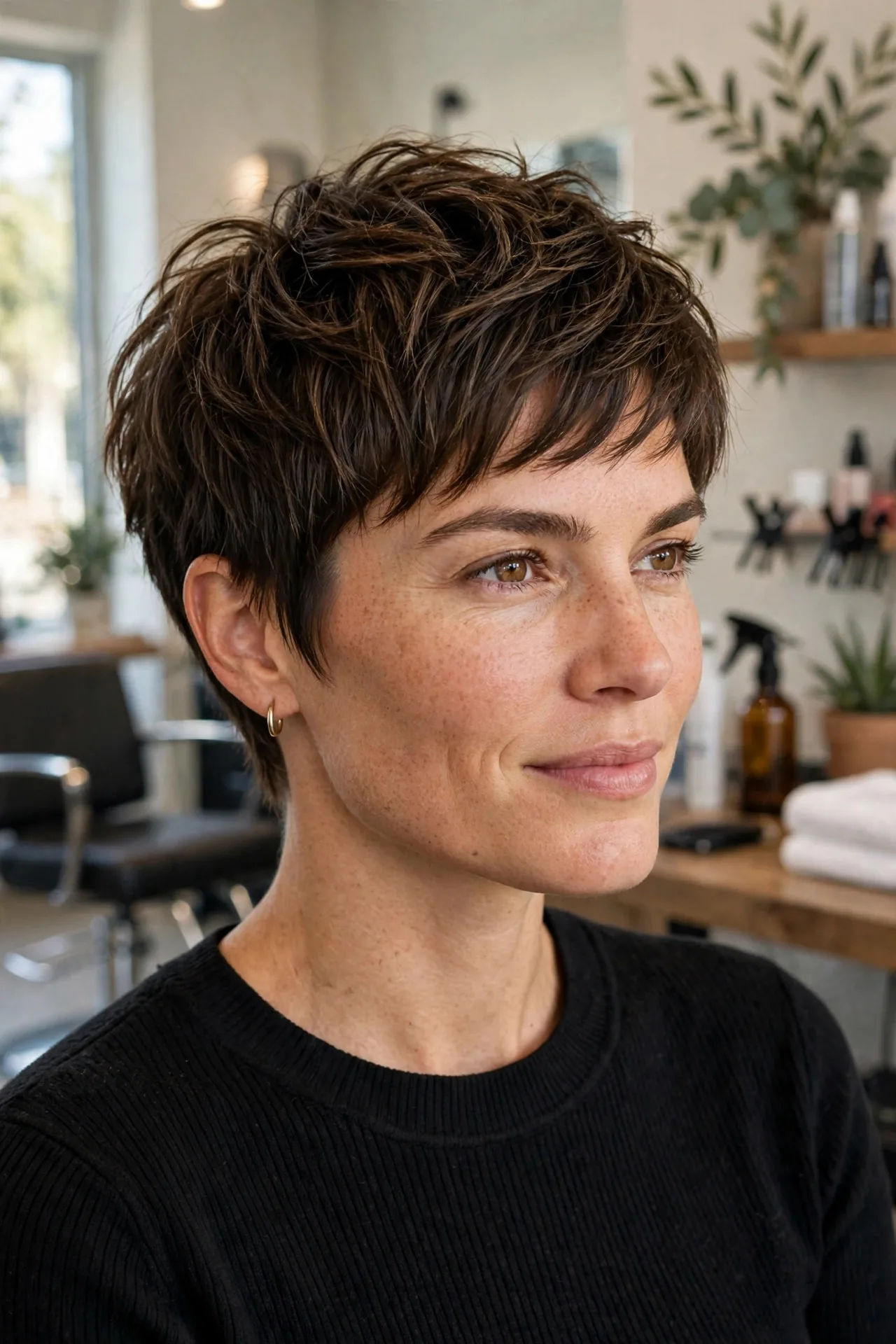
Short hair and square faces are a great combination — when the cut is right. A square face brings strong, striking bone structure: a broad forehead, wide cheekbones, and a defined jawline. The right short cut softens those angles with texture, asymmetry, and movement around the jaw. The wrong one — usually something blunt, boxy, and chin-length — just frames the jaw and makes it the whole story.
This guide covers the short styles that flatter square faces, the cutting details that do the softening, and what to avoid.
The Softening Toolkit: What Works and Why
Before the specific cuts, the principles. Every flattering short cut for a square face uses at least two of these:
- Texture over bluntness. Choppy, piece-y ends break up strong lines; blunt edges echo them.
- Asymmetry. A deep side part or asymmetric cut offsets the face’s natural symmetry and draws the eye diagonally rather than straight across the jaw.
- Height and volume on top. Crown volume elongates the face, balancing a jaw that reads wide.
- Face-framing pieces. Soft strands falling around the jaw blur its edge instead of outlining it.
- Avoiding the jawline “shelf.” A cut that ends in a hard horizontal line exactly at the jaw is the single most unflattering choice — it spotlights the widest, most angular part of the face.
The Best Short Cuts for Square Faces
The Textured Pixie
Short, choppy, with longer pieces on top and soft texture through the crown. The pixie works on square faces because it removes the hair that would frame the jaw and replaces it with crown height and piece-y texture. Ask for: longer on top, textured (not blunt) edges, and softness around the ears rather than a harsh taper. Style with a matte paste, pushing the top forward or to the side for asymmetry.
The Side-Swept Pixie / Long Pixie
A pixie grown out on top with a deep side sweep. The diagonal line of the fringe breaks up the face’s symmetry beautifully, and the longer top pieces can be styled to fall softly past the cheekbone. This is the most forgiving pixie variation for square faces.
The Soft Layered Bob (Chin-Length or Shorter — Done Right)
A bob can work if it avoids the jawline shelf. The trick: go shorter than the jaw or add serious texture. A bob that ends above the jawline (a “micro bob” or French bob) with textured ends and a side part flatters; a blunt bob ending exactly at the jaw does not. Layers through the bottom half keep it from sitting like a helmet.
The Asymmetric Bob
One side slightly longer than the other. The asymmetry is doing real work here — it pulls the eye diagonally across the face instead of letting it rest on the jaw’s horizontal line. Pair with texture and a deep side part for maximum effect.
The Shaggy Pixie / Bixie
The bixie (bob-pixie hybrid) with shaggy layers is practically designed for square faces: layers everywhere, no blunt lines, movement in all directions, and natural volume on top. It’s low-maintenance and grows out gracefully.
The Curly Pixie
Natural curls or a curly cut on short hair. Curls are the ultimate angle-softener — every curve in the hair contrasts with the angles of the face. If you have natural texture, a short curly cut is one of the most flattering options available.
Cuts to Avoid
- The blunt chin-length bob. Ends exactly at the jaw in a hard line — frames and emphasizes the jaw.
- The severe center-part bob. Symmetry plus bluntness plus jaw-length equals maximum angle emphasis.
- The buzz cut / very tight crop. Exposes the entire bone structure with nothing to soften it. Striking on some, but it maximizes rather than balances squareness.
- Stick-straight, one-length short cuts. No texture means nothing to break up the angles.
Styling Tips That Soften
- Always add texture. Even a simple bob looks softer with waved or piece-y ends. A flat iron used to create bends (not pin-straightness) is your friend.
- Side part, always. A deep side part is the easiest single change — it creates instant asymmetry.
- Tuck one side, leave the other loose. The asymmetry trick in styling form; the loose side’s strands soften the jaw.
- Volume at the crown. A little backcombing or root-lifting product at the crown elongates the face.
- Soften with color. Face-framing highlights or balayage around the jaw draw light to the hair instead of the bone structure.
Growing Out Gracefully
Short cuts grow out — and square faces show awkward grow-out faster than most, because the softening came from deliberate texture and shape. Plan the grow-out:
- Pixie to bob: let the top and sides grow while keeping the nape trimmed. You’ll pass through a shaggy stage — lean into it with texture product rather than fighting it flat.
- Bob to lob: keep the ends textured with regular dusting trims (every 8–10 weeks). The goal is a grown-out shag, not a grown-out blunt cut.
- Know your next cut. Having the next style in mind turns grow-out from an awkward phase into a transition. Most pixies grow beautifully into bixies and shags with minimal intervention.
Talking to Your Stylist
Bring photos of cuts you like on square faces specifically — a pixie that looks amazing on an oval face may need adaptation. Tell your stylist three things: your face shape, that you want to soften (not hide) the jawline, and how much daily styling you’ll actually do. A textured pixie that needs 10 minutes of styling is worse than a wash-and-go shag if you’re a 2-minute person.
If you’re not certain about your face shape, our free AI face analysis tool on the homepage maps your proportions from a photo in seconds — useful intel before a dramatic cut. Our face shape detector guide covers the manual method too.
Frequently Asked Questions
Can square face women wear pixie cuts?
Absolutely — the textured pixie is one of the best short cuts for square faces. The key is texture and softness: choppy layers, longer pieces on top, and no harsh blunt edges. Avoid severe, geometric pixies.
What bob length is best for a square face?
Either go shorter than the jawline (micro/French bob with texture) or well below it. The danger zone is a blunt cut ending exactly at the jaw. Asymmetry and a side part make any bob length more flattering.
Should I get bangs with a square face?
Side-swept or curtain bangs — yes, they soften the forehead and add asymmetry. Blunt straight-across bangs — usually no, since they add another hard horizontal line to an already angular face.
Does short hair make a square jaw look bigger?
The wrong short cut can, by framing the jaw with nothing to soften it. The right cut — textured, asymmetric, with crown volume — does the opposite. It’s never about the length alone; it’s about the lines of the cut.
How do I style a pixie to soften my jawline?
Push the top forward or to the side (never slicked straight back), keep the texture piece-y with a matte product, and let a few soft pieces fall around the ears and temples. The goal is controlled messiness — every soft edge contrasts with the jaw’s angles, which is exactly the point.


