Curtain Bangs for Heart Shaped Face: Styling Guide
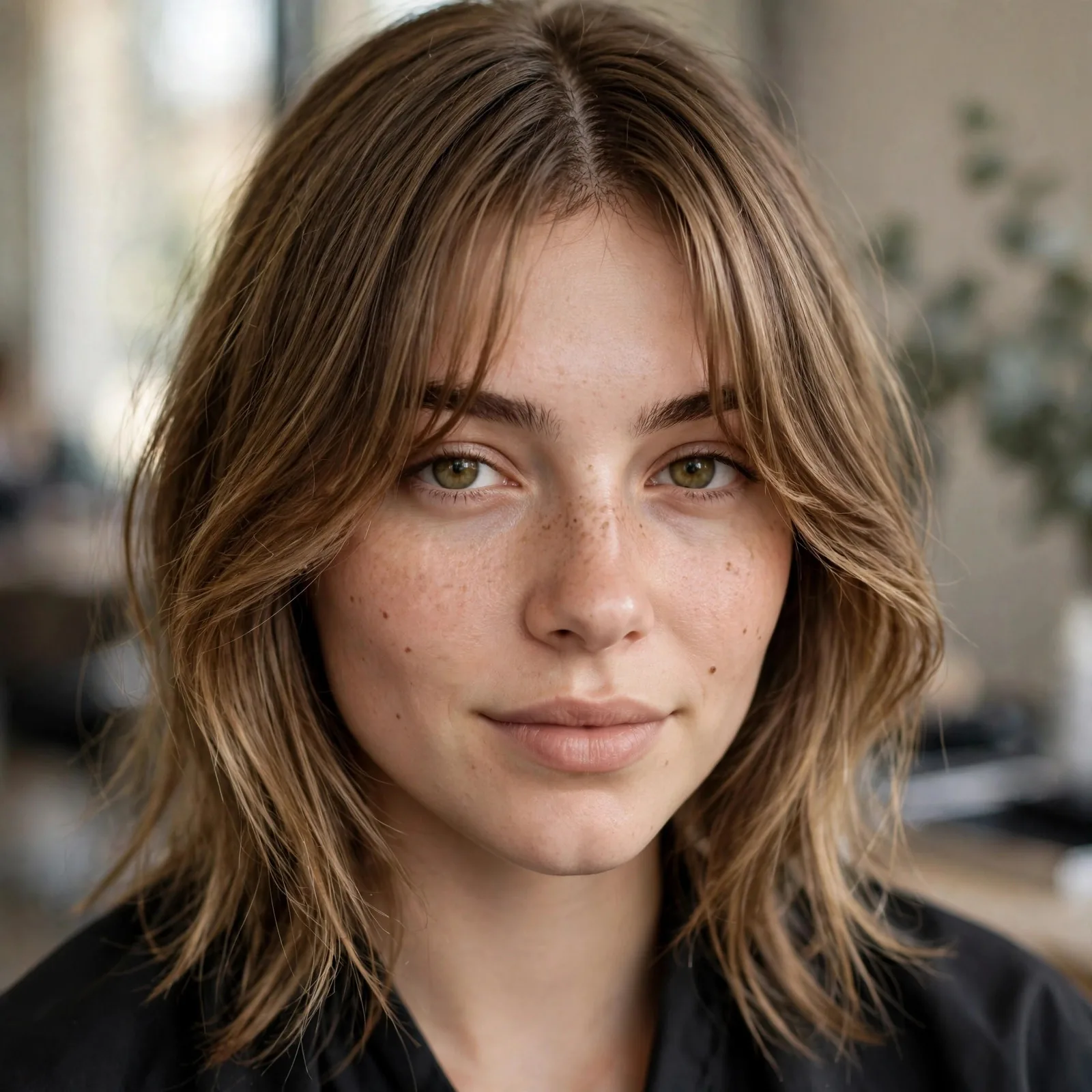
Curtain bangs are one of the most flattering haircuts for a heart shaped face, and the reason comes down to geometry. Heart shaped faces are wider at the forehead and temples and taper down to a narrower, often pointed chin. Curtain bangs — parted down the middle and swept to either side like curtains — do exactly what this face shape needs: they break up the width of the forehead, draw attention toward the eyes and cheekbones, and leave the lower face open so the chin doesn’t look pinched. If you want to be sure about your face shape before booking the chop, Russella’s face shape detection tool gives you a free AI analysis in seconds.
Why Curtain Bangs Suit Heart Shaped Faces
Most bang styles sit straight across the forehead, which can actually emphasize a wide forehead on a heart shaped face by creating a hard horizontal line. Curtain bangs do the opposite. Because they part in the center and angle outward, they create a soft inverted V that narrows the forehead visually while opening up around the eyes.
The second benefit is where the bangs end. Curtain bangs are typically cut so the longest pieces graze the cheekbones or jawline, which adds width exactly where a heart shaped face is narrowest. This balances the facial thirds — forehead, midface, and lower face — so no single third dominates.
The cheekbone connection matters too. The distance between facial landmarks influences how harmonious a haircut looks — the facial fifths guide explains how the face divides vertically, and curtain bangs framing the cheekbones land on one of those key divisions, which is why they look so naturally balanced.
The Ideal Length and Parting
Length
For a heart shaped face, curtain bangs work best when they are long enough to reach the cheekbones at minimum, and ideally the jawline. The shortest pieces near the center part usually start around the eyebrows or the bridge of the nose, then graduate longer toward the sides. Bangs cut too short — ending above the eyes all the way across — recreate the horizontal-line problem and draw attention to forehead width. Ask your stylist for bangs where the longest strands hit between the cheekbones and the chin: this length softens the forehead and adds flattering fullness around the narrower lower face.
Parting
A center part is the classic and most flattering option for this combination. It creates perfect symmetry, which balances the tapered chin of a heart shaped face. A slightly off-center part can also work and adds a more relaxed, modern feel, but avoid deep side parts — they pile hair on one side of the forehead and can make the face look lopsided. If your natural part falls to the side, retrain it gradually by parting damp hair down the middle and letting it dry that way.
How Curtain Bangs Frame the Cheekbones
The magic of curtain bangs on a heart shaped face is in the framing. As the bangs sweep outward from the center part, they skim past the temples and curve around the cheekbones, creating soft diagonal lines that do two jobs at once: they veil the widest part of the forehead and spotlight the cheekbones — often the strongest feature of a heart shaped face.
To make the most of this effect, ask for face-framing layers that connect the bangs to the rest of your hair. A disconnect between short bangs and long, unlayered hair can look choppy; blended layers let the curtain effect flow naturally from the forehead down past the jawline, which also adds gentle width where the face narrows.
Styling Tips: Round Brush and Heatless Methods
Curtain bangs are famously low-maintenance, but they need a little direction to fall correctly:
- Round brush blowout: After washing, blow-dry the bangs with a medium round brush, rolling them away from the face on each side. This sets the outward sweep and gives the center part a soft lift instead of lying flat against the forehead.
- Velcro rollers: For a heat-free option, wrap each side of the bangs around a large velcro roller away from the face while you do your makeup, then remove. Ten minutes is enough to set the shape.
- Heatless overnight method: Twist each side of the bangs away from the face and pin loosely, or wrap them in a silk scarf. You’ll wake up to a natural curtain fall with no heat damage.
- Flat iron touch-ups: On second or third day hair, a quick pass with a flat iron curving outward refreshes the sweep. Keep the heat moderate and use a heat protectant.
- Dry shampoo at the roots: Bangs sit on the forehead and pick up oil faster than the rest of your hair. A light dusting of dry shampoo at the roots keeps them fresh between washes without a full shampoo.
Avoid over-styling the bangs straight down — flat, straight-across bangs lose the curtain effect and its face-balancing benefits.
Growing Them Out
One of the best things about curtain bangs is the grow-out. Because they are already long and layered, they blend into face-framing layers and then into the rest of your hair with minimal awkward phases. If you decide to grow them out:
- Keep the center part — it helps the growing bangs blend symmetrically into layers on each side.
- Ask your stylist to trim your layers to meet the bangs halfway, so the transition looks intentional.
- Use the round brush or roller method to sweep growing bangs to the sides; tucked behind the ears, they pass as face-framing layers within a few months.
Who Should Be Cautious
Curtain bangs suit most hair types, but very fine hair deserves some consideration. Fine hair can separate and look sparse when parted down the middle, which may expose more forehead rather than veiling it — the opposite of the desired effect. If your hair is very fine, ask your stylist to keep the bangs slightly denser at the center, use volumizing products at the roots, and consider a slightly off-center part so the hair doesn’t split into two thin wings. Very curly hair can also work beautifully, but the bangs will spring up shorter than cut — ask for them to be cut longer than the target length to account for shrinkage.
Confirm Your Face Shape Before the Cut
Bangs are a commitment — even low-maintenance ones. If you are between heart shaped and oval, get a free AI face analysis at Russella before you book the appointment. Knowing your exact face shape means your stylist can cut with confidence.
Frequently Asked Questions
Do curtain bangs suit a heart shaped face?
Yes — curtain bangs are one of the best bang styles for heart shaped faces. The center part and outward sweep break up forehead width, while the longer pieces frame the cheekbones and add balance to the narrower chin.
What length should curtain bangs be for a heart shaped face?
The shortest pieces should start around the eyebrows or nose bridge, with the longest strands reaching the cheekbones at minimum and ideally the jawline. Bangs cut too short emphasize forehead width instead of softening it.
Should curtain bangs have a center part?
A center part is the most flattering option for heart shaped faces because it creates symmetry that balances the tapered chin. A slightly off-center part works too, but deep side parts can make the face look uneven.
Are curtain bangs good for thin fine hair?
They can be, with adjustments. Very fine hair may separate at a center part and look sparse, so keep the bangs slightly fuller, add root volume, and consider a soft off-center part to avoid the hair splitting into thin sections.
How do you style curtain bangs without heat?
Use large velcro rollers on each side for about ten minutes, or twist the bangs away from the face and pin them loosely overnight. Both methods set the outward curtain sweep with no heat damage.