
Wondering how attractive am I or seeking an objective AI attractiveness rater? Our studio-grade AI face rater and facial analysis engine evaluates facial symmetry, golden ratio face proportions, midface ratio, and canthal tilt with 478 3D landmarks. If you’ve wondered how attractive am I AI or want to explore how attractive am I using artificial intelligence, get your free, instant analysis right in your browser.
Upload or Drop Your Frontal Portrait
Drag & drop your headshot, select a file, or use your device camera for an instant, private facial symmetry test and beauty score.
Sub-100ms Inference
Hardware-accelerated WebAssembly canvas analysis.
478 3D Landmarks
Deep facial contour, iris, and midface ratio coordinates.
Disclosed Math Formula
Transparent geometric weighting and PSL rating alignment.
Viral 9:16 Face Card
Instant export for TikTok and Instagram Story.
Superior Facial Harmony & Architectural Balance
Landmark geometry reflects superior bilateral symmetry with near-optimal facial thirds and classic golden ratio proportions.
Six-Axis Scientific Harmony Breakdown
Bilateral Symmetry
Evaluates mirroring between zygomatic, orbital, and gonial landmark pairs across the facial midline.
Vertical Facial Thirds
Divides face into upper, middle, and lower sections. Evaluates variance against the 1:1:1 canon.
Horizontal Facial Fifths
Evaluates the 5 transverse segments from ear margin to eye, eye fissure width, and intercanthal gap.
Golden Ratio Phi (1.618)
Compares facial bounding proportions and inter-feature distances against the golden constant phi.
Canthal Tilt Vector
Angle of the palpebral fissure. Positive tilt (+3° to +6°) is traditionally considered youthful and alert.
Jawline & Gonial Angle
Calculates ramus-to-mandible bone angle and sharpness of jawline-to-neck transition.
Actionable Aesthetic & Styling Roadmap
Constructive, non-surgical styling adjustments tailored to your detected facial bone geometry:
Haircut & Framing
Curtain bangs, textured quiff, or soft layering to highlight balanced cheekbones.
Eyewear Optimization
Geometric, cat-eye, or rectangular frames that maintain width proportion.
Posture & Grooming
Maintain clean eyebrow arches and upright cervical spine posture for jawline definition.
Take a Live Portrait
The AuraFace Standard
Why Choose Our Face Attractiveness Analyzer
Engineered for anyone asking “am I attractive” or seeking an objective face rating without black-box estimations, cloud uploads, or paywall traps. Whether you want to test attraction, take a face attractiveness test, or calculate your ai attractiveness rating, our platform delivers unmatched privacy and precision.
100% On-Device Client Privacy
Your photos are processed exclusively inside your browser’s local sandbox memory using WebAssembly. No image files are ever uploaded, transmitted, or stored on external cloud servers.
478 3D Landmark High-Density Mesh
Rather than relying on coarse 68-point outlines, our convolutional neural mesh tracks 478 high-precision 3D sub-pixel coordinates spanning orbital contours, alar base, and jawline angles.
Fully Disclosed Scientific Formulas
Zero black-box guessing. Unlike typical face rating AI apps that assign arbitrary looks rating scores, every metric is derived from published anthropometric canons: Bilateral Facial Symmetry (30%), Vertical Thirds (20%), Horizontal Fifths (20%), Golden Ratio Face Phi Proximity (15%), and Canthal Tilt & Jaw Angles (15%).
Actionable Non-Surgical Roadmap
We don’t just output a cold face score or attractive scale number; our integrated face shape detector identifies your skeletal proportions and delivers constructive hairstyle, eyewear, and posture levers to tangibly improve facial harmony.
Viral 9:16 Social Face Card
One-click export of an ultra-aesthetic 1080×1920 high-resolution graphic showing your photo, score, archetype title, and 6-axis badges, perfectly formatted for TikTok and Instagram.
Instant & 100% Free Face Analysis Forever
Sub-100ms hardware-accelerated face scanner and facial analyser with zero mandatory sign-up, zero credit deductions, and zero hidden weekly subscription paywalls.
Superior Facial Harmony & Architectural Balance
Landmark geometry reflects superior bilateral symmetry with near-optimal facial thirds and classic golden ratio proportions.
Six-Axis Scientific Harmony Breakdown
Bilateral Symmetry
Evaluates mirroring between zygomatic, orbital, and gonial landmark pairs across the facial midline.
Vertical Facial Thirds
Divides face into upper, middle, and lower sections. Evaluates variance against the 1:1:1 canon.
Horizontal Facial Fifths
Evaluates the 5 transverse segments from ear margin to eye, eye fissure width, and intercanthal gap.
Golden Ratio Phi (1.618)
Compares facial bounding proportions and inter-feature distances against the golden constant phi.
Canthal Tilt Vector
Angle of the palpebral fissure. Positive tilt (+3° to +6°) is traditionally considered youthful and alert.
Jawline & Gonial Angle
Calculates ramus-to-mandible bone angle and sharpness of jawline-to-neck transition.
Actionable Aesthetic & Styling Roadmap
Constructive, non-surgical styling adjustments tailored to your detected facial bone geometry:
Haircut & Framing
Curtain bangs, textured quiff, or soft layering to highlight balanced cheekbones.
Eyewear Optimization
Geometric, cat-eye, or rectangular frames that maintain width proportion.
Posture & Grooming
Maintain clean eyebrow arches and upright cervical spine posture for jawline definition.
Computer Vision Architecture
How Our 5-Step AI Landmark Engine Audits Facial Geometry
From browser pixel ingestion to 478 3D vector normalization — discover how our client-side WebAssembly engine extracts millimeter-level aesthetic coordinates in under 100 milliseconds.
Spatial Ingestion & Preprocessing
Your portrait is oriented, checked for minimum focal resolution, and balanced for dynamic range on a client-side offscreen canvas without saving or uploading your raw image.
478 3D Landmark Localization
Our convolutional neural mesh maps 478 precision 3D spatial points across cranial margins, iris centers, palpebral fissures, alar base, and mandibular jaw contours.
Bilateral Sagittal Midline Derivation
The system fits an anatomical vertical axis connecting the glabella, pronasale, and menton, measuring Euclidean mirroring distance across 36 bilateral landmark pairs.
Anthropometric Ratio Evaluation
Quantifies neoclassical vertical thirds, transverse fifths, divine golden ratio phi (Φ ≈ 1.618), canthal tilt angle, and mandibular gonial definition against classical canons.
Calibrated Normalization & Synthesis
The six weighted geometric vectors are compiled against a standardized aesthetic distribution curve, generating your 0–100 score, archetype, and exportable Face Card.
100% Client-Side WebAssembly Advantage
Unlike traditional AI face rating apps that send your sensitive personal selfies to distant third-party GPU servers, AuraFace AI executes all 478 landmark matrix calculations directly inside your browser’s local sandbox memory. Zero latency, zero data retention, and complete privacy guaranteed.
Eliminating Camera Distortion
What influences your score, and why it changes between photos
Why does the same individual score an 88 on one portrait and a 73 on another? Understand how lens focal length, lighting angles, head rotation, and facial tension warp detected landmarks.
Focal Length & “Fisheye” Distortion
Smartphone front cameras use wide-angle lenses (24mm–28mm). Held close to the face, perspective distortion inflates central features (nose) by up to 30% while compressing cheekbones. A 50mm–85mm portrait distance reveals your true bone structure.
Directional Shadows vs Diffuse Luminance
Harsh overhead lighting casts false shadows under the brow bone and deepens tear troughs and nasolabial folds. Diffuse, eye-level ambient lighting ensures the AI reads natural resting bone contours rather than harsh shadows.
Roll, Pitch & Yaw Head Tilts
Even a 3° to 5° head rotation or chin tilt reduces bilateral symmetry by over 10 points. For an accurate mathematical baseline, align your eyes horizontally with the camera lens with zero tilt.
Resting Facial Tonus vs Forced Pouts
Smiles and raised eyebrows naturally alter facial thirds and pull the corners of the lips. A completely neutral, relaxed expression allows the algorithm to measure your resting skeletal architecture accurately.
Camera Elevation & Sensor Convergence
Shooting from beneath the chin foreshortens the forehead while artificially elongating the lower jaw. Shooting from above shrinks the chin. Keeping the lens precisely parallel to eye level ensures true anatomical fidelity.
Motion Blur vs Edge Definition
Aggressive software smoothing filters or hand shake smear sub-pixel iris and orbital borders. Crisp, unfiltered optical focus enables our neural network to pin 478 3D coordinates with sub-millimeter precision.
Studio Calibration Standards
Tips for more accurate face attractiveness analysis
Follow these evidence-based photography guidelines to ensure our 478 3D landmark engine measures your genuine anatomical proportions without environmental distortions.
Recommended Photo Conditions
-
Camera at Exact Eye Level: Hold phone at arm’s length or 4–6 feet away using a timer or tripod to prevent wide-angle distortion.
-
Balanced, Natural Window Light: Soft daylight facing you illuminates features evenly without harsh bilateral shadows.
-
Completely Neutral Expression: Relax forehead and jaw, keeping lips lightly touching without smiling or squinting.
-
Hair Tucked Behind Ears: Ensures full visibility of the forehead hairline (trichion) and jawline angles (gonion).
-
No Thick Glasses or Occlusions: Remove heavy dark frames or hats that obscure eyebrow arches and orbital contours.
Conditions That Falsely Lower Scores
-
Close-Up “Arm-Length” Selfies: 24mm camera distortion expands nose width and falsely reduces golden ratio alignment.
-
Overhead Fluorescent Lighting: Creates artificial dark bags beneath the eyes and darkens the lower facial third.
-
Side Angles & Head Tilts: Any three-quarter angle breaks the vertical symmetry axis, skewing left-right parity.
-
Heavy Filters & Smoothing: Beauty smoothing blurs essential anatomical landmark edges needed for sub-pixel localization.
-
Asymmetrical Smirks or Pouts: Contracting one cheek or puckering lips falsely skews midline reflection metrics.
Full Mathematical Transparency
How Your Attractiveness Score Is Calculated
Unlike black-box AI tools that output arbitrary numbers, AuraFace AI publishes its exact mathematical formula and component weightings, serving as the benchmark standard in facial attractiveness test methodology.
Bilateral Facial Symmetry
Calculates mirroring error between 36 paired landmark vectors across the vertical sagittal midline for our face symmetry test and facial symmetry test to check face symmetry. Having a naturally symmetrical face is recognized in every beauty symmetry test and symmetrical face test as a fundamental indicator of aesthetic balance.
Vertical Facial Thirds
Forehead (trichion to glabella), midface (glabella to subnasale), and lower jaw (subnasale to menton) compared against 1:1:1.
Horizontal Facial Fifths
Checks whether the face width equals five equal eye-width segments as defined in classical Renaissance art canons.
Golden Ratio & Divine Proportion
Proximity of total face height to bizygomatic width against the divine proportion phi (Φ = 1.618) to evaluate a mathematically perfect ratio face. This measures your golden face ratio and convergence on the classical golden section face.
Canthal Tilt & Jaw Definition
Evaluation of palpebral fissure inclination (+3° to +6° positive canthal tilt vs downward negative canthal tilt) and mandibular gonial bone contour.
Calibrated Aesthetic Bands
What Your Face Rating Score Means
Scores reflect objective geometric alignment with selected proportional canons, placed within a normal distribution curve.
| Score Range | Classification Tier | Aesthetic Distribution | Architectural Profile |
|---|---|---|---|
| 88 – 100 | Showstopper | Top 4% of Scans | Exceptional bilateral symmetry, tight convergence on golden ratio canons, and distinct bone definition. |
| 83 – 87 | Standout | Top 15% of Scans | High structural cohesion, well-balanced facial fifths, and harmonious eye-to-mouth proportions. |
| 78 – 82 | Glow-Up Tier | Top 35% of Scans | Above-average measured balance with identifiable levers for hairstyle, grooming, or lighting enhancement. |
| 65 – 77 | Harmonious | Core Distribution | Distinctive, expressive facial characteristics. Minor camera tilt or focal length changes heavily modulate scores. |
| < 65 | Foundation | Base Distribution | Unique feature balance deviating from standard canons; high upside through camera angle and flattering lighting. |
Decoding the PSL Scale, 1–10 Beauty Scales & Objective Facial Ratings
When people search to rate my face, ask how attractive am I, how pretty am I, how beautiful am I, or wonder am I beautiful or am I good looking, they often encounter community frameworks like the PSL scale (a 1 to 8+ system grading Prettiness, Status, and Looks, often searched as a PSL. score) or informal 1–10 beauty scales and attraction scale rankings. While online communities focused on rating looks are inherently subjective and variable, our calibrated 0–100 face rating AI uses millimeter-precise 3D landmark geometry. Our attractiveness calculator translates classic aesthetic canons into reproducible mathematical percentiles — so you understand the exact skeletal balance, midface ratio, and symmetry that establish your true face score.
Demonstrated Geometric Audits
Sample results across different faces
Explore real-world landmark scans across diverse facial archetypes — evaluating how symmetry, facial thirds, and bone angles compute objective harmony scores.
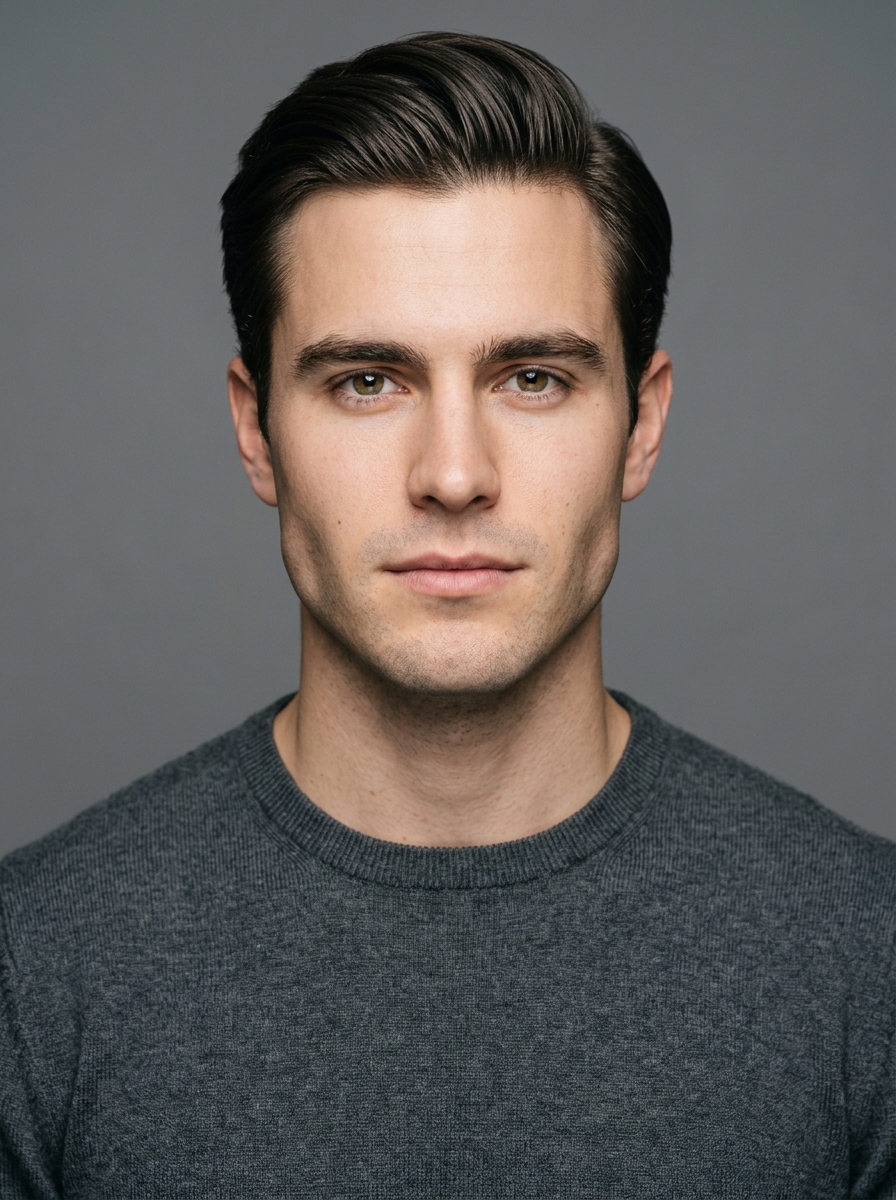
 91.4
Showstopper • Top 4%
91.4
Showstopper • Top 4%
Harmonious Luminary
Near-perfect horizontal fifths with intercanthal width matching eye length, alongside an optimal +4.8° positive canthal tilt and exceptional bilateral symmetry.
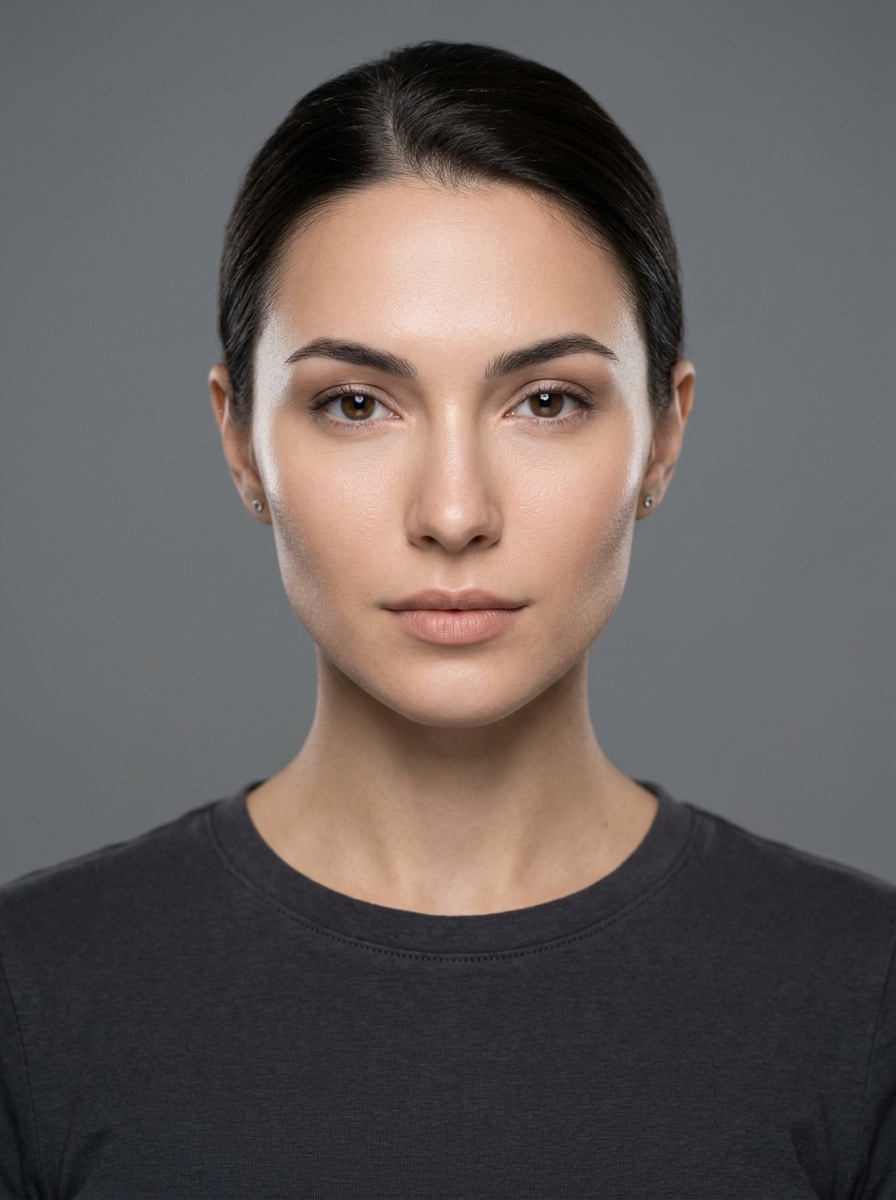
 89.8
Showstopper • Top 4%
89.8
Showstopper • Top 4%
Classical Apollo
Prominent bizygomatic cheekbone width, a sculpted 121° gonial jaw angle, and tight golden ratio facial compactness with balanced 1:2 philtrum-to-chin proportion.
 87.2
Standout • Top 15%
87.2
Standout • Top 15%
Symmetrical Muse
Soft natural contours with high sagittal midline alignment, harmonious eyebrow spacing, and balanced lower-third proportion across hairline to menton.
Scientific Nuance & Validation
Is the AI Face Attractiveness Analyzer accurate?
How mathematical computer vision and modern attractiveness AI models analyse facial geometry — what a 478-landmark face analysis test accurately measures, and what a 2D static photograph cannot capture.
Measurable In Static Photos
-
Bilateral Symmetry: Cross-cultural studies (Rhodes et al.) consistently show facial symmetry correlates with perceived visual attractiveness.
-
Averageness & Proportions: Faces closer to population-average ratios (Langlois & Roggman) are processed more fluently by human vision.
-
Facial Thirds & Fifths: Centuries of plastic surgery literature confirm harmonious horizontal and vertical segmentation reduces visual tension.
-
Canthal Tilt: Upward positive inclination of the eye corners correlates with perceived vitality and alertness.
What A Photo Scan Cannot See
- •
Warmth, Smiles & Micro-Expressions: Genuine smiles in real life dramatically outperform static mathematical symmetry on dating platforms.
- •
Voice, Posture & Charisma: Acoustic vocal traits and confident body language drive real-world attraction more than 2D pixels.
- •
Camera Lens Distortion: Smartphone wide-angle selfie cameras (24mm-28mm) warp nose size and midface proportions by up to 30%.
- •
Lighting & Head Rotation: Subtle 5-degree head rotations shift detected symmetry by over 12% on 2D images.
Scientific Anthropometry Decoded
The Essential Facial Aesthetics Glossary
Demystifying the anatomical landmarks, angles, and proportional indices used by aesthetic surgeons, orthodontists, and computer vision models.
Canthal Tilt (Positive & Negative)
Orbital VectorThe palpebral fissure inclination connecting the medial endocanthion (inner corner) to the lateral exocanthion (outer corner). A positive canthal tilt (+3° to +6°) creates an upward-swept, alert almond eye. A negative canthal tilt slopes downward (≤ -1° to -5°), creating a soft, hooded, or melancholic gaze — frequently accentuated if camera lenses are positioned above eye level.
Golden Ratio Face (Divine Proportion)
Phi ProportionBenchmarked against the divine proportion phi (Φ ≈ 1.618), a golden ratio face compares total facial length against bizygomatic cheekbone width. It evaluates whether your facial thirds and nose-to-mouth intervals converge on the golden section, defining a mathematically perfect ratio face.
Midface Ratio & fWHR
Compactness IndexBizygomatic cheekbone width divided by upper facial height (brow line to upper lip). In aesthetic anthropometry and PSL rating evaluations, an optimal midface ratio (1.80 to 2.05) establishes harmonious facial compactness, whereas an overly long midface can visually drag the eye downward.
Bilateral Symmetry (Symmetry Facial)
Mirroring IndexMeasures Euclidean distance variance between 36 paired landmark vectors reflected across the sagittal midline. While minor physiological asymmetry is universal, our facial symmetry test helps users check symmetry of face against the ≤ 3% variance threshold typical of top-tier aesthetics.
Vertical Facial Thirds
Height BalanceA classic neoclassical canon derived from Leonardo da Vinci and Albrecht Dürer that segments the face vertically into three equal thirds: Forehead (trichion to glabella), Midface (glabella to subnasale), and Lower Face (subnasale to menton). Deviations often highlight styling opportunities.
Transverse Facial Fifths
Width BalanceDividing the maximum bizygomatic facial width into five equal horizontal segments, each exactly equal to one palpebral fissure (eye width). This canon dictates that the intercanthal distance between the eyes should equal the width of each eye, flanked by equal lateral cheek distances.
Gonial Angle
Mandibular BoneThe posteroinferior angle formed by the intersection of the posterior border of the mandibular ramus and the inferior border of the mandibular body. A well-defined gonial angle establishes clear visual separation between the lower jaw and the cervical neck line.
Philtrum-to-Chin Ratio
Lower ThirdThe vertical relationship within the lower facial third, comparing the length of the upper philtrum (base of nose to stomion) against the lower chin height (stomion to menton). Neoclassical aesthetic literature benchmarks this as a golden 1:2 ratio, preventing an overly long philtrum appearance.
The Non-Surgical Optimization Blueprint
Baseline Score vs Face Potential: Levers to Maximize Harmony
A static landmark score is a diagnostic baseline of your current photo — not a genetic destiny. Discover the proven non-surgical levers that tangibly alter perceived facial balance.
Hairstyle Framing & Volume Distribution
Your haircut is an optical illusion tool. An elongated oblong face benefits from textured side volume and fringe to compress the upper third. A round or square jawline benefits from high-top taper fades or curtain bangs that create upward vertical movement.
Impact: Modulates Perceived Thirds by ~15%Eyewear Architecture & Frame Contrast
Glasses act as an architectural bridge across the middle third. Individuals with a narrow intercanthal distance benefit from clear keyhole bridges, while strong angular jawlines are softened by rounded or oval wire frames.
Impact: Modulates Fifths & Eye SpacingCervical Alignment & Submental Tone
Forward head posture (“tech neck”) slackens the platysma muscle and drops the hyoid bone, creating an artificial double chin even at low body fat. Proper cervical retraction and resting tongue posture against the palate sharpens the mandibular-cervical angle within seconds.
Impact: Defines Gonial Angle by 5°–8°Skin Luminance, Brows & Facial Contrast
Facial contrast — the difference in luminance between eyebrows, lips, eyes, and surrounding skin — is one of the strongest scientific predictors of perceived youth and vitality. It is also the primary biological cue answering how old do I look: well-defined contrast elevates your overall beauty test results, sharpens perceived symmetry, and anchors a higher looks rating.
Impact: Boosts Overall Perceived AttractivenessUncompromising Performance
Technical Benchmark: AuraFace AI vs Other Face Raters
See how AuraFace AI compares against traditional mobile apps and legacy web tools in architecture, privacy, mathematical transparency, and pricing.
| Evaluation Dimension | AuraFace AI | Umax App | The Face Report | PinkMirror | AILab Tools |
|---|---|---|---|---|---|
| Image Processing Location | 100% On-Device (Client) | Remote Cloud Server | On-Device (Client) | Remote Web Server | Remote Cloud GPU |
| Landmark Coordinate Density | 478 3D Points | Proprietary Sub-set | 478 3D Points | 68 Classic Landmarks | 106 Keypoints |
| Disclosed Mathematical Formula | 100% Disclosed Weights | Hidden Black Box | Disclosed Weights | Proprietary Black Box | Undisclosed Weights |
| Interactive AR Overlays | 6 Modes (Dots, Mesh, Thirds, etc.) | None | Static Example Only | None | Static Report Card |
| Viral 9:16 Face Card Export | Instant High-Res PNG | Paid In-App Screenshot | None | None | 16:9 Landscape Only |
| Paywall & Subscription Barrier | 100% Free Forever | $4.99–$9.99 / Week | Free Score / Paid Full Report | Paywalled High-Res | Paid Credit System |
| Signup / Account Mandatory | Zero Sign-Up Friction | Account Required | No Sign-Up | Email Mandatory | Account Required |
Real-World Photo Selection
Using Facial Metrics for Dating Apps & Professional Headshots
Research-backed insights on optimizing your visual first impression across Tinder, Hinge, Bumble, and LinkedIn.
❤️ The “Approachability Paradox” in Dating
When people take an attractiveness test face scan, complete an attractive face test, or search to rate my attractiveness, they often ask “how hot am I”, “how attractive is my face”, or take an am I pretty test for their dating profile. However, social psychology studies across online dating platforms consistently discover that warmth, eye contact, and genuine Duchenne smiles outperform rigid mathematical symmetry by over 40% in dating swipe conversion.
- •
Use as an Objective Angle Tiebreaker: When choosing between photos for Tinder or Hinge, use our how attractive am I picture test. The photo with the highest face score indicates optimal camera focal length, lens angle, and balanced lighting without wide-angle facial distortion.
- •
Ditch the Bathroom Mirror Selfie: Low-angle arm perspectives flatten cheekbone depth, distort midface proportions, and falsely lower your attractiveness rating.
LinkedIn & Professional Authority Dynamics
In corporate and executive environments, perceived competence and authority correlate strongly with clear jawline separation, alert eye contact (positive canthal tilt), and upright posture.
- •
Confident Eye Focus: Widely dilated eyes can convey uncertainty; a subtle engagement of the lower eyelids creates a focused, authoritative gaze that answers whether am I good looking with professional presence.
- •
70mm–100mm Telephoto Portraits: Executive portraits shot at telephoto focal lengths eliminate wide-angle nose enlargement, yielding an authentic, commanding facial rating.
Ethical Computer Vision
Cultural Diversity & Neoclassical Canons: An Objective Perspective
Why mathematical symmetry is a geometric proxy, not a universal cultural mandate.
Anthropometric Variety Beyond Ancient Greek Ideals
The classical ratios utilized in facial analysis — such as the Golden Ratio Phi (1.618) and the Rule of Thirds — originated in ancient Greco-Roman sculptures and European Renaissance art. While these mathematical proportions reflect geometric equilibrium, human beauty across global populations is remarkably diverse. Faces with distinctive architectural characteristics (such as prominent high cheekbones, unique philtrum depths, or expressive eye angles) frequently define the highest tiers of global high fashion, runway modeling, and memorable screen presence. Treat your score as an intriguing measurement against one specific mathematical tradition — never as a verdict on your personal allure.
Got Questions?
Frequently Asked Questions
Everything you need to know about the AI face rater, privacy, and facial measurements.
How does the AI attractiveness test determine how attractive am I?
Wondering how attractive am I, how am I attractive, or how attractive is my face? Our AI attractiveness test detects 478 high-precision 3D landmarks directly in your browser. It calculates five mathematical components: Bilateral Symmetry (30%), Facial Thirds Balance (20%), Horizontal Facial Fifths (20%), Golden Ratio Face Phi Alignment (15%), and Structural Angles like Canthal Tilt and Jawline Definition (15%) to give you an objective, reproducible beauty score.
What is the PSL scale and how does PSL rating compare to a 1–10 beauty scale?
The PSL scale (Prettiness, Status, Looks) is an aesthetic rating framework ranging from 1 to 8+ popular in looksmaxxing communities. Our 0–100 face rating AI maps directly to PSL ratings: 88–100 aligns with top-tier Showstopper (PSL 7.5–8+), 83–87 represents Standout (PSL 6.5–7), and 78–82 represents Glow-Up tier (PSL 5.5–6), evaluated through millimeter-accurate 3D coordinate geometry rather than subjective guesswork.
What is a negative canthal tilt versus a positive canthal tilt?
Canthal tilt refers to the inclination of the palpebral fissure line connecting the inner corner of the eye (endocanthion) to the outer corner (exocanthion). When the outer corner is higher than the inner corner (+3° to +6°), it is a positive canthal tilt, which gives eyes an alert, almond appearance. When the outer corner tilts downward (-1° to -5°), it is a negative canthal tilt, which conveys a softer, more relaxed or hooded look. Camera angles above eye level can falsely exaggerate a negative canthal tilt.
How does the golden ratio face calculator evaluate a perfect ratio face?
Our golden ratio face calculator benchmarks your facial dimensions against the divine proportion face constant phi (Φ = 1.618). It compares bizygomatic cheekbone width to vertical face height, midface ratio, and mouth-to-nose proportions to measure how closely your features converge on the neoclassical canons of a mathematically perfect ratio face.
Can this face analyzer test if I am pretty, beautiful, or good looking?
If you’ve ever wondered “am I pretty”, “am I beautiful”, or taken an am I pretty test, this facial analysis test provides an objective anatomical foundation. It evaluates the structural symmetry, vertical thirds balance, and bone contours that human perception universally associates with health and facial balance. However, real-world attractiveness also depends on warmth, expression, styling, and genuine smiles.
How does the facial symmetry test check symmetry of face?
Our facial symmetry test establishes a vertical sagittal midline through the glabella, nose tip, and menton chin point. It computes Euclidean mirroring distances across 36 paired bilateral coordinate vectors to check symmetry of face and compute a comprehensive symmetry facial balance score with sub-millimeter precision.
What is a good midface ratio (fWHR) and why is it important?
The midface ratio (facial width-to-height ratio, or fWHR) measures bizygomatic cheekbone width relative to upper face height (eyebrows to upper lip). An optimal ratio between 1.80 and 2.05 is prized in aesthetic anthropometry and PSL evaluations. Ratios in this range convey balanced facial compactness, whereas an overly elongated midface can visually drag the eye downward.
Is AuraFace AI completely free without hidden paywalls?
Yes, 100% free. Because our landmark inference engine executes entirely in your web browser using WebAssembly ($0 cloud server GPU cost), we don’t need to force subscriptions, charge for credits, or lock your high-resolution 9:16 Face Card behind a paywall. You get complete free face analysis with zero friction.
What is a “Face Card” and how do I share it?
In modern culture, having a strong “face card” means possessing striking facial aesthetics and harmony. Our tool allows you to click “Export 9:16 Face Card” to generate an ultra-aesthetic, high-resolution vertical graphic showing your photo, score, aesthetic archetype, and metric breakdown, formatted perfectly for your Instagram Story or TikTok.
Does makeup, facial hair, or eyewear affect landmark detection?
Light everyday makeup has negligible impact on 3D coordinate detection. However, heavy dark eye contouring or extreme overlining of lips can slightly shift the detected edge coordinates. Thick beards soften the detected gonial angle of the jawline, while thick-rimmed glasses may partially obscure the endocanthion eye landmarks. For pure skeletal analysis, a clean-shaven or cleanly trimmed face without glasses yields the highest precision.
Does AuraFace AI upload or store my selfies?
Absolutely not. Unlike other websites that upload your photos to remote servers or GPU cloud clusters, AuraFace AI processes 100% of the image locally in your browser using client-side WebAssembly and HTML5 Canvas. Your photo never leaves your device.
Explore The Suite
Dedicated AI Facial Analysis Tools
Explore specialized measurement tools powered by our client-side 3D landmark engine.
Facial Symmetry Test
Measure left-right bilateral mirroring accuracy, check symmetry of face, and quantify symmetry facial variance.
Check Face Symmetry →Golden Ratio Face Calculator
Evaluate your proportions against the divine proportion face and face phi ratio (Φ = 1.618) to find your perfect ratio face.
Calculate Golden Ratio →Canthal Tilt Calculator
Detect your precise eye inclination in degrees to evaluate positive canthal tilt vs negative canthal tilt.
Analyze Canthal Tilt →PSL Scale & Rating Calculator
Comprehensive looks rating and PSL score audit benchmarked against classical aesthetic modeling.
Calculate PSL Rating →AI Face Analyzer & Attractiveness Rater
Get a free face analysis and test attractiveness across 478 3D landmark coordinates in seconds.
Launch Face Analyzer →Face Shape Detector & Midface Ratio
Classify your face shape and calculate your midface ratio for personalized styling and framing recommendations.
Detect Face Shape →