
Best Prescription Eyeglasses for Round Faces
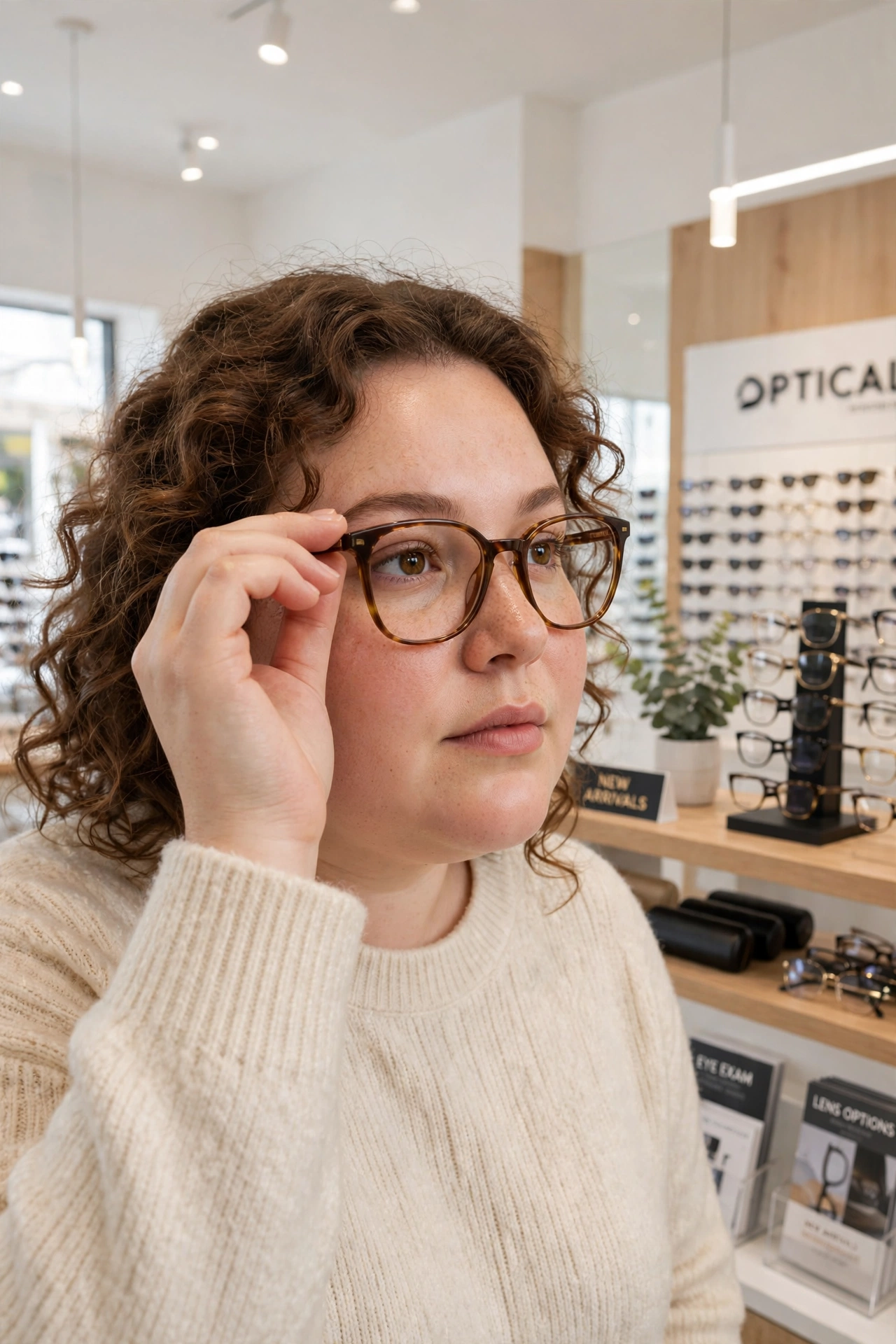
Best Eyeglasses for Round Faces: Prescription Frames Guide
The best prescription eyeglasses for round faces are angular frames in rectangular, wayfarer, or browline shapes that contrast with soft facial curves. Unlike sunglasses, prescription glasses require consideration of lens thickness, pupillary distance, and daily comfort. Choose frames slightly wider than your face in dark acetate for maximum definition, and ensure proper fit for all-day wear.
- Prescription glasses follow the same contrast rule as sunglasses: angular frames for round faces
- Lens thickness affects frame choice: stronger prescriptions need smaller, thicker frames to minimize edge visibility
- Measure your face before ordering online: frame width should exceed face width slightly
- Budget picks under $50 exist from online retailers with virtual try-on
- Progressive lenses require minimum lens height, which limits ultra-narrow frame options
- Always check the return policy when ordering prescription glasses online
Prescription Glasses vs Sunglasses: Different Rules
While our general glasses guide covers the style principles, prescription eyeglasses have additional constraints that sunglasses do not. Understanding these differences will help you choose frames that are both flattering and functional.
The primary difference is lens thickness. Sunglass lenses are typically uniform and thin. Prescription lenses vary in thickness based on your prescription strength, and this affects which frames work. Strong prescriptions create thicker lens edges, which are more visible in rimless or thin metal frames. If you have a strong prescription, you will want frames that conceal the lens edges.
Comfort is also more critical. Sunglasses are worn intermittently; prescription glasses may be worn 12-16 hours daily. Fit, weight, and pressure points matter enormously. A frame that looks perfect but slides down your nose or pinches your temples will end up in a drawer.
Finally, prescription glasses are a longer commitment. Sunglasses can be swapped seasonally, but prescription glasses are typically worn for 1-2 years. Choose a style with longevity rather than chasing extreme trends.
Frame Shapes That Define Round Faces
The shape principles from our general guide apply directly: rectangular, wayfarer, cat-eye, and browline frames provide the angular contrast that round faces need.
For prescription specifically, rectangular frames are the most practical choice. They accommodate the widest range of prescriptions, including progressives and strong single-vision lenses. The straight lines provide reliable angular contrast, and the shape is professional enough for any setting.
Wayfarer-style frames in prescription work well for mild to moderate prescriptions. The trapezoidal shape is flattering, but very strong prescriptions may create thick edges at the wider top portion. Ask your optician about high-index lenses if you love this shape but have a strong prescription.
Browline frames are excellent for prescription because the bold upper rim conceals the top edge of the lens, which is where thickness is most visible. This makes them a smart choice for stronger prescriptions.
What to avoid: Rimless frames in round or oval shapes are the worst combination for round faces with prescriptions. They provide no angular contrast and expose the full lens edge. If you want rimless, choose an angular shape.
Lens Thickness and Frame Choice
Your prescription strength directly impacts frame selection. Here is how to navigate it:
Mild prescriptions (plus or minus 0.00 to 2.00): You have maximum flexibility. Lenses will be thin in almost any frame. Choose based on style preference alone.
Moderate prescriptions (2.25 to 4.00): Consider high-index lenses (1.67 or higher) to keep edges thin. Avoid very large frames, as larger lenses mean thicker edges. A medium-sized rectangular frame is ideal.
Strong prescriptions (4.25+): Frame choice matters significantly. Smaller frames minimize lens thickness and weight. Full-rim acetate frames conceal edges best. Avoid rimless and drill-mount styles. Ask about 1.74 high-index lenses, the thinnest available.
Astigmatism: If you have significant astigmatism (cylinder above 2.00), lens thickness varies across the lens. Rounder frames can actually work better for high astigmatism because the lens shape is more uniform, but for round faces, choose the most angular option within the recommended size range.
The key tradeoff: Larger frames are more fashionable but create thicker, heavier lenses. For round faces, you want frames slightly wider than the face, but not oversized. This balance point gives you the flattering width without excessive lens thickness.
Where to Buy Online (Retailer Comparison)
Online retailers have made prescription glasses affordable, but quality and service vary.
Warby Parker: Excellent virtual try-on, home try-on program (5 frames for 5 days), good quality for the price ($95+). Best for those who want to try before buying. Their angular styles suit round faces well.
Zenni Optical: Extremely affordable ($7+ for frames), huge selection. Quality is adequate for the price. Best for budget shoppers and backup pairs. Use their virtual try-on carefully and check measurements.
EyeBuyDirect: Mid-range pricing with frequent sales. Good virtual try-on and decent quality. Their “2-day delivery” option is useful if you need glasses quickly.
Liingo Eyewear: Home try-on program, mid-range prices. Good customer service. Worth considering if you want guidance choosing flattering shapes.
Costco Optical: If you have a membership, excellent value for high-quality lenses. In-person fitting ensures proper adjustment. Limited fashion-forward styles but solid basics.
What to check before ordering: Return policy (should be at least 30 days), whether they remake lenses if the prescription is wrong, and if virtual try-on is available. For round faces specifically, order 2-3 angular styles to compare.
How to Measure Your Face for Ordering Online
Accurate measurements prevent the most common online ordering mistake: wrong size.
What you need: A millimeter ruler or a credit card (standard width 85.6mm, useful as a reference).
Face width: Measure straight across from temple to temple. Your frame width (the total width including the frame) should be 2-4mm wider than this measurement for round faces. This ensures the frames extend slightly beyond the face for balance.
Pupillary distance (PD): This is the distance between your pupils in millimeters. It is critical for lens accuracy. Your optometrist should provide this, but you can also measure using a PD ruler app or by having someone measure while you look straight ahead. Average adult PD is 54-68mm.
Current glasses reference: If you have glasses that fit well, check the numbers printed on the inside of the temple arm. They will read something like “52-18-140” (lens width, bridge width, temple length in mm). Use these as a baseline for online orders.
Bridge fit: For round faces, ensure the bridge sits comfortably without the frames touching your cheeks. If you have a low nose bridge, look for frames with adjustable nose pads or a keyhole bridge design.
Budget Picks Under $50
Flattering prescription glasses do not require a large budget.
Zenni Optical rectangular frames: Starting at $7 for frames, with single-vision lenses included. Their angular acetate styles in black or tortoise are excellent for round faces. Add high-index lenses for $20+ if needed.
EyeBuyDirect sale styles: Regularly discounted to $20-40 including basic lenses. Their “Brady” (rectangular) and “St Michel” (wayfarer-inspired) shapes suit round faces.
Amazon prescription glasses: Multiple sellers offer complete prescription glasses under $50. Quality varies, so check reviews carefully. Look for sellers with high ratings and clear return policies.
Tips for budget shopping: Prioritize shape over brand. A $15 angular frame that fits well is more flattering than a $200 round designer frame. Invest any savings in high-index lenses if you have a moderate to strong prescription, as thinner lenses look better in any frame.
Premium Picks Worth It
If your budget allows, these are worth the investment for daily-wear prescription glasses:
Warby Parker “Percey” (browline): Around $95 including lenses. The browline shape is ideal for round faces, and the quality justifies the price for daily wear.
Ray-Ban prescription wayfarers: Around $150-200 with lenses. The iconic shape is proven flattering for round faces, and the build quality lasts for years.
Independent acetate brands: Brands like Salt, Garrett Leight, or Moscot offer handcrafted acetate frames ($200-400) with exceptional fit and finish. The thicker acetate provides maximum angular definition.
When premium is worth it: If you wear glasses 12+ hours daily, invest in fit and comfort. Premium frames have better hinges, more precise adjustments, and materials that maintain their shape. For occasional wear or fashion rotation, budget options are perfectly adequate.
Adjusting and Maintaining Your Glasses
Even perfectly chosen frames need proper adjustment to look and feel right, especially for daily prescription wear.
Professional fitting matters. When your glasses arrive (whether from an online retailer or a local shop), visit an optician for adjustment. They will align the frames so they sit level, adjust the nose pads for comfort, and ensure the temples grip without pinching. For round faces specifically, proper positioning ensures the angular lines of the frames sit where they provide maximum contrast.
Signs of poor fit: Frames that slide down the nose (bridge too wide or temples too loose), red marks on the nose or temples (too tight), one side sitting higher than the other (uneven temples), or lenses that touch the eyelashes (frames too close). Any of these issues can be corrected with professional adjustment.
At-home maintenance: Tighten loose screws with an eyeglass repair kit (available for a few dollars). Clean lenses with microfiber cloth and lens spray, not tissues or shirt fabric, which can scratch coatings. Store glasses in a hard case when not worn. For acetate frames, avoid leaving them in hot cars, as heat can warp the shape.
When to replace: Prescription glasses typically need updating every 1-2 years as prescriptions change. But also replace if the frames are visibly worn, the coating is scratched (affecting clarity), or the fit cannot be corrected. For round faces, ensure replacements maintain the angular shape principle; it is easy to drift toward rounder styles over time.
Kids and Teens with Round Faces
The same shape principles apply for younger wearers, with additional practical considerations.
Durability first: Kids are harder on glasses. Look for flexible hinges, impact-resistant polycarbonate lenses (standard for children’s prescriptions), and sturdy acetate or flexible metal frames. The angular shapes recommended for round faces are available in youth sizes.
Fit challenges: Children’s faces change rapidly. Ensure the frames are not too large (a common mistake when buying “room to grow”). Frames should fit properly now; an optician can adjust as the child grows. For round-faced kids, a rectangular frame in the correct size is both flattering and practical.
Encouraging wear: Children who feel good about how their glasses look are more likely to wear them consistently. Involving them in choosing an angular, stylish frame (rather than defaulting to whatever is available) improves compliance significantly.
Frequently Asked Questions
What prescription glasses suit a round face?
Angular frames in rectangular, wayfarer, cat-eye, or browline shapes. These provide the straight lines and defined corners that contrast with round facial features. Choose frames slightly wider than your face in dark colors for maximum definition. Avoid round, oval, or rimless curved shapes that echo the face shape.
How do I measure my face for glasses online?
Measure temple-to-temple width in millimeters; your frame should be 2-4mm wider. Get your pupillary distance (PD) from your optometrist or measure with an app. Check your current glasses for printed measurements (lens width, bridge, temple length) as a baseline. Ensure the bridge type suits your nose, and verify the return policy before ordering.
Should I get thin or thick frames for a round face?
Thicker acetate frames generally provide more angular definition, which benefits round faces. However, if you have a strong prescription, very thick frames combined with thick lenses can look heavy. The best balance is a medium-thickness acetate frame in an angular shape. For mild prescriptions, you have full flexibility. For strong prescriptions, prioritize high-index lenses to keep the overall look refined.
What is the best online store for round face glasses?
Warby Parker is best for guided shopping with home try-on. Zenni Optical is best for budget. EyeBuyDirect offers good mid-range value. The “best” depends on your priorities: try-before-buying (Warby Parker), lowest price (Zenni), or fast delivery (EyeBuyDirect). All offer angular styles suitable for round faces. Always verify the return policy and virtual try-on accuracy.
Do progressive lenses work with any frame shape?
Progressive lenses require minimum lens height (typically 28-30mm) for the different vision zones to fit. This rules out very narrow or ultra-fashionable frames. However, most rectangular, wayfarer, and browline frames designed for round faces meet the height requirement. When shopping, check if the frame is marked “progressive-friendly.” Your optician can confirm fit before lenses are made.