The Most Flattering Haircuts for Round Faces (Stylist-Approved)
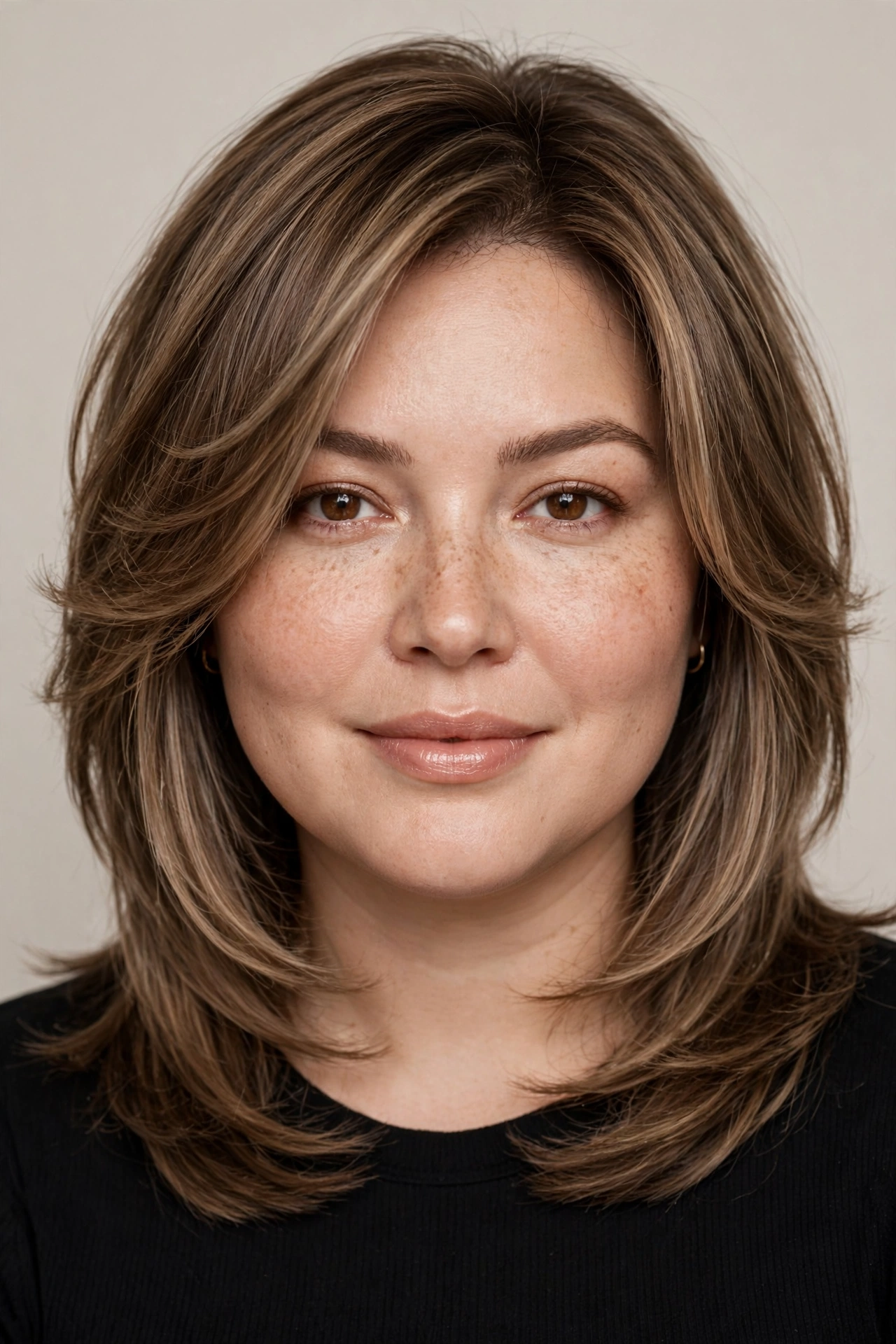
The Most Flattering Haircuts for Round Faces (Stylist-Approved)
If you have a round face, the most flattering haircuts are ones that add height on top and length on the sides: long layered cuts, textured lobs, and pixies with volume at the crown. The key is avoiding width at the cheekbones. These stylist-approved cuts create the illusion of a longer, slimmer face shape.
- The #1 mistake is choosing cuts that add width at the cheeks (blunt chin-length bobs are the worst offender)
- Height on top + length on the sides = the golden formula for round faces
- Long layers, textured lobs, and crown-volume pixies work across all hair textures
- Side parts and face-framing layers slim instantly without a dramatic chop
- Bring specific terminology to your stylist: “point cutting,” “internal layers,” “crown volume”
Why Most “Round Face” Haircut Advice Fails
Here is the mistake almost every round-faced client makes: they choose a haircut that adds width exactly where their face is already widest. The classic example is the chin-length blunt bob. It looks chic on the model in the photo, but on a round face it creates a horizontal line right at the cheekbones, making the face look wider and shorter than it actually is.
The problem with most online advice is that it just lists haircuts without explaining the why. “Get a lob” is not useful guidance if you do not understand what makes a lob work for your face shape. A lob with blunt ends at jaw level will do nothing for a round face. A lob with textured, point-cut ends that fall past the collarbone and long layers through the front? That is transformative.
Stylists think in terms of geometry, not just trends. Your face is roughly as wide as it is long, with soft angles at the jaw and forehead. The goal of any flattering cut is to introduce vertical lines and break up the circular silhouette. Once you understand this principle, you can evaluate any haircut yourself instead of relying on generic lists.
Another common failure: advice that ignores hair texture. A sleek, straight long bob behaves completely differently from a curly one. The principles stay the same, but the execution changes. This guide covers the principles first, then gets specific about length and texture.
The 3 Rules Stylists Use for Round Faces
Professional stylists follow three core rules when cutting for round face shapes. Memorize these and you will never choose a bad cut again.
Rule 1: Create Height at the Crown
Volume on top of the head draws the eye upward and makes the face appear longer. This does not mean teased 1960s beehives. It means layers that are shorter at the crown, a pixie with texture on top, or even just blow-drying roots upward. Flat, heavy hair on top is the enemy of round faces because it emphasizes width.
Ask your stylist for “crown layers” or “internal layers at the crown.” These are cutting techniques that remove weight from underneath, allowing the top to lift naturally without looking thin.
Rule 2: Keep Length Past the Jawline (or Go Very Short)
Hair that ends right at the jawline or chin creates a shelf that mirrors the widest part of your face. The two safe zones are: well past the chin (collarbone or longer) or very short (above the ears with height on top). The danger zone is the 1-2 inches around the jawline.
This is why the long bob (lob) is so popular for round faces, but only when it hits at least collarbone length. A “bob” that grazes the chin is a completely different haircut with the opposite effect.
Rule 3: Break Up the Circle with Texture and Angles
Blunt, one-length cuts emphasize the roundness. Texture, asymmetry, and angled lines break it up. This is why point cutting (where the stylist cuts into the ends vertically rather than straight across) matters so much. It softens the perimeter and creates movement that distracts from the face shape.
Asymmetry is particularly powerful. A slightly longer front on one side, an off-center part, or an angled fringe all introduce diagonal lines that the eye follows instead of tracing the circle of the face.
Best Short Cuts for Round Faces
Short hair can be spectacular on round faces, but only with the right approach. The goal is height and texture, never width.
Textured Pixie with Crown Height
The pixie is the highest-risk, highest-reward short cut for round faces. Done wrong (flat on top, wide at the sides), it emphasizes every round feature. Done right, with choppy texture and serious lift at the crown, it is stunning.
The key details: keep the sides close and tapered, leave length on top for styling upward or to the side, and ask for point cutting throughout for texture. A slightly longer fringe swept to the side adds the diagonal line that slims the face. For more on pixie variations, see our pixie cut guide for technique details that transfer across face shapes.
Asymmetrical Bob (Longer Version)
If you want a bob, go asymmetrical and keep it long. One side falls 1-2 inches longer than the other, and the overall length stays below the chin. The asymmetry creates a diagonal that breaks the circular silhouette, while the extra length keeps the jawline clear of horizontal lines.
This cut works beautifully on straight and wavy hair. On curly hair, the asymmetry gets lost in the volume, so opt for a different short style.
What About the Classic Pixie?
A very short, close-cropped pixie can work if you have the confidence for it. The face is fully exposed, so this is about owning your features rather than camouflaging them. It suits round faces with strong eyes and brows, since those become the focal point.
Best Medium Cuts for Round Faces
Medium length (shoulder to collarbone) is the sweet spot for round faces. It offers the most versatility and the lowest risk.
The Textured Lob
The lob (long bob) hitting at or just below the collarbone is the single most reliable cut for round faces. But the details matter enormously. Ask for: long layers starting below the chin, point-cut ends for texture, and a side part or off-center part. The layers should be longest in front, creating face-framing pieces that fall past the jawline.
What to avoid: a one-length lob with blunt ends. Without layers and texture, it is just a long version of the chin bob problem.
Shaggy Midi with Curtain Bangs
The modern shag, falling between the shoulders and collarbone, is excellent for round faces. The choppy layers throughout create the texture that breaks up roundness, and curtain bangs (parted in the middle, sweeping to each side) frame the face with vertical lines.
This cut is particularly good for thick hair, since the layers remove bulk that would otherwise add width. For fine hair, ask for fewer layers to avoid looking stringy.
Layered Cut with Face-Framing Pieces
Our face frame layer haircut guide covers this technique in depth, but the short version: layers that start at the cheekbones and angle downward create vertical lines that slim the face instantly. Combined with medium length, this is a low-maintenance, high-impact option.
Best Long Cuts for Round Faces
Long hair is naturally flattering for round faces because it adds vertical length. But “just grow it out” is not a strategy. The cut still matters.
Long Layers with Face Framing
The classic long layered cut works when the shortest layers start below the chin. Layers that begin at cheekbone level will add width. Ask your stylist to start face-framing layers at the collarbone or lower, with the absolute shortest pieces no higher than the bottom of the jaw.
Long layers through the back add movement and prevent the hair from hanging like a curtain, which can actually emphasize roundness by creating a frame around the face.
The V-Cut
A V-cut (where the back comes to a subtle point) is excellent for round faces because it creates a strong vertical line down the back. The eye follows the V downward, extending the perceived length of both the hair and the face.
This works best on straight or slightly wavy hair where the V shape is visible. On very curly hair, the shape gets lost.
Long with Side-Swept Bangs
Long hair paired with side-swept bangs is a powerful combination. The bangs add a diagonal across the forehead, breaking the roundness at the top, while the length extends the face vertically. The bangs should be long enough to sweep fully to one side, not a short blunt fringe.
Cuts to Avoid
Knowing what to skip is just as important as knowing what to choose.
Chin-length blunt bob: The number one offender. Creates a horizontal line at the widest point of the face.
Center-parted curtain bangs at cheekbone length: Curtain bangs can work, but if they end right at the cheekbones with a center part, they frame and emphasize the roundness symmetrically.
One-length cuts with no layers: Whether short, medium, or long, a single-length cut with blunt ends creates a solid shape that mirrors the face shape.
Buzz cuts and very tight crops: Unless you specifically want to showcase your face shape, ultra-short cuts with no crown height will emphasize roundness.
Bowl cuts and rounded fringes: Any cut with a rounded silhouette echoes the face shape instead of contrasting it.
Styling Tricks That Slim Instantly
You do not always need a new cut. These styling techniques work with your current length:
Switch to a side part. A deep side part is the fastest slimming trick. It creates asymmetry and diagonal lines instantly. If you have worn a center part for years, the difference will be dramatic.
Add root volume. Blow-dry roots upward using a round brush, or use volumizing mousse at the crown. Even half an inch of extra height changes the perceived face proportions.
Tuck one side behind the ear. This breaks the symmetry and shows the jawline on one side, creating the angular contrast that slims.
Try face-framing highlights. Lighter pieces around the face (sometimes called “money pieces”) draw the eye vertically along the face rather than across it.
Use a curling iron vertically. When curling, wrap hair vertically around the barrel rather than horizontally. Vertical curls elongate; horizontal curls add width.
What to Tell Your Stylist (Exact Phrasing)
Bring this guide on your phone, but also use these specific terms:
For long layers: “I want long layers starting below my chin, with face-framing pieces that fall past my jawline. Point cut the ends for texture.”
For a lob: “A textured lob hitting at my collarbone, with internal layers for movement and a side part. No blunt ends.”
For a pixie: “Tapered sides, length and texture on top for crown height, with a longer side-swept fringe.”
Always mention your face shape: “I have a round face, so I want to avoid width at the cheekbones and add height on top.” A good stylist will know exactly what this means, but saying it ensures you are on the same page.
Bring reference photos, but choose photos of people with similar face shapes to yours. A cut that looks amazing on an oval face may not translate.
Frequently Asked Questions
What is the best haircut for a chubby round face?
The same principles apply, with extra emphasis on length. Long layered cuts that fall past the shoulders are most flattering, as they create the strongest vertical lines. Avoid anything that ends at or near the chin. A textured lob at collarbone length is the safest medium option, and face-framing layers starting below the jaw are essential.
Should round faces get bangs?
Yes, but choose the right type. Side-swept bangs and curtain bangs (when long enough) work well because they create diagonal lines. Avoid blunt, straight-across bangs that create a horizontal line across the forehead, and avoid very short baby bangs. The bangs should be long enough to sweep to the side or blend into face-framing layers.
Is short or long hair better for round faces?
Long hair is generally more forgiving because it naturally adds vertical length. However, a well-executed short cut (textured pixie with crown height) can be stunning. The riskiest zone is medium-short: chin to shoulder length with no layers. If you go short, commit to texture and height on top. If you go long, ensure layers start below the chin.
What haircut makes a round face look thinner?
Any cut that follows the three rules: height at the crown, length past the jawline (or very short), and texture that breaks up the circular silhouette. The fastest single change is switching from a center part to a deep side part, which creates instant asymmetry. For a cut, long layers with face-framing pieces starting below the jaw will slim the most dramatically.
Can round faces wear a middle part?
A middle part is the most challenging for round faces because it creates perfect symmetry, emphasizing the circular shape. If you love a middle part, pair it with long layers and face-framing pieces that fall well past the chin to add the vertical lines that a center part lacks. Curtain bangs with a middle part can work if they are long enough to sweep past the cheekbones.