
Bronzer Placement for Heart Shaped Face: Balance and Warmth
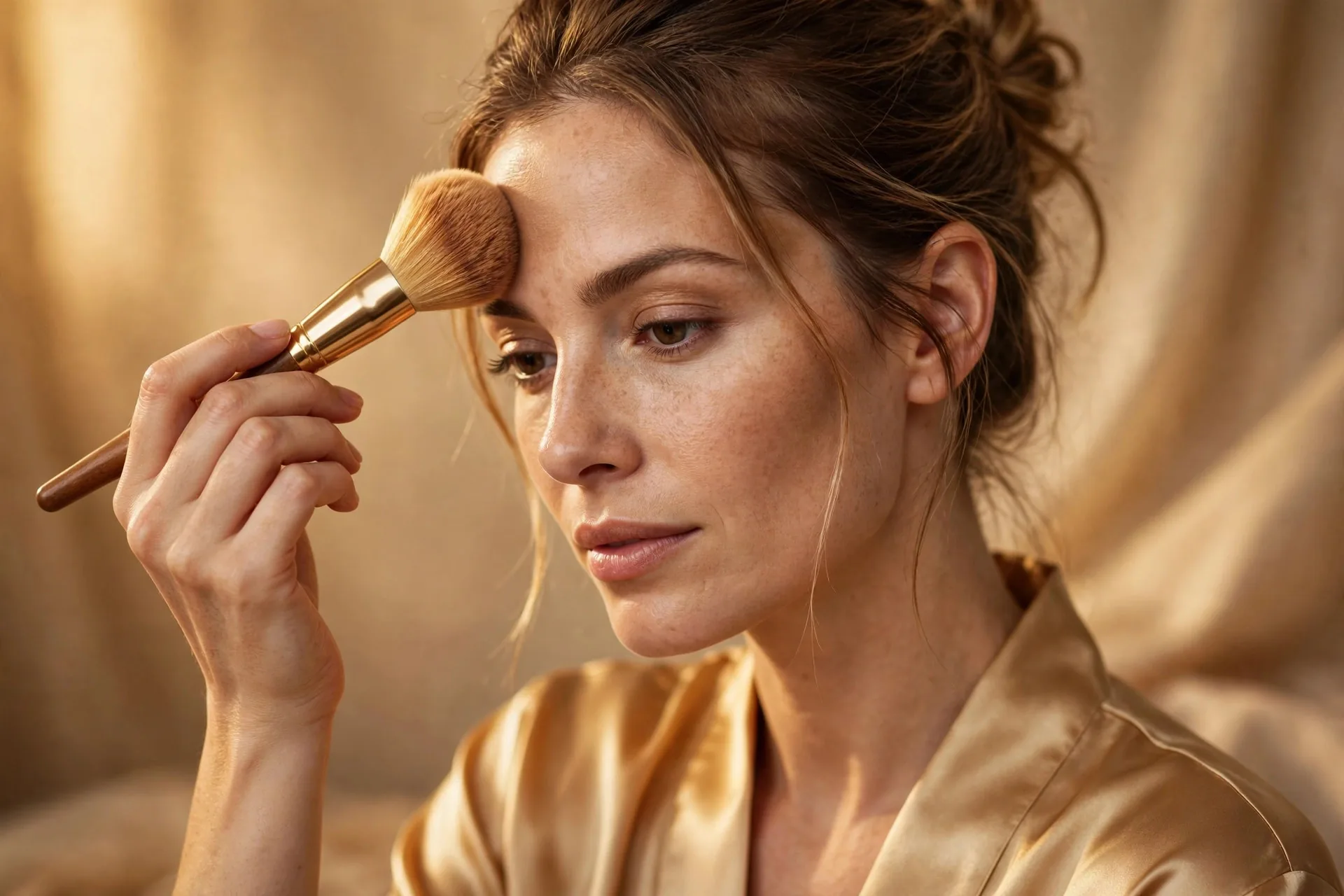
A heart-shaped face is widest at the forehead and temples, with high cheekbones and a narrow, sometimes pointed chin. It is a striking shape — but the contrast between the wide upper face and the delicate lower face can make the forehead look heavy and the chin disappear. The right bronzer placement for heart shaped face types restores balance: it softens the wide forehead, defines the cheekbones, and gives the narrow chin a little more presence.
The Goal: Balance Top and Bottom
Every face shape has a bronzer strategy, and for heart shapes it is all about equilibrium. You want to visually narrow the forehead and temples while adding a touch of width and warmth to the lower face. Think of it as gently pushing the wide areas inward and pulling the narrow areas outward — bronzer’s warmth does both jobs at once.
Where to Place Bronzer: Step by Step
1. The temples and upper forehead corners
This is your most important placement. Sweep bronzer along the temples and into the top corners of the forehead near the hairline. The heart-shaped face is widest here, so softening these corners with warm shadow immediately makes the forehead look narrower and more proportioned. Blend well into the hairline so there is no visible line.
2. Under the cheekbones — but lower than you think
Heart-shaped faces already have prominent cheekbones, so you do not need aggressive sculpting. Place bronzer just beneath the cheekbone, starting at the ear and sweeping forward, but stop earlier than you would on a round face — about halfway to the mouth. Keep the line soft and low rather than sharp and high. The goal is gentle definition, not dramatic hollows. For the matching brightening technique on this shape, see blush placement for heart-shaped face.
3. Along the jawline — with a light hand
Dust a small amount of bronzer along the jawline to give the narrower lower face a bit more definition. This is subtle work: too much bronzer here will make the chin look even smaller. Use the lightest touch of the whole routine, and blend thoroughly down toward the neck.
4. The chin — a whisper of warmth
Unlike most face shapes, the heart-shaped face benefits from a touch of bronzer on the chin itself. A light dusting on the chin adds visual weight to the narrowest part of the face and balances the wide forehead. Keep it sheer — you want warmth, not shadow.
5. What to skip
Do not bronze the center of the forehead — that area should stay bright to keep the face looking open. And do not carve deep hollows under the cheekbones; heart-shaped faces already have natural definition there, and over-sculpting can make the face look gaunt.
The Forehead Technique in Detail
Because the forehead is the widest zone, it deserves extra attention. After your base makeup, take a fluffy brush and sweep bronzer in a soft arc across the top of the forehead, following the hairline from temple to temple. Then blend downward about an inch. This creates a gentle gradient — deepest at the hairline, fading as it moves down — that visually shortens and narrows the forehead without looking like a harsh contour line.
If your forehead is also on the longer side, you can bring the bronzer down slightly further. If it is wide but short, keep the band narrow and close to the hairline.
Choosing the Right Bronzer
Shade: One to two shades deeper than your natural skin tone, with a tone that matches your undertone. Fair skin: light neutral bronze. Medium skin: warm caramel. Deep skin: rich bronze with red undertones. Anything too orange will look artificial, especially on the large surface of the forehead.
Finish: Matte is best for the forehead and temple work, where you want softening without shine. A subtle satin bronzer can work on the cheeks and chin if you like a glow, but keep shimmer away from the forehead — shine makes wide areas look wider.
Formula: Powder bronzer is the easiest to control for the broad forehead sweeps. Cream bronzer works well on the cheeks and jawline for a natural finish. Many people use both: powder up top, cream down low. For a full sculpting routine on this shape, see contour for heart-shaped face beginners.
Blending: The Make-or-Break Step
Heart-shaped faces show bad blending more than most shapes because the placements sit on large, visible areas like the forehead. After applying bronzer:
- Blend in small circular motions, not back-and-forth strokes.
- Blend the forehead bronzer down into the foundation, not up into the hairline.
- Check both sides in the mirror — asymmetry is easy to miss when you are focused on one temple.
- Step into natural light before finishing. Forehead bronzer that looks perfect in warm bathroom light can look muddy in daylight.
Mistakes to Avoid
- Over-bronzing the forehead. A heavy band across the forehead looks like a shadow, not a tan. Build sheer layers.
- Carving the cheeks too deeply. Your cheekbones are already a feature — enhance, do not excavate.
- Skipping the chin. It feels counterintuitive, but the chin needs that whisper of warmth for balance.
- Using shimmer bronzer on the temples. Shimmer reflects light and emphasizes width. Keep the temples matte.
- Forgetting the jawline blend. Bronzer that stops dead at the jaw creates a visible mask line. Always blend down the neck slightly.
Day vs. Evening Intensity
The placements above work for any occasion — what changes is how much product you use. For daytime, keep every placement sheer: one light layer on the temples, a soft wash under the cheekbones, and the faintest warmth on the chin. The effect should read as healthy, sun-kissed skin.
For evening looks, deepen the temple and forehead bronzing with a second sheer layer and define the cheek hollows slightly more. Artificial light washes out subtle makeup, so the stronger application keeps your definition visible in photos. One thing to keep constant: the chin placement stays sheer even at night. A heavy chin draws the eye downward and unbalances the face you just worked to harmonize.
FAQs
Should heart-shaped faces contour or bronze?
Both work, but bronzer is the more forgiving daily choice because it adds warmth while it defines. Use the placements above for everyday wear and add true contour (a cooler-toned sculpting product) on the temples and under the cheekbones when you want stronger definition for evenings or photos.
Can bronzer make my forehead look smaller?
Yes — this is one of bronzer’s most reliable effects. Warm shadow at the temples and along the hairline visually recedes, making the forehead appear narrower. The key is a soft gradient, not a harsh line.
Where should blush go on a heart-shaped face?
Blush belongs on the apples of the cheeks, blended slightly upward toward the temples. It sits above the bronzer zone, so the two products layer without muddying each other. See the linked blush guide above for the full technique.
What if my chin is very pointed?
Keep bronzer off the very tip of a pointed chin and instead dust it lightly on the sides of the chin and along the jaw. This softens the point without adding emphasis to it.
Balance Is Everything
On a heart-shaped face, bronzer is a balancing tool first and a warming tool second. Soften the wide forehead, define the cheeks gently, and give the chin a whisper of warmth — and the whole face comes into harmony. To double-check your face shape before you start, try the free AI face-rating tool at Russella for an instant photo analysis.


