
Wolf Cut for Round Face Female: Styling Tips
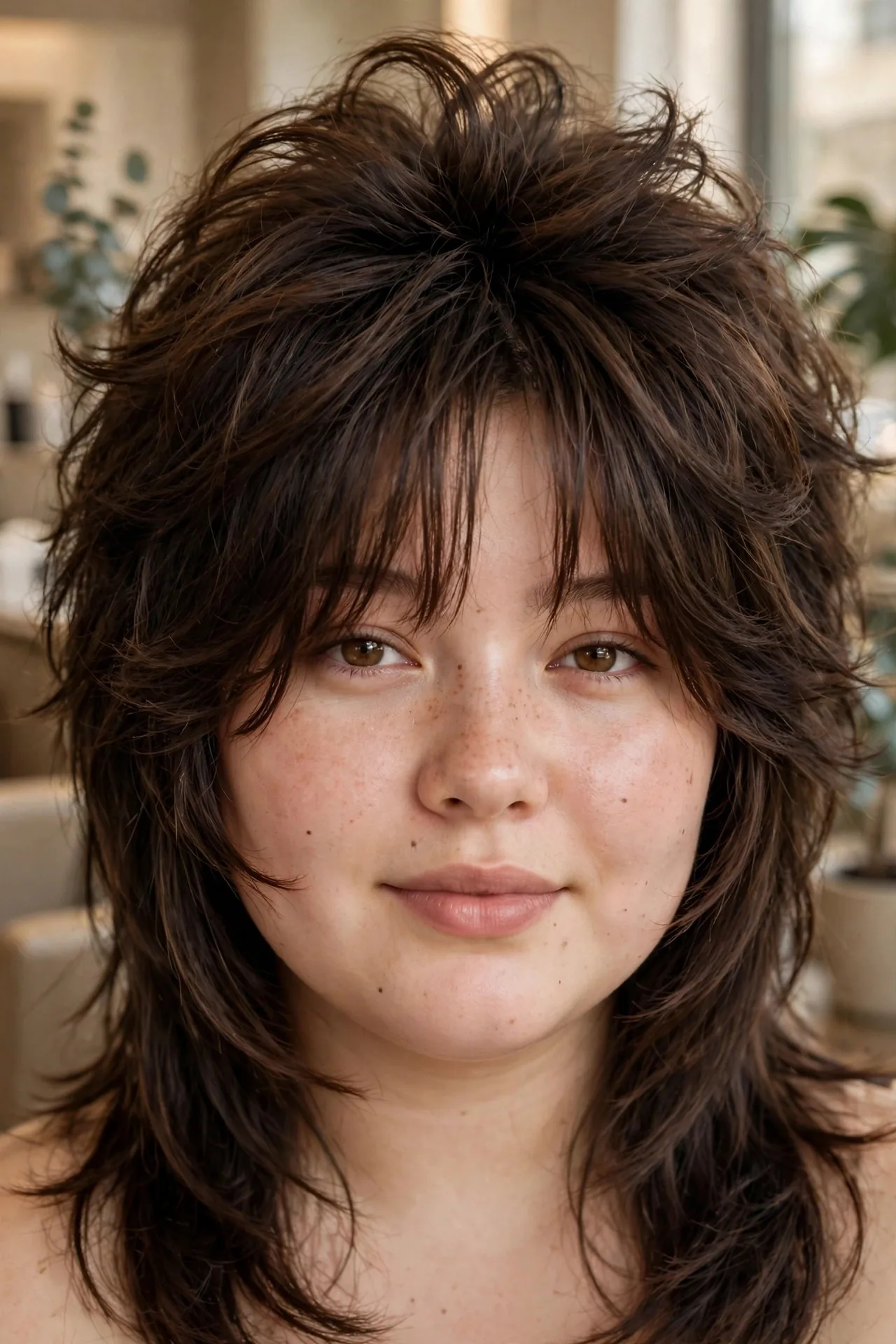
Wolf cuts with crown volume elongate round faces.
Key Takeaways:
- The wolf cut works for round faces when the layers are long enough to elongate rather than widen.
- Face-framing layers that fall past the chin create vertical lines that slim the face.
- Style with volume at the crown and piece-y ends for the most flattering effect.
- Ask your stylist for soft, blended layers with length, not blunt short shag.
- The cut grows out gracefully if layers are kept long and blended.
The right wolf cut will make round faces look more balanced in seconds, because they add definition and the illusion of length. The wrong ones do the reverse. This guide cuts through the noise with picks matched to your features.
The secret: the wolf cut’s defining features, short, voluminous crown layers and long, wispy lengths underneath, do exactly what a round face needs, adding height on top and length below. But the difference between a wolf cut that slims and one that widens comes down to layer placement, length, and styling.
Before committing, confirm your face shape with more than a mirror guess. The free AI face shape detection tool maps your proportions in seconds, a true round face versus a square-round blend changes where layers should fall.
Why the Wolf Cut Works for a Round Face
A round face reads wide because the cheekbones are the broadest point while the jaw and forehead curve softly. The classic fix is perceived length: height at the crown stretches the face upward, and longer pieces below the chin draw the eye downward. Both create the illusion of an oval.
The wolf cut delivers both by design. Short, choppy crown layers create lift where a round face needs it, on top, not at the sides, while the longer, thinner layers underneath extend past chin and collarbone, guiding the eye down instead of out. A blunt bob, by contrast, ends at the jaw and visually widens the cheeks.
The piece-y, lived-in texture helps too, breaking up the smooth curve of a round face so the eye keeps moving instead of settling on width.
The Layers That Elongate
Not every wolf cut is round-face friendly. Ask your stylist for these three things.
Face-Framing Pieces That Slim the Cheeks
The front layers matter most. You want face-framing pieces that start below the chin, not at the cheekbone. Layers hitting at cheek level widen the face at its widest point. Pieces beginning at the jaw or below skim past the cheeks in a slimming diagonal. Ask for soft, blended framing rather than harsh disconnected chunks.
Crown Volume for Height
The signature short top layers are where elongation comes from: volume at the crown makes the face look longer. When styling, always lift the roots there, with a round brush or by blow-drying upside down. Flat crown volume is the most common reason a wolf cut falls flat on a round face. For fine hair, a light texturizing spray at the roots keeps lift from collapsing by midday.
Ideal Lengths: Keep It Below the Chin
Overall length should reach at least the collarbone, ideally longer, every centimeter below the chin adds to the lengthening effect. The shortest top layer can sit high at the crown, but the perimeter must clear the jawline with room to spare. Chin-length “mini” wolf cuts emphasize width and are a much harder sell for round faces.
Styling Tips for a Slimmer Look
A wolf cut is wash-and-go in theory, but ten intentional minutes makes a visible difference.
The crown-lift blowout. Rough-dry upside down until 80 percent dry, then flip up and smooth the ends with a round brush, directing front pieces forward and down past the cheeks, lift where it counts, sides falling vertically.
Pair it with curtain fringe. Parted in the middle and swept aside, curtain fringe adds a diagonal line across the forehead that breaks up width and blends into the face-framing layers. Avoid straight-across blunt bangs, which create a horizontal line that shortens the face.
Embrace messy texture. Work texturizing cream or sea-salt spray through mid-lengths and ends, scrunching upward. Piece-y, separated ends keep the silhouette airy; sleek, flat-ironed versions lose the slimming crown volume.
Mind side volume. When diffusing or air-drying waves and curls, don’t push volume outward at ear level. Keep the sides close; let fullness live at the crown and ends.
What to Tell Your Stylist
Walk in with clear language and reference photos: “a wolf cut with heavy crown layers for height, face-framing pieces starting below the chin, and length past the collarbone.” Mention you want to elongate a round face, a good stylist keeps the shortest pieces high and the perimeter long and wispy.
Bring photos of wolf cuts on round or oval faces with hair texture like yours. Thick straight hair may need serious thinning through the ends; fine wavy hair needs fewer layers to avoid looking sparse. Ask when the crown needs refreshing, usually every 8 to 10 weeks.
Knowing your proportions helps place layers precisely. The facial fifths guide explains how face width divides into five parts, knowing where your widest fifth sits shows where layers should avoid bulk.
Maintenance and Grow-Out
The wolf cut is low-maintenance daily but needs periodic shaping. Crown layers grow out fastest relative to the look, once they drop past the ears, it reads as plain long layers. Reshape every two to three months, focusing on the top and face-framing pieces; the length can be micro-trimmed or left alone.
Grow-out is graceful: built on blended layers, the cut transitions naturally into long layered hair. To grow it fully, have your stylist gradually lower the shortest crown layer at each trim instead of cutting everything to one length.
Between appointments, dry texturizing spray revives second-day crown volume. When ends look straggly rather than piece-y, the perimeter needs a dusting.
Confirm Your Face Shape First
The right wolf cut depends on the right diagnosis. Try the free AI face analysis to confirm your face shape and see your proportions mapped, under a minute, and a clear starting point for you and your stylist.
Frequently Asked Questions
Does a wolf cut suit a round face?
Yes, cut with elongation in mind. Short crown layers add height while long lower layers draw the eye down, both make a round face look longer and slimmer. Key details: face-framing from below the chin, length past the collarbone.
What wolf cut length is best for a round face female?
Collarbone length or longer. Lengths ending at chin or jaw emphasize the widest part of a round face; longer lengths create a slimming vertical line. Shortest layers can sit high for volume, but the perimeter stays long.
Should I get bangs with a wolf cut on a round face?
Curtain fringe is the best pairing, its diagonal, parted shape breaks up forehead width and blends into the layers. Avoid straight-across blunt bangs, which add a horizontal line that widens and shortens the face.
How do I style a wolf cut to make my face look slimmer?
Three things: lift roots at the crown (blow-dry upside down or use a round brush), keep face-framing pieces falling forward past the cheeks, and avoid volume at ear level. Texturizing product on the ends keeps the finish piece-y, not flat.
How often does a wolf cut need trimming for a round face?
Every 8 to 10 weeks, concentrating on the crown layers and face-framing pieces that create the shape. The facial fifths guide can help you judge when grown-out layers are throwing the vertical balance off.