Best Haircut for Square Face Male: Texture Over Sharp Lines
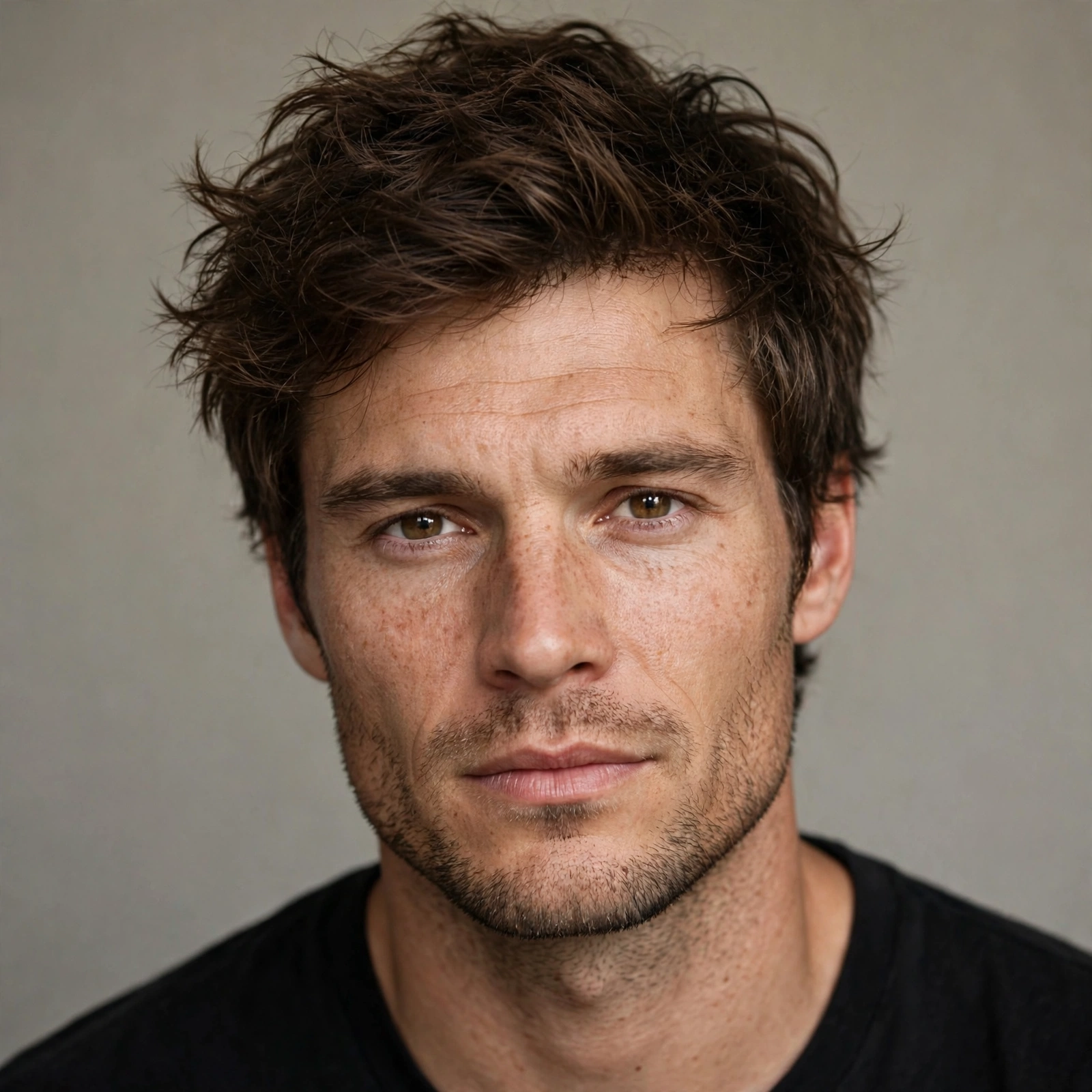
A square face — broad forehead, strong cheekbones, a defined jaw with corners — already has all the structure a face could want. The haircut’s job here is the opposite of the round-face brief: don’t add more angles. Instead, bring texture, movement, and softness that keep the strong bone structure from reading as severe.
The guiding idea is “texture over sharp lines.” Cuts with natural movement, soft edges, and a bit of controlled messiness contrast beautifully with a square jaw. Severe, geometric, razor-sharp cuts just stack more angles onto the angles — technically tidy, but harsh on this face shape.
The Core Principle: Soften, Don’t Sharpen
Every element of a square face is already defined — the jaw corners, the brow, the cheekbone line. A haircut with hard lines (a razor-sharp lineup, a severe flat top, a geometric Caesar) adds more of the same, and the total effect can look rigid or aggressive. It’s the same balance logic behind facial thirds — features read best when they contrast rather than compete. A cut with texture and movement introduces the softness the face lacks, and the contrast makes the strong features look refined rather than hard.
That doesn’t mean abandoning structure — a square face carries strong styles well. It means softness in the details: textured ends, natural flow, lengths that move instead of crops that expose every angle.
The Best Haircuts for Square Male Faces
Textured Fringe / Messy Top
Length on top with choppy, textured ends falling naturally — the single most flattering direction for square faces. The texture breaks up the forehead’s broad flat plane, and the soft, irregular hairline contrasts with the jaw’s sharp geometry. Ask for point-cutting through the top and style with a light matte product for separation.
Wavy Medium Length
If your hair has natural wave, let it work. Medium-length wavy hair — falling to the ears or just past — introduces curves around the temples and softens the transition from forehead to cheekbone. The waves’ organic movement fights boxiness — keep the shape layered and controlled so width doesn’t compete with the face.
Side-Swept with Texture
Hair swept to the side with textured, touchable finish — the asymmetry breaks up the face’s strong symmetry, and the soft sweep across the forehead shortens its broad expanse. Unlike the severe side parts of classic styling, the modern version stays loose and textured. This is an excellent professional option: polished enough for the office, soft enough for the face shape.
The Grown-Out Crop
A crop with length — think textured French crop but grown out a couple of inches, with the fringe soft rather than blunt. The extra length lets the hair move and fall naturally instead of sitting as a hard cap. Ask your barber to keep the fringe textured and slightly irregular; a blunt straight fringe creates a hard horizontal line that emphasizes the forehead’s width.
Classic Taper with Natural Top
Shorter sides are fine on square faces — the caution is about the top. A classic taper with a naturally styled, textured top (not slicked, not spiked into points) keeps things neat while the soft top does the softening. The low-maintenance winner: easy to style, professional, and flattering.
Cuts to Avoid (or Soften)
- Flat tops and high-and-tights. Maximum geometry on maximum geometry — the flat plane echoes the forehead and the sharp corners echo the jaw. Harsh on square faces.
- Severe buzz cuts. Very short all-over cuts expose every angle with nothing to soften them — high-risk on square faces, since the strong jaw dominates completely.
- Blunt Caesar fringes. A straight, blunt fringe draws a hard horizontal line across the broadest part of the forehead — width emphasized, softness zero.
- Slicked-back severe styles. Hair scraped flat and back exposes the full forehead and frames the jaw in hard lines. If you like the swept-back look, keep texture and lift in it rather than plastering it down.
How to Brief Your Barber
Square faces get the best results from specific language:
- Name the goal: “I want to soften my jawline and forehead — texture and movement on top, nothing too sharp or geometric.”
- Specify the texture: “Point-cut the ends, keep it textured — I don’t want blunt straight lines anywhere on top.”
- Specify the sides: “Taper or fade is fine, but keep the transition soft.”
- Specify the finish: “Natural, matte, touchable — not wet-look or helmet-slick.”
Bring reference photos on square faces specifically. A textured cut photographed on an oval face can look different once the same geometry meets a strong jaw — photos on similar face shapes set accurate expectations.
Styling for Softness
Product choice directly affects whether a cut reads soft or severe:
- Matte clay or cream gives texture and separation without shine — the ideal finish for softening.
- Sea salt spray enhances natural wave and movement; excellent for the wavy medium-length option.
- Lightweight paste for the side-swept styles — hold without stiffness.
- Avoid high-shine gels and pomades used flat — shine emphasizes every hard line. (A little shine in a textured style is fine; shine plus flat equals severe.)
- Blow-dry with movement. Finger-drying with lift at the roots builds soft volume; a round brush and sleek blowout create the hardness you’re avoiding.
The Beard Question
Facial hair on a square face needs the same softening logic. A beard with softly rounded shaping at the jaw corners — rather than sharp, squared-off lines — echoes what the textured haircut is doing. Keeping some length at the chin while softening the corners gives the jaw presence without hardness. See our oval-face beard guide for shaping technique, and confirm your shape with our male face-shape quiz guide if you’re between square and rectangular.
When to Break the Rules
- You want the strong look. Some men prefer to lean into the jawline’s power rather than soften it. A sharp, well-executed cut on a square face looks commanding — it’s a legitimate style choice, just a different message from the softened one.
- Your hair is very straight and fine. It can’t hold extreme texture — focus on soft edges and natural movement instead.
- Military or workplace requirements. Regulation cuts are non-negotiable — soften what you can (slightly longer top within regs, natural finish) and let the rest go.
Still unsure whether your face is square, oblong, or diamond? Our free AI face analysis tool on the homepage measures your jaw, cheekbone, and forehead widths from a photo — the right numbers make the barber conversation much more productive.
Frequently Asked Questions
What is the best haircut for a square face male?
Textured cuts with movement on top — a textured fringe, wavy medium length, or textured side-sweep. The texture and softness contrast with the jaw’s angles instead of repeating them.
Should square-faced men avoid fades?
No — fades are fine. The caution is about the top: pair the fade with a textured, natural top rather than a severe flat top or sharp geometric style. Keep the fade’s transition soft.
Is long hair good for square faces?
Medium length with wave or texture is excellent — the movement softens the angles. Very long, flat, straight hair can work too, but it needs some layering around the face to avoid a severe curtain effect.
Do buzz cuts suit square faces?
They expose every angle with nothing to soften them — high-risk, since the strong jaw dominates. If you go very short, soften elsewhere (rounded beard shaping, softer styling).
Should the fringe be textured or blunt on a square face?
Textured, always. A blunt straight fringe creates a hard horizontal line across the broad forehead, emphasizing width. A textured, slightly irregular fringe breaks up that line and flatters the face.