
Most Flattering Haircuts for Oval Faces
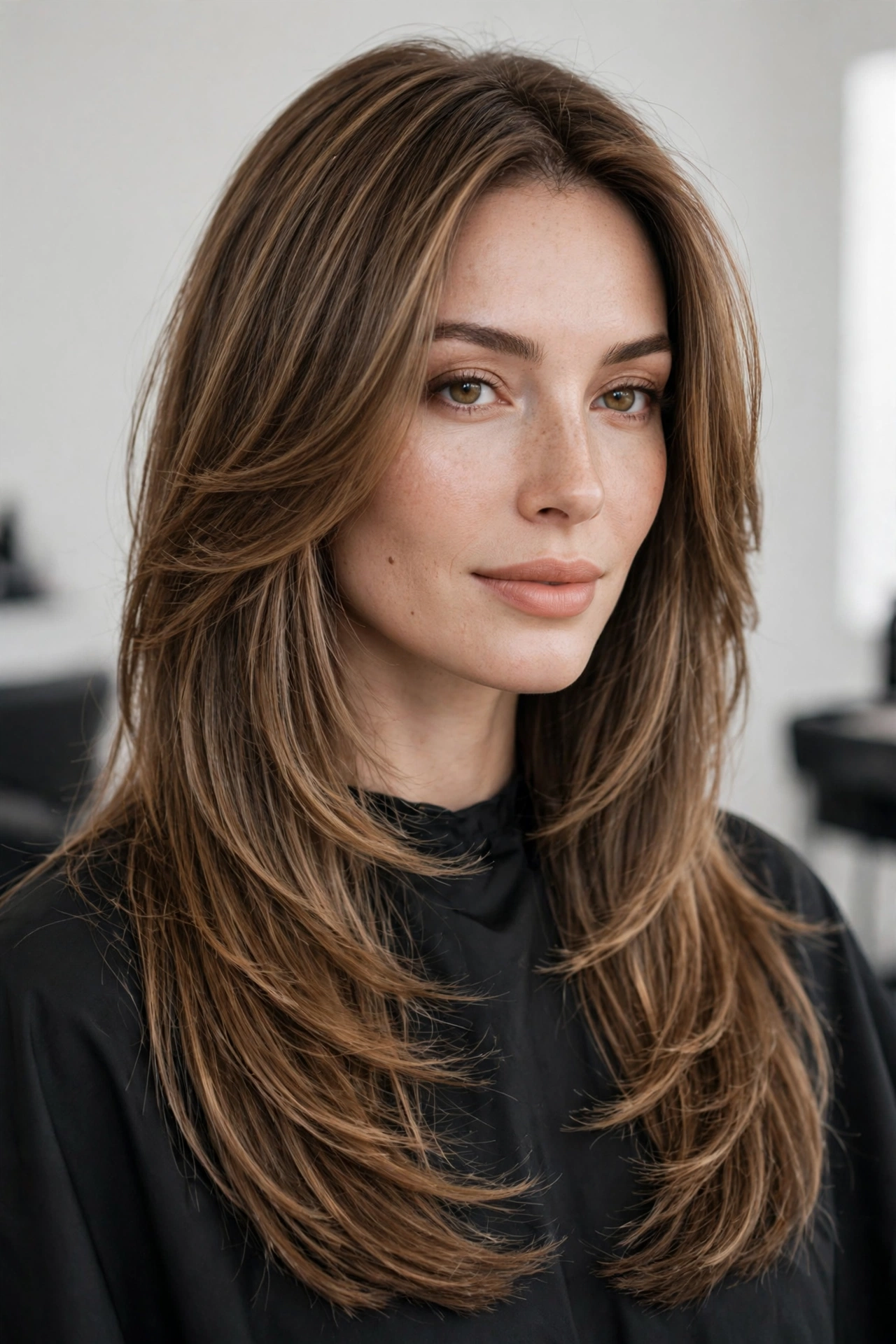
Best Haircuts for Oval Faces: The Most Versatile Guide
Oval faces suit the widest range of haircuts, but the most flattering options balance the naturally long proportions: textured bobs, layered lobs, and cuts with volume at the sides. The key is avoiding styles that add excessive length. The counterintuitive truth is that oval faces need to be careful about elongating cuts that make the face look too long.
- The “everything works” advice is a myth: oval faces should avoid cuts that add excessive vertical length
- Determine your subtype first: long oval needs width, short oval needs careful length management
- Best bets: textured bobs, layered lobs, side-swept bangs, and cuts with side volume
- Counterintuitive avoid list: super-long one-length hair, center parts with no layers, excessive crown height
- Bangs are excellent for oval faces but the type matters: curtain, side-swept, and textured fringes work best
Why Oval Faces Get Bad Advice
“You have an oval face, so everything works on you.” If you have heard this from a stylist, you have received lazy advice. While oval faces are indeed versatile, this blanket statement ignores critical nuances and leads to disappointing results.
The problem is that “everything works” becomes “nothing is optimized.” Without specific guidance, people default to the safest, most boring options, or they choose cuts that technically “work” but do nothing to enhance their features. An oval face with waist-length one-length hair is not a bad look, but it is a wasted opportunity.
The deeper issue is that oval faces have a specific vulnerability: they are already long relative to their width. Cuts that add more vertical length (very long straight hair, excessive crown height, center parts with no framing) can make the face look disproportionately long. The advice should not be “everything works” but “most things work, but here is how to make them work best.”
This guide takes the opposite approach from most oval-face content. Instead of just listing what works, we will cover what to avoid, how to identify your oval subtype, and how to choose cuts that enhance rather than just accommodate your face shape.
Long Oval vs Short Oval: Know Your Subtype
Not all oval faces are the same. The length-to-width ratio varies significantly, and this changes the optimal approach.
Long Oval
A long oval face is noticeably longer than it is wide, sometimes approaching oblong proportions. The forehead, cheekbones, and jaw are balanced, but the overall vertical measurement is extended.
For long ovals, the priority is adding width and breaking up vertical length. Side volume is your best friend: waves, curls, and cuts that are fuller at the sides. Bangs are highly recommended because they shorten the forehead and reduce the perceived length. Avoid super-long straight hair and excessive crown height, both of which add more length.
Chin-length bobs work beautifully on long ovals because they add width at exactly the right level. This is one of the few face shapes where a chin bob is genuinely flattering.
Short Oval (Balanced Oval)
A short or balanced oval is the “ideal” proportion: about 1.5 times longer than wide, with gentle curves. This subtype has the most flexibility and can wear the widest range of styles.
The main consideration is maintaining the natural balance. Avoid extremes in either direction: not too much length, not too much width. Medium lengths with soft layers are the sweet spot. You can experiment freely, but keep the overall silhouette balanced.
How to Tell Which You Are
Measure your face length (hairline to chin) and width (cheekbone to cheekbone). If the length is more than 1.6 times the width, you lean toward long oval. If it is around 1.4-1.5 times, you are a balanced oval. This is approximate, but it gives you a starting point for choosing cuts.
Best Short Cuts for Oval Faces
Textured Bob
The textured bob, hitting anywhere from the chin to just above the shoulders, is superb for oval faces. The texture adds width and movement, preventing the cut from looking too severe against the long face shape. Point-cut ends and choppy layers keep it modern.
For long ovals, a chin-length textured bob is ideal because it adds the width you need. For balanced ovals, you can go slightly longer, to jaw or neck length.
Classic Pixie
Oval faces are one of the few shapes that can wear a classic pixie without modification. The balanced proportions mean the short cut does not need compensating volume or angles. A textured pixie with soft, piece-y ends is effortlessly chic.
The only caution: very short pixies expose the full face length. If you are a long oval, consider leaving slightly more length on top or adding textured bangs to break up the vertical line.
French Bob
The French bob (chin-length with bangs, often with a slight under-curl) is charming on oval faces. The bangs shorten the forehead, and the chin length adds width. This cut has a vintage appeal that suits the balanced proportions of oval faces particularly well.
Best Medium Cuts for Oval Faces
Layered Lob
The layered lob (long bob) at collarbone length is the most versatile medium cut for oval faces. The layers add movement and prevent the cut from looking heavy, while the length is long enough to be feminine but short enough to avoid excessive elongation.
Ask for long layers throughout with face-framing pieces. A side part adds asymmetry that keeps the look interesting. This cut works on straight, wavy, and curly textures.
Shaggy Midi
The modern shag, with choppy layers and curtain bangs, adds the texture and width that oval faces benefit from. The layers create horizontal interest that balances the vertical length. This is a great choice for those who want an edgier, more fashion-forward look.
Blunt Lob with Textured Ends
For those who prefer a cleaner look, a blunt lob with point-cut (textured) ends provides structure without severity. The blunt perimeter adds width, while the textured ends prevent it from looking too harsh. Keep the length at or above the collarbone to avoid elongation.
Best Long Cuts for Oval Faces
Long hair works on oval faces, but the cutting technique matters more than the length itself.
Long Layers with Volume
Long layers are essential to prevent long hair from dragging the face down. The layers should start at the chin or below and add movement throughout. Ask for volume-creating layers rather than just length-removing ones.
The critical detail: avoid one-length long hair. Without layers, long hair creates a curtain effect that emphasizes the face’s length. Layers break this up and add the width that balances the proportions.
Waves and Curls
Natural or styled waves are ideal for oval faces because they add horizontal volume. If your hair is straight, consider long layers cut to enhance wave when styled. Even loose, heatless waves will improve the balance significantly.
What About Super-Long Hair?
Hair past the waist can work on balanced ovals but is risky for long ovals. If you love extreme length, compensate with: face-framing layers starting at the chin, regular volumizing at the roots, and waves or texture through the lengths. Pin-straight waist-length hair on a long oval face will look disproportionate.
Bangs for Oval Faces: Which Ones Actually Work
Oval faces suit most bang types, but some are better than others.
Curtain bangs: Excellent choice. They frame the face softly, add width at the cheekbones, and work with most lengths. The center part creates symmetry that suits the balanced oval.
Side-swept bangs: Very flattering. The diagonal line adds interest and the asymmetry prevents the look from being too “perfect.” Works particularly well with lobs and medium cuts.
Textured / wispy bangs: Good for those who want bangs without commitment. The lightness prevents them from overwhelming the forehead, and the texture adds a modern feel.
Blunt straight bangs: These work but are the highest-maintenance option. They create a strong horizontal line that shortens the face, which is good for long ovals but can look severe on balanced ovals. They also require frequent trimming.
What to avoid: Very short baby bangs can look disproportionate on long faces, emphasizing the forehead length above them. If you want short bangs, keep them textured rather than blunt.
What Oval Faces Should Avoid
This is the section most guides skip, but it is arguably the most important.
Super-long one-length hair: Without layers, extreme length elongates the already-long face. If you want long hair, layers are non-negotiable.
Excessive crown height: While some volume on top is good, too much height (think 1960s beehive or over-teased roots) adds length to an already long face. Keep crown volume moderate.
Center part with no face framing: A severe center part with straight, unlayered hair falling on both sides creates a long, narrow frame that emphasizes length. If you love a center part, add face-framing layers or curtain bangs.
Slicked-back styles: Pulling all hair straight back exposes the full face length with no softening. This can look striking for editorial purposes but is unflattering for everyday wear on long ovals.
Very narrow, flat styles: Hair that is pin-straight and close to the head on the sides removes all width, making the face look longer and narrower than it is.
Styling for Different Hair Textures
Straight hair: Focus on adding texture through cutting (point cutting, slide cutting) and styling (waves, bends with a flat iron). Straight hair shows the face shape most clearly, so the cut must do the balancing work.
Wavy hair: You have a natural advantage. Waves add the width that oval faces need. Enhance with layered cuts that encourage the wave pattern. Avoid over-straightening, which removes your natural balancing feature.
Curly hair: Curls provide excellent width and volume. The main consideration is managing volume distribution: ensure fullness at the sides rather than all on top. A curly lob or shoulder-length cut with shaped layers is ideal. For technique details, consult a curl-specialist stylist.
Fine hair: Avoid too many layers, which can make fine hair look thinner. Instead, opt for blunt perimeters with subtle internal layers for movement. A textured bob is often the best choice for fine hair on oval faces.
Thick hair: Layers are essential to remove bulk and prevent the hair from overwhelming the face. Thinning shears or slide cutting can reduce weight while maintaining length. For related techniques, see our round face guide for layering approaches that transfer well.
Frequently Asked Questions
What is the best haircut for an oval face female?
The most universally flattering is a textured lob at collarbone length with long layers and face-framing pieces. It balances the natural length of the oval face with width and movement. However, the “best” cut depends on your oval subtype: long ovals benefit from chin-length bobs and bangs that add width, while balanced ovals can wear almost anything with proper layering.
Do bangs suit oval faces?
Yes, oval faces suit most bang types. Curtain bangs and side-swept bangs are the most versatile, adding softness and framing without overwhelming. Blunt bangs work but require more maintenance. The key is choosing bangs that complement your oval subtype: long ovals benefit most from bangs that shorten the forehead, while balanced ovals can choose based on personal style.
Is long hair good for oval faces?
Yes, but with layers. Long hair without layers can elongate the already-long oval face, creating disproportion. Long layers starting at the chin or below add movement and width that balance the proportions. Waves or texture through the lengths further improve the balance. Avoid pin-straight one-length hair past the waist, especially for long oval subtypes.
What should oval faces avoid in haircuts?
The main things to avoid are: super-long one-length hair with no layers, excessive height at the crown, severe center parts with no face framing, and slicked-back styles that expose the full face length. These all emphasize the vertical length that oval faces already have. The counterintuitive truth is that oval faces need to be careful about adding length, not width.
Which is better for oval face: side part or middle part?
Both work, but they create different effects. A side part adds asymmetry and visual interest, which can make the look more dynamic. A middle part emphasizes the natural symmetry of the oval face, creating a classic, balanced appearance. If you choose a middle part, pair it with face-framing layers or curtain bangs to avoid a severe, elongating effect. For maximum versatility, a slightly off-center part offers the best of both.