Baggy Jeans: How to Style the Relaxed Fit Well
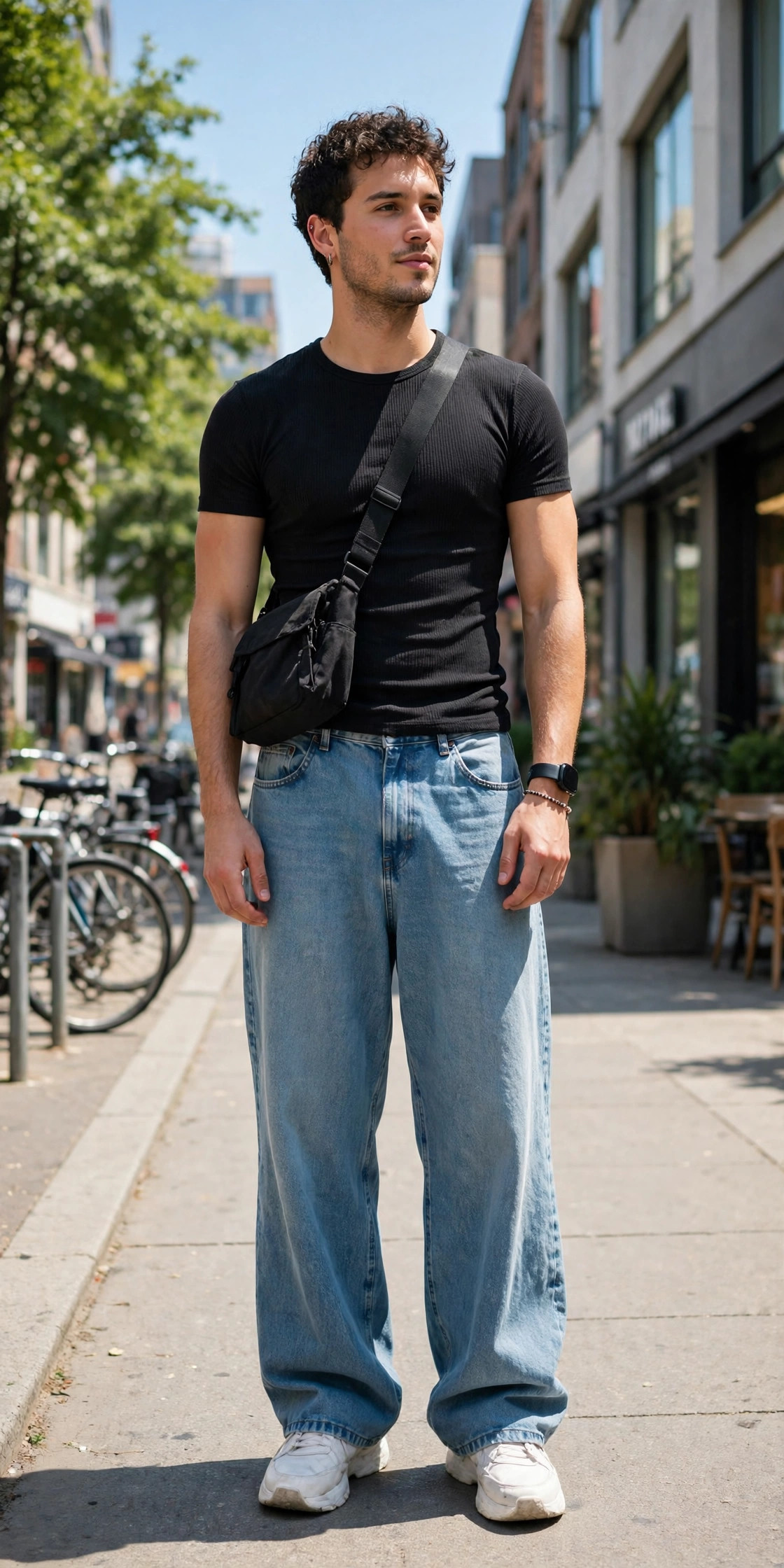
Baggy jeans are jeans with a loose, relaxed fit through the hips and legs, sitting lower on the waist and pooling slightly at the ankle or over the shoe. They come from 1990s streetwear and skate culture, and they are back as a mainstream style, worn by people who want comfort and a relaxed, confident look.
The short answer is this: baggy jeans work when the top half of the outfit is fitted or structured, so the loose jeans look deliberate rather than accidental. This guide explains how baggy jeans differ from other fits, how to choose a size, and how to style them for casual days, smart casual looks and colder weather.
Key Takeaways
- Baggy jeans are loose through the hips, thighs and legs, with a relaxed, low or mid rise.
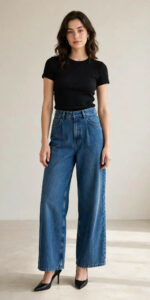
- They differ from wide leg jeans, which are fitted at the waist and hips before widening.
- Balance the volume with a fitted top, a cropped jacket or a tucked-in shirt.
- Choose your usual size for a relaxed look, or size down if the jeans run very loose.
- Chunky trainers, boots and platform shoes suit baggy jeans best, since slim shoes can disappear under the hem.
Baggy Jeans vs Straight, Wide Leg and Relaxed Jeans
Baggy jeans are often confused with other loose fits, but the difference matters. Straight jeans fall in a straight line from hip to ankle with no extra volume. Wide leg jeans are fitted at the waist and hips, then widen from the thigh down, giving a long, clean line. Relaxed jeans are looser than straight jeans but still follow the leg. Baggy jeans are loose everywhere, with extra fabric through the hips, thighs and legs, and they usually sit lower on the waist.
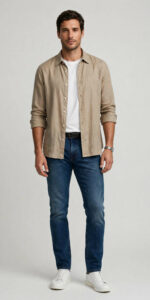
That extra volume is the point of baggy jeans, but it is also what makes them easy to get wrong. If the rest of the outfit is loose too, the whole look collapses into shapelessness. Our mens jeans style guide covers slim, straight, tapered and relaxed fits in detail, which helps you see where baggy fits in the range.
How to Choose the Right Baggy Fit
Rise: Most baggy jeans are mid or low rise. Mid rise is easier to wear and suits more body types, while low rise gives a stronger 1990s look but needs a top that covers the waistband comfortably.
Leg shape: Some baggy jeans are straight and loose all the way down, while others taper slightly at the ankle. A slight taper is easier to style with trainers, while a fully loose leg suits chunky boots and skate shoes.
Length: Baggy jeans should break slightly over the shoe or pool a little at the ankle. If the hem drags on the ground, the jeans are too long, and the hem will wear out quickly. If they sit well above the shoe, they read as cropped rather than baggy.
Size: Start with your usual size and try them on. Baggy jeans are designed to be loose, so sizing up usually just adds bulk. If the waist is too loose, a belt helps, but if you need a belt to keep them up, the size is wrong.
Styling Baggy Jeans
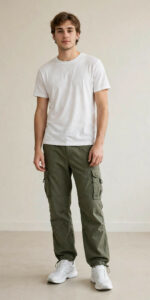
Fitted top: A fitted t-shirt, a slim tank or a tucked-in shirt balances the volume of the jeans. This is the simplest and most reliable way to style baggy jeans, and it works for almost everyone.
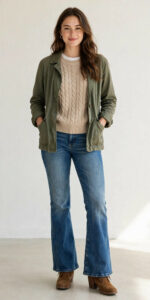
Cropped jacket: A cropped denim jacket, a bomber jacket or a short leather jacket adds structure at the top without adding bulk at the waist. Keep the jacket short so the waistband of the jeans stays visible.
Layering: In colder weather, layer a fitted long-sleeve top under a hoodie or a zip-up jacket, and let the baggy jeans carry the relaxed feel. Avoid long, oversized coats that cover the whole outfit, since they hide the proportion that makes baggy jeans work.
Shoes: Chunky trainers, skate shoes, platform shoes and boots suit baggy jeans best, because they hold their own under a wide hem. Slim, delicate shoes can look lost. For more denim outfit ideas, see our Denim and Bottoms section.
Baggy Jeans for Different Body Types
Baggy jeans suit tall and average-height wearers easily, because the extra length and volume have room to fall naturally. Petite wearers can wear baggy jeans too, but should choose a mid rise, a slight taper at the ankle, and shoes with a platform or heel, so the jeans do not overwhelm the frame.
For curvier figures, baggy jeans with a mid rise and a defined waistband work better than very low-rise styles, which can gap at the back. A fitted top and a belt that sits flat help keep the outfit structured. For slim figures, baggy jeans add shape and presence, especially with a tucked-in shirt or a cropped jacket.
5 Mistakes to Avoid With Baggy Jeans
- Everything oversized: An oversized top with baggy jeans looks shapeless. Keep one half of the outfit fitted or structured.
- Wrong length: Jeans that drag on the ground wear out fast and look careless. Get the hem right for your shoes.
- Slim shoes: Delicate flats or slim trainers disappear under a baggy hem. Choose shoes with some presence.
- Sagging waistband: Baggy does not mean falling down. The waistband should sit securely without constant adjusting.
- Wrong occasion: Baggy jeans are casual. They do not suit formal offices, smart weddings or black-tie events, however well styled.
Frequently Asked Questions
What are baggy jeans?
Baggy jeans are jeans with a loose, relaxed fit through the hips, thighs and legs, usually with a mid or low rise. They come from 1990s streetwear and skate culture.
Are baggy jeans the same as wide leg jeans?
No. Wide leg jeans are fitted at the waist and hips and widen from the thigh down. Baggy jeans are loose through the whole leg, including the hips and thighs.
What size should I buy in baggy jeans?
Start with your usual size. Baggy jeans are designed to be loose, so sizing up usually adds bulk rather than improving the fit.
What top goes with baggy jeans?
A fitted top, a tucked-in shirt or a cropped jacket works best, because it balances the volume of the jeans and keeps the outfit structured.
Can petite people wear baggy jeans?
Yes, with a mid rise, a slight taper at the ankle, and platform or heeled shoes, so the jeans do not overwhelm a smaller frame.
Explore more denim fits in our Denim and Bottoms section, and browse the full Style and Fashion guides for tops and shoes that pair with baggy jeans.